In the high-stakes environment of a 2026 packaging plant, the final stage of the corrugated carton production line is often where the battle for OEE (Overall Equipment Effectiveness) is won or lost. As facilities move toward "lights-out" manufacturing, the reliability of the robotic interface-the End of Arm Tooling (EOAT)-has become the single most critical variable in the automated chain.
When integrating high-performance systems like an automatic robotic palletizer, factory managers face a fundamental architectural choice: Should they utilize Mechanical Grippers or Vacuum Suction systems? This decision is not merely a matter of hardware preference; it is a choice that must be dictated by the physical characteristics of your board, the precision of your automatic box gluing machine, and the speed of your entire carton box production line.

The Anatomy of Modern Palletizing
Before diving into the comparison, we must understand the environment. A modern corrugated cardboard production line in 2026 is a marvel of speed, often producing sheets at 350 meters per minute. By the time these sheets are converted into boxes, they represent a significant investment in energy, adhesive, and labor.
The palletizer machine acts as the final judge of this process. If the robotic "hand" fails to secure the box, the result is more than just a dropped product-it is a catastrophic interruption of the flow.
What is EOAT?
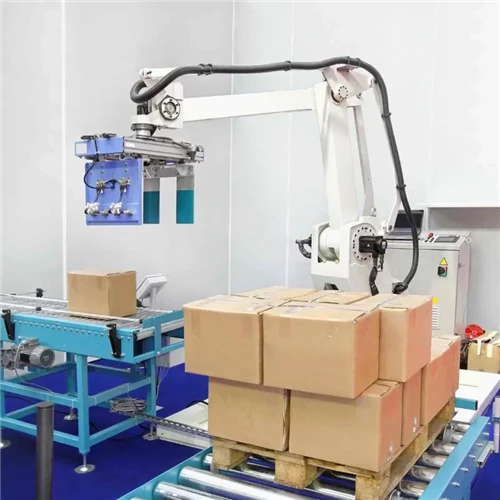
End of Arm Tooling (EOAT) is the bridge between the robot's intelligence and the physical box. In the context of an automatic robotic palletizer, the EOAT must be fast enough to keep pace with the outfeed of a high-speed folder gluer while being gentle enough not to compromise the structural integrity of the corrugated flutes.
Vacuum Suction Systems: The High-Speed Specialist
Vacuum technology has undergone a revolution in the last three years. In 2026, vacuum grippers are no longer just simple rubber cups; they are sophisticated flow-management systems capable of handling a diverse array of porous materials.
How it Works
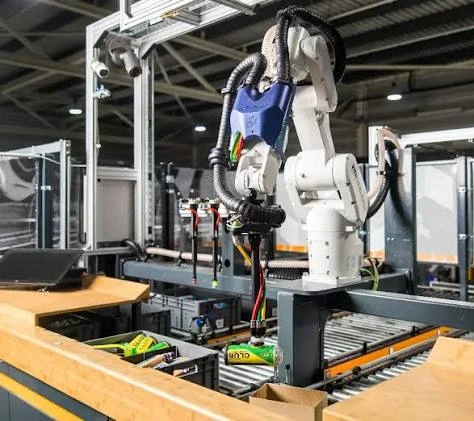
Vacuum systems use either high-flow blowers or venturi-style vacuum generators to create a pressure differential. This "lifts" the box by its top liner. In a corrugated carton production line, this is often the preferred method for lightweight packaging.
The Advantages of Vacuum in 2026
- Multi-Pick Capabilities: One of the primary reasons to choose vacuum for a carton box production line is the ability to pick multiple boxes of varying sizes simultaneously. By activating specific "zones" on a large vacuum plate, the robot can build complex pallet patterns much faster than a mechanical clamp.
- Surface Protection: Vacuum exerts distributed pressure on the top liner. For high-gloss retail packaging or boxes with delicate graphics, vacuum is the only way to ensure the branding is not scratched or marred during the move.
- Minimal Mechanical Wear: With fewer moving parts than a mechanical gripper, vacuum systems often require less physical maintenance, provided the filters are kept clean.
The Fatal Flaw: Warpage Sensitivity
The biggest enemy of the vacuum gripper is a poorly calibrated flute laminator machine. If the upstream corrugated cardboard production line produces warped boards, the vacuum seal will break. A 3mm curve in the top liner can lead to a 50% loss in lifting force. This is why vacuum users must invest in high-precision gluing control to ensure every board remains perfectly flat.

Mechanical Grippers: The Heavy-Duty Workhorse
While vacuum is about finesse, mechanical grippers are about raw reliability. These systems use servo-driven plates to "sandwich" the box from the sides or support it from the bottom.
The Evolution of the Servo-Clamp
In 2026, mechanical grippers have moved away from pneumatic cylinders toward high-torque servo motors. This allows the automatic robotic palletizer to adjust its "squeeze" pressure in real-time, based on the weight and flute-strength of the box.
The Advantages of Mechanical Clamping
- Total Material Independence: Unlike vacuum, mechanical grippers don't care about the porosity of the paper or the dust on the surface. Whether the box is made of recycled Kraft or heavy-duty triple-wall board, the grip remains constant.
- High Payload Capacity: For industrial corrugated carton production lines handling heavy appliances, chemicals, or bulk liquids, mechanical grippers provide a level of security that vacuum cannot match. They are essentially "fail-safe"-if power is lost, the mechanical lock often holds the load.
- Tolerance for Imperfection: Mechanical grippers are much more forgiving of warped or "soft" boards. They "force" the box into position, which can actually help square up a pallet if the automatic box gluing machine has produced slightly trapezoidal boxes.
The Risk: The "Crush" Factor
The primary downside is the risk of flute damage. If the clamp pressure is set too high, or if the corrugated cardboard production line has produced a board with low vertical crush resistance, the mechanical gripper will leave "bruises" on the side of the box. This compromises the stack's integrity, leading to pallet collapse in the warehouse.

Head-to-Head: 2026 Performance Matrix
To make the right choice for your carton box production line, refer to the following technical comparison.
| Feature | Vacuum Suction System | Mechanical Servo Gripper |
| Ideal Speed | 12-18 Cycles/Min | 8-12 Cycles/Min |
| Board Type | E, F, G (Micro-flute) | A, B, C (Heavy-duty) |
| Surface Sensitivity | Excellent (No marks) | Moderate (Risk of crushing) |
| Warp Tolerance | Very Low | High |
| Order Change Speed | Instant (Software-based) | Fast (Servo-adjustment) |
| Palletizer Compatibility | automatic robotic palletizer / Robotic | Gantry / Conventional / Robotic |
| Maintenance Needs | Filter/Pad Replacement | Lubrication/Servo Calibration |
The Role of the automatic robotic palletizer in 2026
When we talk about high-speed output, the name automatic robotic palletizer often comes up because of its superior pattern-forming software. However, even the best software cannot overcome a poorly chosen gripper.
In 2026, the trend is toward Hybrid Grippers. These tools utilize a vacuum plate for the initial lift and mechanical "fingers" that slide under the box for secondary support during high-speed travel. This hybrid approach allows a corrugated carton production line to run at maximum velocity without the fear of a vacuum seal failure during a sudden robotic rotation.
Why Upstream Quality Dictates Your Gripper Choice
A common procurement mistake is buying a palletizer machine without auditing the corrugated cardboard production line. Your choice of gripper should be a reflection of your paper quality and machine precision.
The Impact of the Thin Blade Slitter Scorer
If you use a high-quality Thin Blade Slitter Scorer, your box edges are clean and dust-free. This is a massive advantage for vacuum systems, as dust is the #1 cause of vacuum pump failure. A clean cut ensures that the suction pads can maintain a long-term seal.
The Impact of the Folder Gluer
If your automatic box gluing machine is inconsistent in its squaring, a vacuum gripper will pick up the box "as-is," preserving the defect and creating a leaning pallet. A mechanical gripper, however, can be programmed to "squeeze" the box back into a square shape as it places it, acting as a secondary quality control mechanism.
Operational Troubleshooting: When to Switch?
Many plant managers find that their needs change. If you are currently using vacuum but find your automatic robotic palletizer is dropping 5% of its loads, it is time for an audit:
- Check the Board: Use a moisture meter on the outfeed of your flute laminator. If moisture exceeds 8%, the paper is too porous for standard vacuum pads.
- Monitor the Suction: If the vacuum pressure drops only during high-speed turns, the centrifugal force is overcoming the suction. You may need to switch to a mechanical assist.
- Inspect the Edges: If your mechanical grippers are leaving marks, your corrugated carton production line may be producing "soft" flutes. You must either reduce the clamp pressure or switch to a high-flow vacuum system.
The Economic Reality: ROI Comparison
In 2026, Labor Shortage Solutions are the primary driver of ROI. A vacuum system is generally cheaper to install but requires a more stable corrugated cardboard production line to be effective.
Mechanical grippers have a higher upfront cost due to the complex servo-actuators and precision machining required for the clamps. However, for a plant running 24/7 with varying grades of recycled paper, the mechanical system often pays for itself by eliminating "nuisance stops" caused by vacuum leaks.
The Integrated Vision for 2026
Choosing between Mechanical Grippers and Vacuum Suction is not an isolated decision. It is the final piece of the puzzle in your corrugated carton production line.
- Choose Vacuum if your focus is on high-speed retail packaging, e-commerce, and micro-flute boards, and you have total control over board flatness.
- Choose Mechanical if you handle heavy industrial loads, high-recycle content paper, or if your environment is dusty and demanding.
In 2026, the most successful facilities are those that treat their automatic robotic palletizer as part of a single, living organism. By aligning your carton box production line with the right End of Arm Tooling, you ensure that the "last meter" of your automation is as strong as the first.
The goal is simple: A perfect pallet, every time, without a single human hand touching the box. Whether you achieve that through the whisper of a vacuum or the firm grip of a servo-clamp, the result is the same-a profitable, automated future.