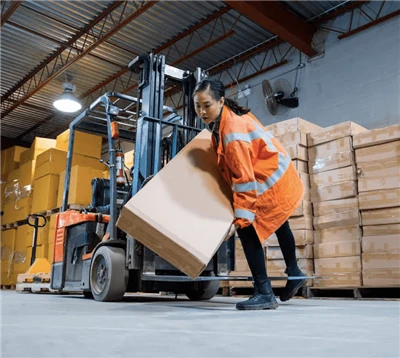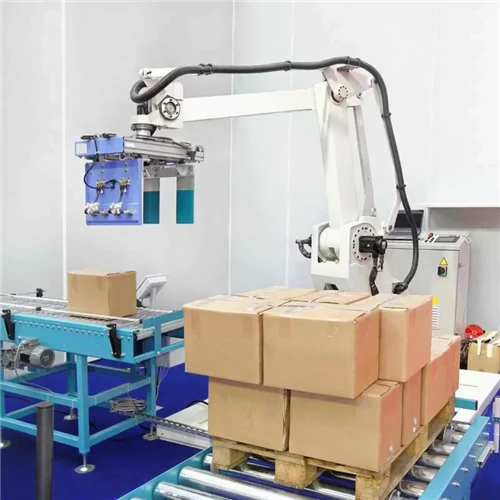
A case palletizer machine (also referred to as a case palletizer or box palletizer machine) is an automated end-of-line packaging system engineered to stack packaged goods-such as corrugated cases, boxes, trays, or crates-onto pallets in structured, repeatable patterns for safe transportation and storage. Facilities require automatic case palletizers when line speeds outpace manual labor capacity (typically exceeding 10–15 cases per minute), when repetitive strain injuries drive up labor costs, or when inconsistent pallet stability leads to shipping damage.
End-of-line packaging is a frequent bottleneck in modern manufacturing, logistics, and processing plants. While processing and secondary packaging lines often operate at high speeds, manual palletizing frequently slows total throughput. Integrating a dedicated case palletizer machine stabilizes production flow, lowers operational expenses, and ensures cargo integrity throughout the distribution chain.
This guide details the internal mechanics of modern case palletizers, compares automated configurations against traditional labor, evaluates critical operational triggers, and outlines a step-by-step implementation plan.

What Is a Case Palletizer Machine?
A case palletizer machine is an industrial assembly designed to receive individual boxes or cases from an upstream conveyor line, align them into specified layer configurations, and place them onto a wooden or plastic pallet.
These machines replace manual lifting, turning, and stacking. Depending on the system architecture, they handle a wide range of secondary packaging types:
- Corrugated shipping containers (RSC and die-cut boxes)
- Shrink-wrapped trays and bundles
- Plastic crates and totes
- Pails, drums, and rigid plastic tubs
By automating the transition from individual secondary packages to unitized shipping loads, automatic case palletizers establish a controlled, predictable throughput rate that matches upstream production capability.
Core Components of an Automatic Case Palletizer
To understand how a case palletizer machine functions, it is essential to examine its primary sub-systems. Industrial palletizers rely on mechanical, electrical, and pneumatic integration to maintain speed and precision.
1. Infeed Conveyor and Metering Section
The infeed conveyor receives incoming packages from the casing or sealing line. It includes photo-eyes, proximity sensors, and metering belts to regulate the gap between cases. Proper spacing ensures that downstream turning mechanisms can manipulate individual boxes without causing pile-ups.
2. Case Orientation and Pattern Formation Station
Cases must be oriented in specific directions (lengthwise or crosswise) to construct interlocking pallet layers. Mechanical bump turns, pin turners, or high-speed robotic grippers rotate the incoming packages according to pre-programmed layer recipes stored in the Programmable Logic Controller (PLC).
3. Layer Forming / Stacking Mechanism
Once a complete row or layer of cases is assembled, it moves into the transfer zone:
- Conventional High-Level / Low-Level Palletizers: Use a sweep arm to push completed case rows onto a bi-parting apron plate or sliding floor.
- Robotic Case Palletizers: Use specialized End-of-Arm Tooling (EOAT)-such as vacuum plates, mechanical clamps, or bottom-support forks-to pick single boxes, rows, or full layers and place them directly onto the pallet.
4. Pallet Handling and Dispensing System
Automatic systems integrate a pallet magazine (dispenser) that holds a stack of empty pallets. An internal conveyor automatically indexes a single empty pallet into the loading zone. Once the pallet reaches its full height, a discharge chain conveyor moves the finished load out of the cell toward an automated stretch wrapper or strapping station.
5. Control System (PLC & HMI)
The control cabinet houses the main PLC, variable frequency drives (VFDs), and safety relays. The operator interacts with the machine via a Human-Machine Interface (HMI) touchscreen to select stack patterns, adjust line speeds, monitor diagnostic alarms, and clear operational faults.
How a Case Palletizer Machine Works: Step-by-Step
While mechanical designs vary between conventional sweep-type machines and articulated arm systems, the sequential process of building a palletized load remains uniform.
Step 1: Case Infeed and Gap Creation
Upstream equipment (such as case sealers or case erectors) transfers sealed boxes onto the palletizer's infeed belt. The system uses indexing belts running at varying speeds to create precise physical gaps between consecutive cases.
Step 2: Orientation and Row Building
As cases pass through the orientation zone, overhead stoppers, turning pins, or dual-belt differential turners rotate designated boxes by 90 degrees. The machine arranges the rotated and straight boxes into a single row according to the programmed pattern.
Step 3: Layer Assembly
Once a row is complete, a pusher mechanism advances it onto a layer-forming table. The system repeats this process until a full pattern layer (incorporating tie-rows and edge alignments for load stability) is formed.
Step 4: Pallet Placement and Indexing
An empty pallet is conveyed from the dispenser into the stacking station. In conventional high-level palletizers, the apron plate opens, allowing the formed case layer to drop smoothly onto the pallet or the preceding layer of cases. In low-level or robotic setups, the lifting platform or robotic arm lowers the load incrementally as layers build up.
Step 5: Discharge and Load Securing
After the designated number of layers is placed, the full pallet indexes out of the cell via a heavy-duty roller or chain conveyor. It advances to an inline stretch wrapper, where plastic film is applied under tension to prevent load shifting during freight transit.

Main Types of Case Palletizers
Selecting the correct case palletizer depends on available floor space, required speeds, budget constraints, and payload characteristics.
| Palletizer Type | Typical Speed Range | Floor Space Requirement | Key Strengths | Primary Limitations |
|---|---|---|---|---|
| Low-Level Conventional | 10 – 30 Cases / Min | Medium to Large | Simple maintenance, easy floor-level access | Moderate speed limit, larger footprint than cobots |
| High-Level Conventional | 30 – 100+ Cases / Min | Large (Requires elevated platforms) | Extreme high-speed capability, handles heavy continuous loads | High capital cost, complex installation, rigid line layout |
| Robotic Arm Palletizers | 10 – 40 Cases / Min | Compact to Medium | Handles multiple infeeds simultaneously, rapid pattern changeover | Requires specialized programming for complex troubleshooting |
| Collaborative Robots (Cobots) | 5 – 12 Cases / Min | Very Compact (Minimal guarding) | Low initial cost, easy relocation, simple drag-and-drop HMI | Limited payload capacity (typically <20 kg) and lower speeds |
Conventional Low-Level Case Palletizers
Low-level machines accept cases at standard conveyor height (approximately 800 mm to 1000 mm off the floor). The layer-forming table builds layers at this working height, and a hoist mechanism raises or lowers the pallet to receive each subsequent layer. These systems offer straightforward maintenance since all moving parts are accessible from ground level.
Conventional High-Level Case Palletizers
High-level machines receive cases at an elevated level (typically 2.5 meters to 3.5 meters above floor level). Cases are raised via inclined conveyors or vertical lifts before pattern formation. Layers are pushed onto an apron plate, which remains static while the pallet underneath lowers step-by-step. These units handle high-speed bottling, canning, and FMCG operations.
Robotic Case Palletizers
Robotic systems utilize a 4-axis or 6-axis industrial articulated robot arm mounted in a central cell. The arm carries a multi-function gripper designed to pick single cases, multiple cases, or full layers. Robotic case palletizers offer versatility: a single robot can serve up to four separate production infeeds at once, placing boxes onto distinct pallets.
Detailed Comparison: Robotic Palletizers vs Manual Systems
When evaluating end-of-line investments, plant managers compare automated technology against manual labor stacking. The following breakdown highlights the primary differences between robotic palletizers vs manual systems.
1. Throughput Speed and Efficiency
- Manual Systems: A human operator can stack 5 to 10 cases per minute on a sustainable basis. However, speed drops significantly over a standard 8-hour shift due to physical fatigue, heat, and heavy payloads.
- Robotic Systems: Industrial robotic palletizers operate at continuous rates of 15 to 40 cases per minute without performance degradation. They run uninterrupted through consecutive shifts, maximizing plant OEE (Overall Equipment Effectiveness).
2. Ergonomics and Workplace Safety
- Manual Systems: Manual case stacking requires continuous bending, twisting, and lifting heavy weights (often 10 kg to 25 kg per case). This environment accounts for a high proportion of industrial musculoskeletal injuries, leading to worker compensation claims and high labor turnover.
- Robotic Systems: Robots perform all heavy lifting, completely isolating operators from high-risk physical tasks. Operators transition into monitoring, quality control, and forklift operation roles.
3. Load Consistency and Stacking Precision
- Manual Systems: Human placement introduces variance in layer squareness and edge alignment. Overhanging boxes reduce stack strength by up to 30%, increasing the risk of load collapse during truck transport.
- Robotic Systems: Servo-driven positioning guarantees sub-millimeter placement accuracy. Layers remain square and vertical, maximizing structural integrity and ensuring compatible dimensions for automated warehousing systems (AS/RS).
4. Operational Cost and Scalability
- Manual Systems: Direct labor costs escalate yearly due to wages, benefits, insurance, and recruitment expenses. Scaling production requires hiring additional personnel, which can be difficult during regional labor shortages.
- Robotic Systems: While requiring an initial capital outlay, automated palletizers deliver low, predictable operating costs per pallet. Equipment investment is amortized over time, leading to lower total cost of ownership (TCO) at higher production volumes.
Read More:《Manual Vs Fully Automatic Robot Palletizing Systems: Evaluating Total Cost Of Ownership》

When Do You Need a Case Palletizer? (Operational Triggers)
Investing in an automatic case palletizer requires identifying clear operational triggers within your facility. If your plant exhibits one or more of the following conditions, installing an automated system is justified:
1. Line Speeds Exceed Manual Capacity
When upstream packaging machinery operates at speeds exceeding 12 to 15 cases per minute, a single manual operator can no longer maintain pace. Adding a second or third operator in a tight end-of-line area creates congestion, safety hazards, and labor inefficiencies. An automatic case palletizer handles these higher line speeds smoothly.
2. High Employee Turnover and Labor Shortages
Manufacturing hubs worldwide face ongoing shortages of general labor. High turnover in end-of-line stacking positions leads to frequent hiring costs, onboarding delays, and intermittent line shutdowns caused by staffing gaps.
3. Rising Injury Rates and Insurance Premiums
If health and safety audits reveal rising incidents of repetitive strain injuries (RSI), lumbar stress, or shoulder fatigue associated with box stacking, automation becomes a safety mandate. Mitigating risk lowers workers' compensation liabilities and regulatory compliance penalties.
4. Frequent Freight Transit Damage
Improperly stacked pallets with uneven weight distribution or overhanging edges easily shift during transit, resulting in crushed boxes, rejected shipments, and costly customer chargebacks. Automated palletizing ensures straight, tight stacks that withstand transport stresses.
5. Floor Space Restrictions
Manual palletizing areas require space for operators, staging tables, multiple pallet positions, and safety clearance for forklift traffic. A compact box palletizer machine or collaborative robot palletizing cell can reduce the required floor footprint by 30% to 50%, freeing up plant space for additional production equipment.
Industrial Case Study: Secondary Packaging Line Upgrade
To illustrate the practical impact of replacing manual labor with an automated system, consider the following real-world implementation in an industrial manufacturing plant.
Customer Background
A regional producer of commercial lubricants operated two parallel packaging lines filling 5-liter fluid containers into corrugated shipping cases (total case weight: 18.5 kg).
- Upstream Output: Combined line speed averaged 22 cases per minute.
- Previous Operations: The facility relied on four operators per shift (two per line, running two shifts daily) to manually stack cases onto standard pallets.
Primary Challenges
- High Turnover: The heavy 18.5 kg case weight caused high operator fatigue, resulting in a 45% annual employee turnover rate in the packing department.
- Product Damage: Inconsistent manual stacking caused load shifting during freight transit, generating an average of $6,500 per month in damaged product returns and customer chargebacks.
- Space Constraints: The manual packing area was congested with staging tables, pallets, and manual hand trucks, creating a safety hazard near forklift travel lanes.
System Solution
The facility integrated a centralized, dual-infeed robotic case palletizer featuring:
- One 4-axis industrial articulated robot arm with a 110 kg payload capacity.
- A dual-zone vacuum grid end-of-arm tool capable of picking two cases simultaneously.
- An automatic empty pallet magazine feeding two distinct loading stations.
- Integrated safety fencing, light curtains, and an inline automatic stretch wrapper.
Operational Results (12-Month Post-Implementation Metrics)
| Operational Metric | Pre-Automation (Manual) | Post-Automation (Robotic) | Net Improvement |
| End-of-Line Labor Required | 4 Operators / Shift | 1 Float Operator / Shift | 75% reduction in direct labor |
| Sustained Line Speed | 18 – 20 Cases / Min (Unstable) | 22 Cases / Min (Constant) | 100% target throughput reached |
| Annual Product Damage Claims | ~$78,000 / Year | < $1,200 / Year | 98.4% reduction in freight damage |
| Pallet Cell Footprint | 62 Square Meters | 38 Square Meters | 38.7% floor space saved |
| Project Payback Period (ROI) | N/A | 14.2 Months | Full capital recovery achieved |
Following the installation, the plant eliminated manual lifting hazards on both lubricant lines. Reallocated operators were trained as machine attendants and forklift drivers. Pallet load quality achieved a 100% acceptance rate at customer distribution centers.
How to Select the Right Case Palletizer Machine
Choosing the optimal case palletizer machine requires a systematic review of your product specifications, plant infrastructure, and financial targets. Use the following criteria during supplier evaluations:
1. Payload and Package Characteristics
Document the minimum and maximum dimensions, gross weights, and material properties of all cases passing down the line:
- Are the boxes sealed with tape, hot-melt glue, or strapping?
- Are the cases made of lightweight single-wall corrugated board, or heavy double-wall board?
- Are you handling open-top trays that require bottom-support grippers rather than top-vacuum pickers?
2. Target Line Speeds and Future Growth
Calculate your required Cases Per Minute (CPM) based on peak upstream production rates rather than average daily output. Ensure the selected case palletizer has a speed buffer of at least 15% to 20% to handle short-term surges without backlogging upstream packaging machines.
3. Factory Layout and Ceiling Clearances
Measure available floor dimensions, door access openings, and overhead clearances:
- High-level palletizers require substantial overhead clearance (often 4 meters or more) for elevated infeed conveyors.
- Low-level and robotic cells fit under standard industrial ceilings but require adequate perimeter access for maintenance and forklift entry.
4. Software Ease-of-Use and Recipe Storage
Modern manufacturing demands frequent product changeovers. Verify that the system's HMI features intuitive pattern creation software. Operators should be able to select pre-saved layer patterns or configure new box dimensions without writing custom PLC code.
5. Safety Compliance and Vendor Support
Ensure the palletizer cell complies with regional safety standards (such as ANSI/RIA R15.06, CE, or OSHA requirements). Confirm that the equipment manufacturer provides local spare parts availability, remote telemetry diagnostics, and field service technician support.
Ready to streamline your end-of-line packaging? Contact our automation engineers today to discuss your application requirements and get a customized palletizing cell design.