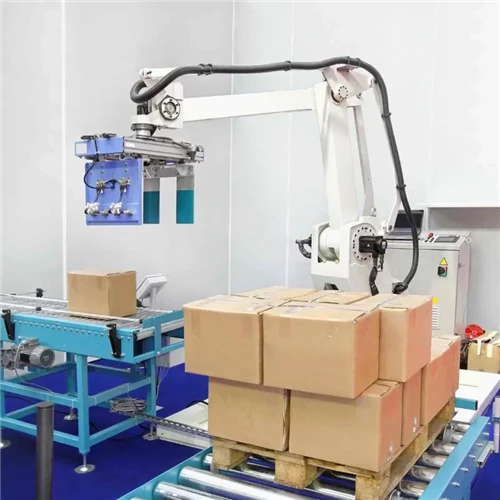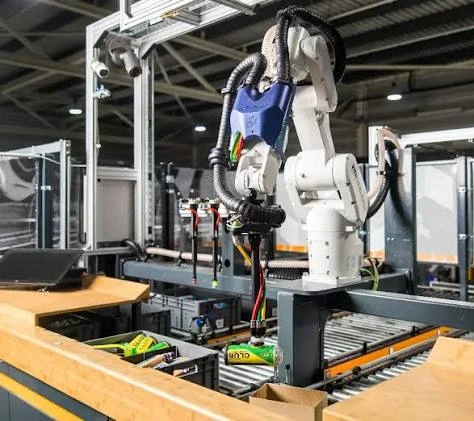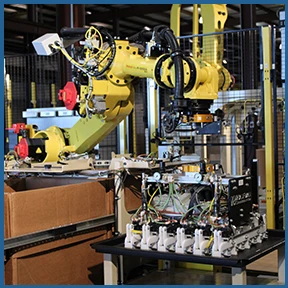
Choosing the correct End-of-Arm Tooling (EOAT) is the single most critical factor in determining the reliability, speed, and overall success of a robotic or cobot palletizing system. While the robotic arm provides the reach and motion, the gripper interacts directly with your product. A poorly matched EOAT can cause dropped cases, damaged packaging, or severe throughput bottlenecks.
Understanding the 4 Core EOAT Technologies for Palletizing
Selecting the right gripper depends heavily on product geometry, material porosity, weight, and surface structural integrity.
1. Vacuum Sponge Grid Systems (Foam Pads)
- Best Used For: Standard corrugated boxes (RSC/HSC), shrink-wrapped trays, and display cartons.
- How It Works: Utilizes a dense foam pad backed by internal check valves or high-flow vacuum blowers.
- Key Advantages: Tolerates minor box misalignment and handles varying package sizes without mechanical adjustment. If part of the foam surface extends off the package, internal valves shut off automatically to maintain full suction.
2. Mechanical Bottom-Support Fork Grippers
- Best Used For: Heavy bags (grain, cement, resin), open plastic crates, and unsealed or fragile cartons.
- How It Works: Stainless steel tines or support fingers slide underneath the payload, taking 100% of the product weight off top-surface suction.
- Key Advantages: Eliminates the risk of tearing paper bags or lifting tape off unsealed boxes. Ensures maximum safety for heavy loads up to 50 kg.
3. Side-Clamping Grippers (Pneumatic / Servo)
- Best Used For: Heavy rigid boxes, wooden crates, and tightly bundled products.
- How It Works: Applies controlled lateral pressure to securely clamp the sides of the package.
- Key Advantages: Highly reliable for heavy non-porous packages where top vacuum access is restricted.
4. Multifunctional Combo Grippers
- Best Used For: Fully automated cells that require layer management without human intervention.
- How It Works: Integrates a primary case gripper (vacuum or clamp) with secondary pneumatic suction cups and mechanical hooks.
- Key Advantages: Allows the robot arm to pick raw wooden pallets, place cardboard slip-sheets/layer pads, and stack cases-all using a single EOAT assembly.
Top 7 EOAT Manufacturers & Suppliers for Robotic Palletizing (2026)
When sourcing EOAT hardware, choosing established tooling manufacturers ensures high durability, readily available replacement parts, and easy integration with cobots and industrial arms.
| Supplier / Brand | Primary EOAT Specialty | Compatible Robot Brands | Standout Advantage |
| Piab | Kenos® Vacuum Foam Systems | UR, FANUC, ABB, Yaskawa, KUKA | Industry-standard modular vacuum grids with high energy efficiency |
| Schmalz | FMG & FXP Area Vacuum Grippers | Universal Robots, FANUC, Doosan | Integrated ejectors and fast vacuum buildup for quick cycle times |
| OnRobot | VGP20 Electric Vacuum Grippers | Universal Robots, Doosan, TM | 100% electric (no external air compressor required), plug-and-play for cobots |
| ROBOGIANT / UnityRobots | Turnkey Combo Grippers & Custom EOAT | UnityRobots, UR, FANUC | Built-in slip-sheet & pallet handling hooks for compact cell integration |
| Robotiq | AirPick & PowerPick Grippers | UR Ecosystem (UR+ certified) | Ultra-lightweight aluminium design maximizing effective robot payload |
| Gimatic | Modular Mechanical & Pneumatic Clamps | All major industrial robot brands | Customisable modular framing for heavy-duty industrial bag/crate handling |
| Zimmer Group | Heavy-Duty Servo & Pneumatic Grippers | KUKA, ABB, FANUC | Extreme longevity and high gripping forces for heavy industrial loads |
Key Technical Criteria: How to Evaluate Your EOAT Needs
Before issuing a Purchase Order (PO) for an EOAT system, evaluate your application against these technical parameters:
NET ROBOT PAYLOAD CALCULATION MODEL
- Tool Weight vs. Robot Payload: The weight of the EOAT directly subtracts from the payload capacity of your robot arm. For example, using a 7 kg gripper on a 20 kg cobot leaves only 13 kg of usable capacity for your product.
- Air Supply Requirements (Pneumatic vs. Electric): High-flow vacuum generators require consistent compressed air (6–8 bar). If plant compressed air is limited, opt for electric vacuum generators or servo-driven mechanical clamps.
- Surface Porosity & Tape Quality: Recycled corrugated boxes often leak air through porous fiber. Ensure vacuum systems use high-volume Venturi pumps or dedicated vacuum blowers to compensate for leakage.
- Changeover Flexibility: If your line handles 10+ different SKUs daily, select an EOAT with quick-change mechanical interfaces (e.g., manual/automatic tool changers) or programmable servo adjustment.
Common EOAT Mistakes to Avoid
- Over-Engineering the Tool: Adding unnecessary mechanical features increases tool weight and reduces the effective payload of the robot arm.
- Ignoring Foam Pad Wear: Vacuum foam pads are consumable items. Ensure your maintenance team stocks replacement foam strips and checks for wear monthly to prevent dropped boxes.
- Neglecting Wrist Center of Mass: Extending the length or offset of the EOAT increases rotational torque on the robot's wrist joints, which can trigger emergency stops during fast acceleration.
To evaluate your multi-level facility's layout feasibility, contact our technical engineering team today. Provide your plant architectural drawings, floor-to-floor heights, converting line output rates, and target pallet specifications, and our team will prepare a custom 2D/3D CAD layout drawing and a complete technical feasibility analysis tailored to your site.