The global landscape of the corrugated packaging market trends in 2026 is defined by a singular pursuit: the elimination of friction. As labor costs peak and the demand for sustainable, high-performance packaging reaches an all-time high, the modern box plant is no longer just a converter of paper-it is a high-tech data center that happens to produce fiber-based protection.
From the initial slitting of the board to the final stack on a pallet, every millimeter of the production flow is being scrutinized for efficiency. If you are operating a plant in 2026, the following trends in automation, circularity, and high-speed integration are the new benchmarks for survival and profitability.

The Core Infrastructure: High-Speed Integrated Lines
The backbone of any successful plant in 2026 is the corrugated cardboard production line. We have moved past the era where a facility could thrive on fragmented, semi-automatic machinery. Today, the focus is on a synchronized carton box production line that maintains a continuous flow from the wet end to the finished pallet.
The Rise of the Corrugated Carton Production Line
A modern corrugated carton production line now routinely operates at speeds exceeding 300 meters per minute, but speed is nothing without control. The industry's shift toward micro-flutes (E, F, and G flutes) for e-commerce has made precision a non-negotiable requirement. High-speed lines in 2026 utilize closed-loop moisture control and tensioning systems that prevent warping before the board even reaches the conversion stage.
Precision Cutting: The Evolution of the Thin Blade Slitter Scorer
One of the most significant technical shifts in 2026 is the universal adoption of the Thin Blade Slitter Scorer. In a market where "Lightweighting" is the dominant design philosophy, traditional thick blades are a relic of the past.
Why Thin Blade Technology is Non-Negotiable
Traditional slitting methods often crushed the corrugated flutes at the point of impact, compromising the vertical compression strength of the box. The Thin Blade Slitter Scorer utilizes tungsten carbide blades, often only 1mm thick, which slice through the board like a surgical instrument.
- Clean Edges: This ensures burr-free edges, which are essential for high-end retail packaging and prevents dust buildup in the carton box production line.
- Servo-Driven Flexibility: In 2026, these machines are equipped with independent servo motors for each blade and scorer. This allows for "on-the-fly" order changes in less than 3 seconds, a critical feature as the average order size continues to shrink.
- Automated Sharpening: Modern NC slitting units feature programmed sharpening cycles that maintain blade geometry without human intervention, ensuring consistent cut quality over millions of linear meters.
Click here to access other articles for more information on thin blade slitter scorer machine
Addressing the Crisis: Labor Shortage Solutions
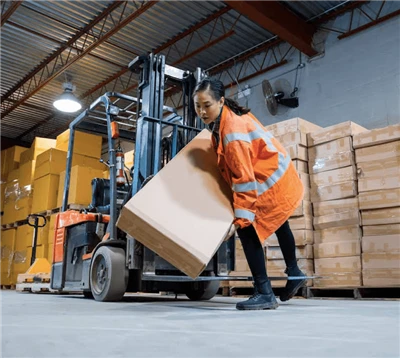
Perhaps the most pressing driver of innovation in 2026 is the global scarcity of skilled operators. Labor shortage solutions are no longer "optional upgrades"; they are the core architecture of new equipment.
The "Hands-Off" Factory Floor
To combat the lack of experienced floor staff, manufacturers are implementing:
- HMI (Human Machine Interface) Simplification: Modern corrugated carton production lines feature intuitive, tablet-like interfaces. An operator with only two weeks of training can now manage a complex folder-gluer by following AI-guided setup prompts.
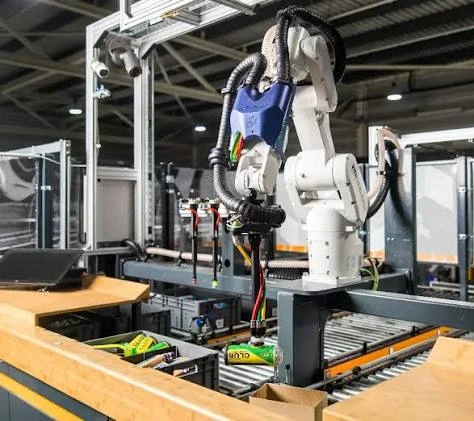
- Automated Waste Removal: Robotic systems now handle the stripping and removal of die-cut waste, a task that was previously labor-intensive and injury-prone.
- Remote Diagnostics: Machine manufacturers now provide 24/7 VR-assisted support, allowing a master technician in Shanghai to guide a local maintenance worker in Dubai through a complex repair.
The Final Meter: Robotic Palletizing Systems (EOAT)
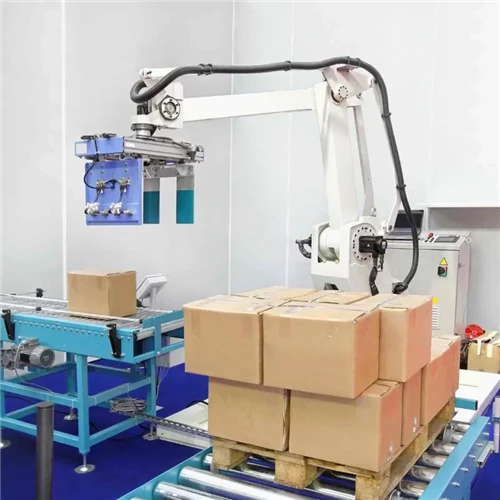
The "last meter" of the production line is where many plants lose their efficiency. In 2026, Robotic Palletizing Systems have become the standard for high-speed conversion. The focus has shifted heavily toward the End of Arm Tooling (EOAT)-the "hand" of the robot.
The Intelligence of the Pallet Gripper
A modern pallet gripper in 2026 is a multi-modal device. It no longer relies solely on simple vacuum or mechanical force.
- Sensory Feedback: Using 3D vision and pressure sensors, the EOAT can detect if a box is slightly misaligned or if the corrugated cardboard production line has produced a board with a slight warp.
- High-Speed Coordination: For lines producing 16,000 to 20,000 boxes per hour, robotic palletizing is the only way to maintain pace without causing a bottleneck. The gripper can pick multiple boxes in a single cycle, organizing them into a perfectly square "brick" for maximum pallet stability.
Click here to access other articles for more information on automatic robotic palletizer

Sustainability and the Circular Economy for Packaging
In 2026, the circular economy for packaging is the regulatory North Star. Brands are demanding that their corrugated suppliers prove a reduced carbon footprint, leading to three major shifts in manufacturing:
Glue Reduction and "Dry" Boxes
Excess glue is a hidden enemy of the circular economy. It increases the weight of the box (raising transport emissions) and makes the fiber recycling process more energy-intensive. 2026 technology focuses on High-Precision Gluing Control, using sensors to apply the absolute minimum amount of adhesive required for a structural bond. This results in a "drier," stiffer box that is 100% easier to repulp.
Lightweighting and Performance-Based Design
We are seeing a move away from "Paper Weight" toward "Box Performance." By using high-quality virgin fibers in thin liners and optimizing the flute geometry, a 2026 box can achieve the same BCT (Box Compression Test) as a 2024 box while using 15% less material.
Technical Comparison: 2024 vs. 2026 Benchmarks
To understand how far the industry has moved, consider the following performance metrics for a standard corrugated carton production line.
| Feature | 2024 Benchmark | 2026 Benchmark | Impact on OEE |
| Average Line Speed | 200 - 250 m/min | 300 - 350 m/min | +25% Output |
| Order Change Time | 1 - 2 Minutes | < 10 Seconds | Minimal Downtime |
| Slitting Precision | ± 1.5 mm | ± 0.5 mm | Reduced Waste |
| Palletizing Method | Manual / Semi-Auto | Full Robotic (EOAT) | Labor Shortage Solution |
| Adhesive Usage | Standard Over-application | High-Precision Digital | Lower Costs / Sustainability |
The Digital Twin: IoT Integration in 2026
The most successful carton box production lines today are "conversational." Every motor, sensor, and belt is connected to a central IoT hub.
Predictive vs. Reactive Maintenance
In 2024, you fixed the machine when it broke. In 2026, the Thin Blade Slitter Scorer tells the maintenance team that its bearings are running 5 degrees hotter than normal, and a replacement should be scheduled during the next planned downtime. This predictive approach has reduced unplanned stoppages by nearly 40% across the global industry.
Navigating the Market: A Buyer's Checklist for 2026
If you are looking to invest in a new corrugated cardboard production line this year, your procurement checklist should prioritize integration over price.
- Integration Capability: Does the Thin Blade Slitter Scorer communicate directly with the Robotic Palletizing Systems?
- Energy Efficiency: What is the KWh per 1000 square meters of board? In 2026, energy costs are a primary profit-killer.
- Modular Upgradability: Can the carton box production line be upgraded with new EOAT or AI modules in two years, or is it a closed system?
- Waste Minimization: Does the NC control system offer an "Optimization Mode" to reduce trim waste to under 1%?
Future Outlook: Beyond 2026
The corrugated packaging market trends suggest that by 2030, the "Black Box" factory will be the norm. We are already seeing the first iterations of AI that can adjust the heat and steam on a corrugator in real-time based on the ambient humidity and paper moisture of the incoming rolls.
The goal is a self-healing production environment. If a corrugated carton production line detects a jam, it will slow down automatically, clear the obstruction using robotic arms, and resume speed without a human ever touching the machine.
The Path Forward
The corrugated industry has entered its "High-Tech" era. The combination of Thin Blade Slitter Scorer precision, Robotic Palletizing Systems (EOAT), and a rigid adherence to the circular economy for packaging has transformed the humble cardboard box into a marvel of engineering.
For manufacturers, the message is clear: Automate or be left behind. The labor shortage is not a temporary dip-it is a demographic reality. The only way to maintain the margins required to survive in the corrugated packaging market trends of the future is to embrace the full-line integration of the corrugated cardboard production line.
By focusing on precision at the slitting stage and intelligence at the palletizing stage, you ensure that your plant is not just producing boxes, but is building a sustainable, profitable future in a world that demands perfection.