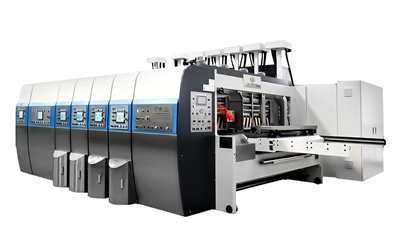
Modernizing your converting line with an advanced Flexo Printer Slotter is the single most effective intervention for modern box plant optimization. By replacing manual setups with a fully motorized computer preset slotting system and transitioning mechanical roller transport to a high-precision vacuum transfer printing precision system, modern plants eliminate downstream print registration errors, preserve corrugated flute integrity, and shrink order changeover times from 45 minutes to under 120 seconds. Whether operated as a standalone unit or upgraded into a fully inline flexo folder gluer machine, integrating this high-performance cardboard box manufacturing machine into your floor plan directly drives OEE (Overall Equipment Effectiveness) up by 25% to 40% while dramatically slashing material and ink waste.

Introduction: The Operational Bottleneck in Traditional Box Plants
In the highly competitive world of corrugated packaging, modern plants face a relentless squeeze from two sides: escalating raw material costs and an industry-wide shift toward "small-batch, multi-variety, and rapid-delivery" orders. Historically, corrugated plant operations relied on heavily manual, gear-driven printer slotters. On these legacy machines, changing a printing plate, adjusting slotting boss positions, or calibrating the scoring heights required the line to be stopped for up to an hour while operators physically loosened bolts, adjusted manual wheels, and ran multiple test sheets to correct alignment issues.
In 2026, this old-school operational model is no longer financially viable. When a converting line spends more time idling for setup changes than running at its rated speed, your plant's profitability evaporates. To survive and scale, packaging facilities are prioritizing the acquisition of automated corrugated box plant machinery.
Among these investments, the modern high-speed Flexo Printer Slotter stands out as the core engine of box plant optimization. This article delivers an in-depth technical analysis of the mechanical, digital, and structural systems that allow modern printing slotting equipment to redefine carton production efficiency and maximize your plant's return on investment.
Read More: 《How To Reduce Downtime in Your Corrugated Box Plant: A Practical Guide》
Ⅰ,Eliminating Flute Crush at the Feed Table
Any high-performance cardboard box manufacturing machine is only as good as its feeding mechanism. If the corrugated sheet is deformed or crushed the moment it enters the machine, its ultimate structural strength is permanently compromised.
| Feeding Technology Solution | Process Flow & Core Consequences | Final Board Quality & BCT Performance |
| Traditional Feeding (Mechanical Nip Rolls) | Localized heavy pressure ──> Flute crush (physical damage) ──> Creation of setup waste | Damaged structure, significantly reduced box compression strength, high risk of box collapse. |
| Modern Feeding (Lead Edge + Vacuum Suction) | Stable suction adsorption ──> Zero flute compression ──> Maintained original board stiffness | Perfectly preserves 100% of the engineered structural thickness; premium high-standard quality. |
1. The Technology of the Lead Edge Feeding System
Older machines used heavy mechanical nip rollers to grab and force the corrugated board into the first printing unit. This localized compression permanently crushed the internal flutes-especially delicate E-flute, F-flute, or micro-flutes-reducing the Box Compression Test (BCT) strength of the finished box by up to 20%.
Modern machines eliminate this failure point by utilizing an advanced lead edge feeding system paired with a vacuum suction grid.
Segmented Feed Grids: A series of reciprocating feeding gates and high-grip polyurethane rollers contact only the very leading edge of the board.
Variable Frequency Vacuum Fans: High-volume vacuum fans pull the corrugated sheet flat against the feeding table, compensating for warped or bowed boards without applying physical downward roll pressure to the board's core structure.
2. Protecting Downstream Quality
By feeding sheets without physical crushing, the board retains 100% of its engineered structural thickness. This guarantees that when the sheet proceeds to subsequent printing, slotting, and die-cutting stations, the scoring blades can make precise, crisp creases rather than tearing or cracking the dry paper fibers.
Read More: 《What Is A Printing Slotting Die Cutting Machine?》
Ⅱ,Achieving Micro-Level Alignment via Vacuum Transfer
Once the board enters the printing section of the Flexo Printer Slotter, maintaining absolute sheet control is the difference between premium high-definition packaging and a stack of expensive scrap paper.
1. Vacuum Transfer Printing Precision vs. Roll Transport
In traditional printer slotters, sheets were transferred from one color station to the next using a series of mechanical pull-rolls. This design introduced two major points of failure:
- Ink Smearing: The physical contact of the pull-rolls on wet, freshly applied ink frequently caused unsightly smudging and ghosting.
- Registration Slippage: As mechanical gears wore down over time, slight micro-slippages occurred between the rollers, causing the color plates to drift out of alignment.
Modern corrugated box plant machinery solves this by implementing comprehensive vacuum transfer printing precision systems. The corrugated board is held firmly from its unprinted backside by a continuous vacuum suction deck while being transported via high-precision ceramic-coated rollers or durable timing belts. The printed surface never makes physical contact with any mechanical transport components, allowing for perfect multi-color registration accuracy down to ±0.5mm, even at operating speeds exceeding 300 sheets per minute.
2. Eliminating Print Defects
Because sheet transport is incredibly stable, modern lines can easily integrate advanced print adjustments. For plants struggling with common print quality issues, combining vacuum transfer with automated ink monitoring completely eliminates common wet-end printing defects.
💡 Related Reading: 《How To Stop Flexo Printing Blotches And Ghosting: Anilox Roller And Ink Viscosity Adjustments》

Ⅲ,Advanced Ink Management and Fast Color Changes
For modern packaging plants, ink cleanup and color changeover represent some of the most significant daily operational drains. High-efficiency systems address this bottleneck through advanced hydrodynamic design.
| Chambered Doctor Blade Component | Mechanical Operational Principle | Contribution to Printing Efficiency & Quality |
| Chamber Internal Inflow | Maintains continuous, specific pressure ink circulation. | Ensures sufficient ink supply without air bubbles, even at ultra-high speeds. |
| Positive Seal Blade | Physically seals chamber edges, blocking ink leakage caused by centrifugal force. | Keeps the workshop exceptionally clean, eliminating ink splashing waste. |
| Negative Doctor Blade | Cleanly shears excess ink from the anilox surface at a scientifically reversed angle. | Ensures precise cell filling on the anilox roller, achieving high-precision halftone printing. |
1. The Chambered Doctor Blade System
Older roll-to-roll ink systems (using a rubber fountain roll and an anilox roll) are notoriously difficult to calibrate. They are highly susceptible to ink starvation at high speeds and ink flooding at low speeds, resulting in inconsistent print density across the production run.
Modern high-speed printer slotters utilize a closed chambered doctor blade system constructed from carbon fiber or specialized aluminum alloys.
- Constant Cavity Pressure: The closed chamber maintains a consistent, pressurized reservoir of ink against the ceramic anilox roller, ensuring uniform cell filling regardless of machine speed.
- Dual-Blade Configuration: A positive blade seals the chamber to prevent leakage, while a negative-angle doctor blade cleanly shears excess ink from the anilox surface. This achieves ultra-consistent, high-resolution solid fills and fine halftone dot screens.
2. Automated Rapid Washing Systems
To achieve a quick changeover, modern machinery features automated wash-up cycles. By pressing a single button on the operator's console, the machine automatically pumps unused ink back into the storage buckets, flushes the chamber and anilox roller with warm water, and dries the system using pressurized air. This entire cycle completes in less than three minutes per color station, drastically lowering water consumption and reclaiming valuable production time.
For plants looking to procure state-of-the-art printing systems, choosing highly integrated wet-end configurations is vital. Explore our advanced solutions on our High-Speed Flexo Printer Slotter to find machinery engineered for maximum uptime and color consistency.
Ⅳ,Zero-Downtime Settings with Motorized Computer Preset Slotting
The slotting section of a cardboard box manufacturing machine is where the cardboard sheet is cut, creased, and trimmed to form the final flap profile of the box. Historically, setting up the slotting heads was a painstaking, labor-intensive chore.
1. The Evolution of Motorized Computer Preset Slotting
On manual machinery, operators had to physically measure, loosen, and slide heavy steel slotting bosses along a central shaft to set the correct box length, width, and depth panels. This task alone could take up to 45 minutes of valuable floor time per order change.
In a modern, computerized box plant, this bottleneck is entirely eliminated. Modern slotting units feature motorized computer preset slotting technology driven by independent servo motors.
- Recipe Recall: The operator enters the new box dimensions into the central PLC touch screen or imports the order details directly from the plant's ERP system.
- Simultaneous Auto-Positioning: The computerized system commands individual, high-torque servo motors to slide the pre-creasing, creasing, and slotting heads along linear guide rails simultaneously.
- Automatic Gap Calibration: The nip gaps between the upper and lower shafts are automatically adjusted to match the caliper thickness of the incoming board (A-flute, B-flute, C-flute, or double-wall boards).
2. Reducing Scrap and Setup Waste
Because the motorized heads move with sub-millimeter precision, the very first sheet through the machine is cut to the exact engineered specifications. This eliminates the traditional "trial-and-error" test runs, saving plants hundreds of sheets of waste paper daily.
Read More: 《Printing Slotting Die-cutting Machine: Revolutionizing The Carton Manufacturing Industry》

Ⅴ,Future-Proofing - Scaling Up to an Inline Flexo Folder Gluer Machine
While a standalone Flexo Printer Slotter is a highly efficient asset, the ultimate evolution of end-of-line packaging is to integrate printing, slotting, folding, gluing, and stacking into a single continuous process.
| Inline Process Stage | Core Mechanical Action | Traditional Standalone vs. FFG Inline Production |
| 1. Raw Board Feeding | High-speed lead edge vacuum suction non-crush feeding. | Traditional Standalone: Requires manual or forklift transfer of semi-finished pallets between processes, creating massive Work-in-Progress (WIP) accumulation that wastes floor space and risks physical damage. |
| 2. High-Precision Printing | Multi-color vacuum transfer, high-precision registration. | Traditional Standalone: Requires waiting for ink to fully dry before transport, high risk of secondary scratching. |
| 3. Slotting & Creasing | Automated computer preset knife positioning, precise cutting. | FFG Inline: Corrugated board enters the machine and completes all processes from printing to finished products in a Single Pass, achieving truly unified, high-standard output. |
| 4. Folding & Gluing | Servo guide belt control, high-precision box forming. | FFG Inline: Speeds up to 400 boxes/min, seamlessly connecting to automatic palletizing robots at the end of the line. |
1. Expanding to an Inline Flexo Folder Gluer Machine (FFG)
By connecting a folding and gluing section directly to the output of the printer slotter, the machine transitions into a highly automated flexo folder gluer machine. This inline setup converts flat corrugated sheets into finished, glued, folded, and bundled boxes in a single pass.
- Eliminating Work-in-Progress (WIP): Traditional multi-step manufacturing requires printing sheets, stacking them on pallets, storing them in a staging area, and then transport-feeding them into a separate folder gluer or stitching machine. An inline FFG completely removes this intermediate storage step.
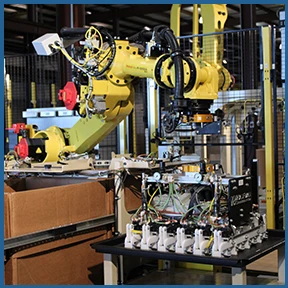
- Sustained High-Speed Output: Modern inline systems can run at speeds up to 400 boxes per minute, feeding finished, squared bundles directly to an automatic palletizing robot at the end of the line.
2. Selecting the Ideal System Architecture
Depending on your plant's target product mix, choosing the right FFG configuration is critical. Different systems offer varying degrees of automation, speed, and size options to match your plant's specific market demands.
💡Related Reading: 《Types Of Flexo Folder Gluers: Classification By Size, Speed, Automation, Function, And Application》
Read More: 《What Does A Flexo Folder Gluer Do?》
Read More: 《How To Choose A Flexo Folder Gluer Machine: A Step‑by‑Step Selection Guide》
To explore how these fully automated inline lines fit into your plant layout, review our extensive inventory on our Automatic Flexo Folder Gluer Machine and find the perfect configuration for your business scale.
Ⅵ,OEE and Technical Comparison Matrix
To clearly demonstrate the operational leap forward, the following matrix compares the technical capabilities and efficiency metrics of traditional mechanical printer slotters with modern, automated, CNC-controlled Flexo Printer Slotters:
| Performance Indicator | Traditional Mechanical Printer Slotter | Modern CNC Flexo Printer Slotter | Impact on Plant OEE |
| Typical Setup/Changeover Time | 30 to 50 minutes (requires physical tools and manual adjustments). | Under 120 seconds (fully automated via computerized touch-screen recipes). | Critical Boost: Virtually eliminates idle line downtime, maximizing daily run hours. |
| Sheet Transport Method | Mechanical Pull-Rolls (prone to crushing flutes and smudging wet ink). | High-Precision Vacuum Transfer (backside-only grip, zero face-paper contact). | Quality Spike: Eliminates print defects and preserves 100% of board compression strength. |
| Ink System & Control | Open Fountain Roller (highly manual, hard to wash, inconsistent flow). | Closed Chambered Doctor Blade (constant pressure, auto-wash cycle under 3 min). | Resource Savings: Drastically cuts ink and water waste during color changeovers. |
| Registration Precision | ±1.5mm to ±2.0mm (susceptible to gear wear and mechanical slip). | ±0.5mm (sub-millimeter precision via closed-loop servo motor synchronization). | Zero Waste: Prevents misaligned prints and eliminates costly test-sheet waste. |
| Inline Connectivity | Standalone operation; requires offline folding and gluing. | Highly modular; easily linked inline to form a high-speed flexo folder gluer machine. | Labor Reduction: Converts the plant floor from multi-step handling to single-pass output. |
Ⅶ,Strategic Purchasing - Choosing the Right Machinery Partner
Selecting your next converting line is a decision that impacts your factory's profitability for the next fifteen to twenty years. When evaluating global corrugated cardboard machine manufacturers, smart plant managers look beyond the initial ticket price (CAPEX) and focus on long-term operational costs (OPEX) and structural reliability.
1. Structural Robustness
High-speed vibration is the natural enemy of precise printing and slotting. Elite manufacturers construct their machine frames from heavy-duty, solid cast-iron side frames (typically 50mm to 60mm thickness) that are precision-tempered and machined on advanced five-axis CNC centers. This heavy base absorbs mechanical harmonics, ensuring that your vacuum transfer decks and print cylinders remain perfectly parallel even when running at speeds of 15,000 to 18,000 sheets per hour.
2. Proactive After-Sales Service and Integration
Modern, computerized machinery requires a sophisticated support network. Investing in heavy-duty automated machinery is a partnership. To safeguard your investment, ensure your selected manufacturer provides comprehensive after-sales service, including:
- Real-Time Remote Diagnostics: Technicians should be able to log directly into your machine's PLC via a secure internet connection to troubleshoot software anomalies or sensor misalignments in real time, preventing costly on-site visits.
- Rapid Spare Parts Availability: Ensure that critical electronic components (servos, PLC modules) and wear-and-tear parts (doctor blades, feed rolls, slotting knives) are stocked locally for overnight shipping.
- Hands-on Operator Training: On-site training programs ensure your floor crew is fully skilled in maximizing the computerized setup systems, transitioning them from manual handlers to highly efficient CNC operators.
To find highly reliable machinery designed for decades of trouble-free industrial service, we invite you to browse our curated selection of processing equipment at our Corrugated Box Plant Machinery or check our comprehensive factory floor solutions on our Cardboard Box Manufacturing Machines. By combining robust physical engineering with elite, proactive customer care, we help modern packaging plants unlock unprecedented levels of OEE and secure their competitive edge for years to come.