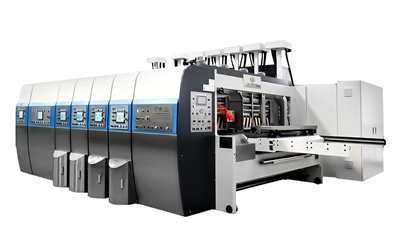
A flexo printer folder gluer-often called a flexo printing slotter folder gluer machine or simply FFG-is the most productive machine in a modern corrugated box plant. It takes flat corrugated blanks, prints graphics, slots or die‑cuts flaps, folds them, applies adhesive, and stacks finished boxes in one continuous pass. Choosing the right flexo printing folder gluer machine affects every aspect of your operation: throughput, labor cost, box quality, glue consumption, and future scalability.
This guide walks through six practical steps to select a flexo automatic folder gluer machine that fits your box sizes, daily volume, changeover frequency, print needs, and budget. Each step includes data tables, decision frameworks, and actionable checklists.
Read More: 《Types of Flexo Folder Gluers》

Before looking at any machine, document your real production profile. This prevents buying a press that is either under‑sized for peak demand or over‑specified for daily needs.
Measure your smallest and largest blank width and length. This directly determines the machine size class.
|
Box Size Class
|
Blank Width (mm)
|
Typical Applications
|
|
Narrow
|
<1,200
|
Small e‑commerce cartons, pizza boxes
|
|
Medium
|
1,200–2,000
|
Standard RSC shipping boxes, retail displays
|
|
Wide
|
2,000–2,800
|
Appliance, furniture, industrial containers
|
Rule: Choose a machine whose maximum width is at least 100 mm larger than your largest regular box. Running at the absolute maximum width every day accelerates wear on folding rails and belts.
Beyond width, consider the board grades you run. Single‑wall (B, C, E flute) is standard. Double‑wall (BC, BE) requires heavier construction and more power. Heavy‑duty FFGs can handle up to 12 mm board thickness, but speed must be reduced by 30–40% compared to single‑wall.
|
Board Type
|
Typical Thickness (mm)
|
Recommended FFG Class
|
|
Single‑wall (E, B, C)
|
2–5
|
Standard or high speed
|
|
Double‑wall (BC, BE)
|
5–8
|
Heavy‑duty frame, servo drive
|
|
Triple‑wall
|
8–12
|
|
Estimate your average daily output in boxes per 8‑hour shift, as well as peak day volume. This tells you what speed class you need.
|
Daily Volume (boxes/day)
|
Recommended Speed Class
|
Typical Speed (bpm)
|
|
<40,000
|
Standard
|
80–150
|
|
40,000–120,000
|
High speed
|
150–250
|
|
>120,000
|
Ultra‑high speed
|
250–400+
|
A flexo automatic folder gluer machine running at 200+ bpm is essential for plants with daily volume above 50,000 boxes. Below that, a standard‑speed machine is more cost‑effective when total cost of ownership is considered.
Count how many job changes you do per shift. This dictates the automation level you need.
|
Changeovers per Shift
|
Recommended Automation Level
|
|
<3
|
Manual or semi‑automatic
|
|
3–6
|
Semi‑automatic or basic CNC
|
|
>6
|
Fully automatic (CNC) with job memory
|
Read More: 《Fully Automatic vs. Semi‑Automatic Folder Gluer: ROI Comparison》
Once you have your production profile, evaluate specific machine attributes. The table below lists the most important specs and what to look for.
|
Specification
|
What to Check
|
Why It Matters
|
|
Max blank width
|
Must be ≥ your largest box + 100 mm
|
Prevents premature wear on rails and belts
|
|
Min blank width
|
Must handle your smallest box
|
Otherwise small boxes cannot run
|
|
Max board thickness
|
7–10 mm typical; heavy‑duty up to 12 mm
|
Determines if you can run double‑wall or heavy board
|
|
Sustained speed (bpm)
|
Ask for speed on your typical box, not peak
|
Peak speed is often unrealistic for mixed production
|
|
Number of print colors
|
2, 3, 4, or 6
|
More colors increase cost and changeover time
|
|
Print registration accuracy
|
±0.5 mm or better
|
Loose registration causes rejects on branded packaging
|
|
Changeover time (CNC)
|
3–8 minutes
|
Faster changeover directly increases throughput
|
|
Glue system
|
Cold glue (standard) or hot melt (optional)
|
Hot melt allows immediate stacking
|
|
Drive system
|
Servo‑driven (electronic line shaft)
|
Better registration, faster changeover, less maintenance
|
The feeder is often overlooked but critical for running warped or recycled board.
|
Feeding Type
|
How It Works
|
Advantages
|
Disadvantages
|
|
Lead‑edge (vacuum)
|
Vacuum belt pulls board by its front edge
|
Handles warped board, high speed, less jams
|
Higher initial cost
|
|
Trailing‑edge (friction)
|
Friction wheels push board from behind
|
Simpler, cheaper
|
Struggles with warped board, more jams
|
Recommendation: For recycled board (which tends to warp) or high‑speed operation (>200 bpm), choose lead‑edge vacuum feeding.
A common mistake is prioritizing the maximum mechanical speed over sustained, reliable output. A machine rated for 300 sheets per minute that jams every 20 minutes is far less profitable than a robust machine running continuously at 250 sheets per minute.
What to look for:
- Heavy‑duty cast iron frame and reinforced side walls (≥50 mm thick) to dampen vibration
- Lead‑edge feeding system that can handle warped board and lightweight recycled materials
- Servo‑driven sections that maintain registration even during acceleration and deceleration
Different plants have different priorities. Below are typical scenarios with recommended machine features.
-
Profile: Few box sizes, long runs (e.g., 100,000+ boxes per day of the same RSC)
-
Recommended features: High‑speed dedicated folder gluer, large‑capacity feeder, minimal changeover requirements
-
Key metric: Sustained speed (bpm) at maximum width
-
Profile: Many changeovers per shift (6+), short runs of different box sizes
-
Recommended features: Quick‑change tooling, CNC job memory (500–2,000 recipes), servo‑assisted adjustments
-
Key metric: Changeover time (minutes), not top speed
-
Profile: Branded retail or e‑commerce boxes with 3–4 color printing, fine text, or logos that cross flaps
-
Recommended features: Precision synchronization with flexo printing, vibration‑free conveyors, tight register (±0.5 mm)
-
Key metric: Print registration accuracy at full speed
-
Profile: Fewer skilled operators, need to minimize downtime
-
Recommended features: Remote diagnostics, easy maintenance access, robust automatic feeders
-
Key metric: Mean time between failures (MTBF) and availability of remote support
Read More: 《The Guide of the Flexo Folder Gluer (FFG)》
The level of automation directly impacts labor cost, changeover time, and ROI.
|
Automation Level
|
Changeover Time
|
Operators per Shift
|
Labor Reduction
|
Payback Period
|
|
Manual
|
20–45 min
|
2–3
|
Baseline
|
N/A
|
|
Semi‑automatic
|
10–20 min
|
1–2
|
~30%
|
6–12 months
|
|
Fully automatic (CNC)
|
3–8 min
|
1 (can monitor 2–3 machines)
|
Up to 70%
|
14–18 months
|
Key insight: Semi‑automatic systems reduce labor by approximately 30%, with payback periods ranging from 6 to 12 months. Fully automated systems achieve labor savings of up to 70%, with ROI realized in 14 to 18 months, especially beneficial for high‑volume production exceeding 15,000 units daily.
Two changeover philosophies exist on flexo printing slotter folder gluer machines:
-
Open/Close (Stop‑to‑Change): The machine stops, operators open the sections, make adjustments, close, and restart. Suitable for plants with fewer than 5–6 changeovers per shift.
-
Set While Run: Operators prepare unused print stations for the next job while the machine continues producing the current order. Ideal for plants with 10+ changeovers per shift.
If you run more than 6 changeovers per shift, a Set While Run FFG with fully automatic CNC will pay for itself quickly.
Modern FFGs can integrate inline camera inspection systems that check print registration, glue pattern, and box dimensions in real time. This is optional but highly recommended for food, pharmaceutical, or high‑value retail packaging where defects cannot be tolerated.
|
Vision Feature
|
Benefit
|
|
Print registration check
|
Rejects misaligned boxes before stacking
|
|
Glue pattern inspection
|
Detects missing or excessive glue
|
|
Barcode/QR code reading
|
Verifies correct job, enables traceability
|
|
Data logging
|
Provides OEE and waste reports
|

The number of flexo print stations determines what graphics you can produce.
|
Print Colors
|
Typical Applications
|
Print Quality
|
Changeover Impact
|
|
1–2
|
Plain shipping boxes, basic branding (e.g., "FRAGILE")
|
Basic (60–85 lpi)
|
Minimal
|
|
3–4
|
Standard retail boxes, e‑commerce packaging
|
Good (85–120 lpi)
|
Moderate
|
|
5–6
|
High‑graphic displays, licensed brand boxes
|
Very good (120–150 lpi)
|
Significant
|
Practical advice: For most corrugated box plants, 3‑color or 4‑color FFGs cover 90% of orders. Six‑color machines are rare and typically used for pre‑print liner or very high‑end short runs. Each additional print station adds $40,000–100,000 to the machine price and increases changeover time by 2–5 minutes.
Ask the supplier what anilox LPI (lines per inch) and BCM (billion cubic microns) they recommend for your typical work. Standard corrugated printing uses 200–400 LPI with 4.5–9.5 BCM. High‑resolution work (e.g., pre‑print) uses 600–1000 LPI with lower BCM. Ensure the machine can accept different anilox rolls for future flexibility.
Beyond the core four functions (feed, print, slot/die‑cut, fold/glue), FFGs can be equipped with optional modules that expand capability.
|
Feature
|
Description
|
|
Function
|
Cuts irregular shapes, handles, windows, ventilation holes, interlocking tabs
|
|
Die type
|
Interchangeable rotary dies (male/female cylinders)
|
|
Changeover time
|
Additional 5–15 minutes for die change
|
|
Cost addition
|
+$50,000 – $150,000
|
|
Best for
|
Specialty boxes, retail displays, produce trays, auto‑lock boxes
|
If you regularly produce die‑cut boxes (not just slotted RSCs), specify this option. A rotary die‑cut unit integrated into a flexo printing folder gluer machine allows complex shapes in the same pass.
|
Feature
|
Description
|
|
Function
|
Counts finished boxes, forms a stack, and ejects onto a pallet or conveyor
|
|
Stack height
|
Up to 2,000 boxes (depending on thickness)
|
|
Cost addition
|
$30,000 – $80,000 (often included in mid‑range and above)
|
|
Advantage
|
Eliminates manual stacking, improves safety, ensures accurate counts
|
A counter‑ejector is almost standard on all medium and large FFGs. Without it, boxes would need manual stacking, which is slow and labor‑intensive.
|
Feature
|
Description
|
|
Function
|
Automatically straps stacks of boxes with plastic or paper band
|
|
Strapping speed
|
15–25 stacks per minute
|
|
Cost addition
|
$30,000 – $80,000
|
|
Best for
|
High‑volume plants shipping palletized loads
|
In‑line strapping is optional and is usually added only for plants with very high throughput or automated palletizing lines.
The purchase price is only the beginning. A complete TCO analysis covers 5–10 years and includes labor, maintenance, consumables, energy, and waste.
|
Machine Type
|
Price Range (USD)
|
|
Entry‑level FFG (basic)
|
$150,000 – $300,000
|
|
Mid‑range FFG (semi‑auto)
|
$300,000 – $600,000
|
|
High‑speed FFG (CNC, servo)
|
$600,000 – $1,200,000
|
|
Large‑format / ultra‑high speed
|
$1,200,000 – $2,500,000
|
Note: Prices vary by manufacturer, configuration, and optional features. The global flexo folder gluer market was valued at approximately $2.00–2.11 billion in 2026 and is projected to grow at a CAGR of 4.2–6.4% through 2032.
Assumptions:
|
Cost Category
|
Semi‑Auto FFG
|
Fully Auto CNC FFG
|
|
Operators per shift
|
2
|
1
|
|
Annual labor cost
|
$268,800
|
$134,400
|
|
Annual maintenance
|
$12,000
|
$20,000
|
|
Annual energy
|
$15,000
|
$12,000
|
|
Annual waste (glue + scrap)
|
$25,000
|
$18,000
|
|
Total annual operating cost
|
$320,800
|
$184,400
|
Annual savings with CNC: $136,400
Incremental investment (CNC vs. semi‑auto): $350,000
Payback period: 350,000 ÷ 136,400 = 2.6 years (approx. 31 months)
Before finalizing a purchase, ask potential suppliers these questions:
-
How many FFGs of this model have been installed in my region in the last 3 years?
-
What is the average lead time for spare parts (belts, anilox rolls, glue nozzles)?
-
Do you offer remote diagnostics? Is it included or extra?
-
What training is provided for operators and maintenance staff (duration, on‑site or remote)?
-
Can we speak to three customers who run similar box sizes and volumes?
Factor these costs into your budget:
-
Rigging and placement: $5,000–$20,000 depending on access and weight
-
Electrical work: $10,000–$30,000 (may require new transformers or upgraded panels)
-
Compressed air connection: $2,000–$5,000
-
Commissioning by supplier technician: $5,000–$15,000 (often excluded from base price)
A new FFG is only as good as the people running it. Budget for:
-
Basic operator training (2–3 days): $3,000–$6,000
-
Advanced maintenance training (1 week): $5,000–$10,000
-
Refresher courses after 6 months: Highly recommended
If budget is tight, consider a used flexo automatic folder gluer machine. However, conduct a thorough inspection:
-
Run a full production test with your own blanks.
-
Check anilox roll condition (microscope inspection, measure cell volume).
-
Verify servo motors and drives (error logs, hours).
-
Request maintenance records for the last 3–5 years.
-
Get a warranty (30–90 days) on mechanical parts.
Used FFGs typically cost 30–50% less than new, but you may need to spend 10–20% of the purchase price on refurbishment.
Use this table to shortlist the right FFG type based on your production profile.
| Your Profile |
Recommended Type |
Key Features to Prioritize |
| Daily volume <40k boxes, few changeovers |
Standard speed, semi‑auto |
Lower capex, easy maintenance |
| Daily volume 40k–120k, mixed orders |
High speed, semi‑auto or CNC |
Balance of speed and flexibility |
| Daily volume >120k, long runs |
Ultra‑high speed, fully auto |
Max productivity, high‑capacity feeder |
| Frequent changeovers (>6/shift) |
Fully auto CNC, Set While Run |
Job memory, 3–8 min changeover |
| High‑quality printed boxes |
Servo‑driven, tight register |
Vibration‑free conveyor, ±0.5 mm accuracy |
| Die‑cut specialty boxes |
With rotary die‑cut unit |
Interchangeable dies, complex shapes |
| Limited skilled staff |
Remote diagnostics, easy maintenance |
IoT‑ready, predictive maintenance |
| Mistake |
Consequence |
| Buying on peak speed alone |
Machine jams or loses register at rated speed; actual throughput is lower |
| Under‑automating a high‑mix plant |
Losing hours per shift to manual changeovers kills profitability |
| Over‑automating a low‑mix plant |
Paying for CNC features rarely used |
| Ignoring lead‑edge feeding |
Cannot run warped or lightweight recycled board |
| Choosing mechanical drive for tight register |
Print quality suffers; logos across flaps misalign |
| Forgetting spare parts availability |
Downtime measured in weeks instead of days |
| Skipping operator training |
Machine underperforms, frequent crashes, higher waste |
- Measure your box size range (smallest and largest width, length, thickness)
- Calculate daily volume (average and peak, boxes per shift)
- Count changeovers per shift (average over a month)
- Define print quality requirements (number of colors, register tolerance)
- Specify automation level (manual, semi, full CNC)
- Decide on additional functions (die‑cut, counter‑ejector, strapping)
- Request live demonstration – run your own blanks on the machine
- Check supplier support – local service, spare parts lead time, remote diagnostics
- Calculate 5‑year TCO – not just purchase price
- Get references from similar plants – ask about uptime, waste, and support response
Choosing a flexo printer folder gluer is a major investment decision. The right machine depends on your box size range, daily volume, changeover frequency, print quality needs, and budget.
- Narrow‑width FFGs handle small e‑commerce and pizza boxes.
- Medium‑width FFGs cover most standard corrugated plants.
- Wide‑width FFGs process large industrial and appliance boxes.
- Fully automatic CNC pays for itself in high‑mix environments (6+ changeovers/shift).
- Servo drive and lead‑edge feeding are essential for consistent quality on warped or lightweight board.
- Total cost of ownership-not purchase price-determines true value.
Before signing, map your production profile to the decision tables in this guide, request a live demonstration with your own blanks, and verify after‑sales support in your region.
Need help selecting the right FFG for your specific box plant? Contact our team for a free consultation based on your actual box sizes and production volume.