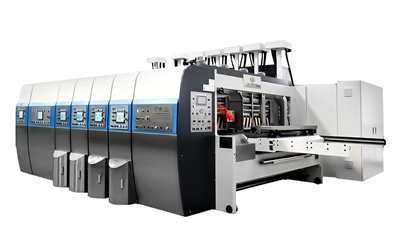
A flexo folder gluer machine is one of the largest capital investments a corrugated box plant can make. For many plant managers, the decision to purchase a flexo folder or a flexo gluer machine comes down to one question: how long until it pays for itself? This guide provides a data‑driven ROI analysis for upgrading from a manual or semi‑automatic finishing line to a modern high speed flexo folder gluer or flexo printer folder gluer.
Unlike simple price comparisons, this analysis quantifies real savings across labor, waste, energy, and throughput. It includes a step‑by‑step payback calculation model, real‑world case examples, and a breakdown of the variables that most affect your return on investment.
For a basic introduction to what an FFG is and how it works, read 《The Guide of the Flexo Folder Gluer (FFG)》.

1. Baseline: Production Costs Without an FFG
To measure the ROI of any flexo folder gluer machine, you must first establish a baseline. This section describes a typical manual or semi‑automatic corrugated finishing line that produces printed, slotted, folded, and glued boxes using separate machines and manual handling.
1.1 Typical Manual Line Configuration
| Process Step | Equipment | Operators Required |
|---|---|---|
| Feeding | Manual or semi‑auto feeder | 1 |
| Flexo printing | Standalone flexo printer (1–2 colors) | 1 |
| Slotting / die‑cutting | Separate slotter or die‑cutter | 1 |
| Folding & gluing | Standalone folder gluer | 1–2 |
| Stacking / palletizing | Manual | 1 |
| Total operators per shift | 5–6 |
In many small to mid‑size plants, these operations are not fully synchronized. Buffers of semi‑finished blanks accumulate between stations, increasing handling time and damage risk.
1.2 Baseline Annual Operating Costs (Example: 60,000 boxes/day, 2 shifts)
| Cost Category | Calculation | Annual Cost (USD) |
|---|---|---|
| Labor (5 operators/shift × 2 shifts × $35/hr × 8 hr × 240 days) | 5 × 2 × 35 × 8 × 240 | $672,000 |
| Waste (print mis‑register, glue errors, damaged blanks) | 8% of material cost | $120,000 |
| Energy (printer + slotter + folder gluer) | 35 kW × 16 hr × 240 days × $0.12/kWh | $16,128 |
| Maintenance (multiple machines) | $25,000 | $25,000 |
| Total baseline annual cost | $833,128 |
This baseline excludes indirect costs such as work‑in‑process inventory, extra floor space, and injury claims from repetitive manual stacking.
For a detailed classification of FFG types by size and speed, see 《Types of Flexo Folder Gluers》.
2. What an FFG Changes
2.1 FFG Operating Profile
2.2 FFG Annual Operating Costs (Same Volume: 60,000 boxes/day, 2 shifts)
3. Quantified Savings by Category
3.1 Labor Savings
3.2 Waste Reduction
3.3 Energy Savings
3.4 Maintenance Savings
3.5 Space Savings (Indirect Benefit)

4. Total Annual Savings and Payback Period
4.1 Annual Savings Summary
|
Category |
Annual Saving (USD) |
|---|---|
|
Labor |
$470,400 |
|
Waste reduction |
$75,000 |
|
Energy |
$3,226 |
|
Maintenance |
$7,000 |
|
Total annual savings |
$555,626 |
4.2 FFG Purchase Price Range (2026 Estimates)
|
Machine Type |
Price (USD) |
|---|---|
|
Entry‑level FFG (standard speed, 2–3 colors) |
$200,000 – $400,000 |
|
Mid‑range FFG (high speed, 3–4 colors, semi‑auto changeover) |
$400,000 – $800,000 |
|
High‑end FFG (ultra‑high speed, 4–6 colors, full CNC) |
$800,000 – $1,800,000 |
4.3 Payback Period Calculation
Simple Payback (years) = FFG Price ÷ Annual Savings
|
FFG Price |
Annual Savings |
Payback Period |
|---|---|---|
|
$300,000 |
$555,626 |
6.5 months |
|
$600,000 |
$555,626 |
13 months |
|
$1,200,000 |
$555,626 |
26 months |
Even for a high‑end flexo gluer machine costing $1.2 million, the payback period is just over two years. For a mid‑range machine, payback is approximately one year. For an entry‑level flexo folder, payback can be as short as six months.
5. Real‑World Case Example
Plant profile: Midwest US corrugated box plant, 55,000 boxes/day, two shifts, 240 days/year. Before FFG, they used a 2‑color standalone flexo printer, a separate slotter, a semi‑automatic folder gluer, and manual stacking.
FFG installed: Mid‑range high speed flexo folder gluer with 3 colors, semi‑automatic CNC changeover, and counter‑ejector. Price: $620,000 (installed).
Results after 12 months:
| Metric | Before FFG | After FFG | Change |
|---|---|---|---|
| Operators per shift | 5 | 1.5 | –70% |
| Daily output (boxes) | 48,000 | 58,000 | +21% |
| Waste rate | 7.8% | 2.9% | –63% |
| Changeover time | 35 min | 11 min | –69% |
Annual savings (actual): $510,000 (slightly lower than the model due to lower local labor rates)
Actual payback: 14.5 months
The plant achieved full ROI in less than 15 months and continues to operate the same flexo printer folder gluer with no major repairs after three years.
6. Variables That Most Affect ROI
6.1 Daily Production Volume
6.2 Local Labor Rate
6.3 Changeover Frequency
6.4 Existing Equipment Condition
7. Common ROI Calculation Mistakes
| Mistake | Why It's Wrong |
|---|---|
| Counting only direct labor substitution | Ignores waste reduction, energy savings, and throughput gains (often 30–50% of total savings) |
| Using peak speed instead of sustained speed | Overestimates actual daily output |
| Ignoring changeover time savings | For high‑mix plants, changeover savings often exceed running speed savings |
| Forgetting indirect labor (supervision, material handling) | FFG reduces indirect labor as well |
| Assuming 100% utilization | Real FFG uptime is 85–95%; factor this in |
| Underestimating installation and training costs | These can add 10–15% to total investment |

8. Sensitivity Analysis: Best‑Case and Worst‑Case Scenarios
Assumptions for a $600,000 FFG (mid‑range).
| Scenario | Daily Boxes | Labor Rate | Waste Rate (before/after) | Payback Period |
|---|---|---|---|---|
| Best case | 100,000 | $45/hr | 10% → 3% | 8 months |
| Base case | 60,000 | $35/hr | 8% → 3% | 13 months |
| Worst case | 35,000 | $25/hr | 6% → 3% | 24 months |
Even in the worst case (lower volume, lower labor cost, already low waste), the flexo gluer machine pays for itself within two years.
9. How to Build Your Own ROI Model
Step 1 – Calculate Current Annual Cost
Step 2 – Estimate FFG Annual Cost
Step 3 – Calculate Annual Savings
Step 4 – Determine Payback
10. Conclusion
A flexo folder gluer machine delivers one of the fastest ROIs of any major equipment purchase in a corrugated box plant. The combination of labor reduction (70–80%), waste reduction (50–65%), and modest energy and maintenance savings typically yields a payback period of 12–18 months for a mid‑range high speed flexo folder gluer, and as little as 6–9 months for entry‑level models in high‑volume plants.
Even in conservative scenarios (low volume, low labor cost), payback rarely exceeds two years. The data is clear: upgrading from a manual or semi‑automatic finishing line to an integrated flexo printer folder gluer is not only a productivity improvement-it is a financially sound investment.