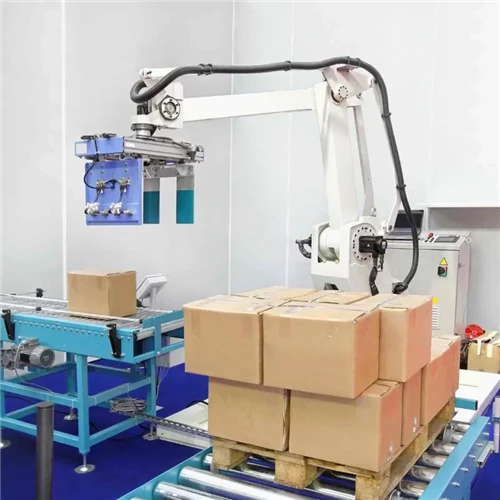
Automatic palletizing robots are the primary mechanical solution used to eliminate the severe downstream packaging bottleneck caused by the speed imbalance between high-speed flexo folder gluers (FFGs) and manual dry-end stacking crews in modern corrugated box manufacturing plants. This automated system replaces slow, manual lifting with continuous, high-speed robotic pick-and-place actions, allowing the converting line to run at its maximum rated design capacity. Implementing this heavy-duty automation directly prevents upstream machinery from ramping down, reduces physical structural sheet damage, and delivers full investment payback within 10 to 12 months. Sourcing these advanced robotic cells from trusted suppliers who prioritize robust structural engineering and comprehensive, proactive after-sales service ensures your high-volume packaging line operates at peak speed, 24/7.
Introduction: The Critical Velocity Imbalance in Modern Converting Lines
In contemporary high-volume corrugated packaging facilities, operations managers face a systemic operational mismatch: the physical speed imbalance between the wet-end corrugator or converting machinery (such as ultra-fast, multi-color flexo folder gluers (FFGs)) and the manual dry-end discharge area. While a modern FFG can seamlessly process, fold, glue, and strap up to 20,000 corrugated containers per hour-or run at sustained linear paper velocities exceeding 300 meters per minute-the human labor force at the end of the line cannot physically sustain this rate of output.
When finished, strapped bundles of shipping boxes exit the inline bundler, they must be rapidly stacked onto wooden or plastic shipping pallets. If this physical stacking step is executed manually, a critical downstream bottleneck immediately materializes. As human fatigue sets in, the inability to clear the discharge conveyor forces operators to slow down the million-dollar FFG upstream.
Read More: 《How To Reduce Downtime in Your Corrugated Box Plant: A Practical Guide》
1,Quantifying the Throughput Gap - Manual vs. Automated Stacking
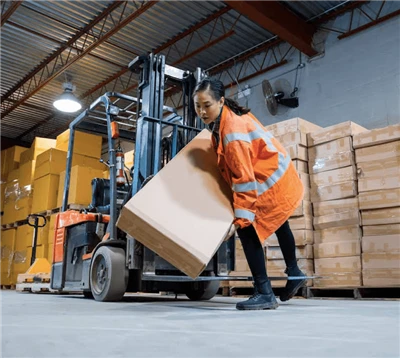
To fully appreciate the necessity of dry-end automation, plant managers must evaluate the hard physical limits of human labor against the mechanical endurance of a specialized industrial robot. Stacking corrugated bundles is highly repetitive, physically punishing work. A standard strapped bundle containing 20 to 25 double-wall or single-wall shipping cartons typically weighs between 10 kg and 18 kg. To match the output of an FFG running at full speed, a human worker must lift, rotate, and precisely position one of these heavy bundles every 2.5 to 4 seconds.
Maintaining this physical pace is impossible over a standard 8-hour shift. The table below provides a detailed technical comparison of manual labor throughput versus a dedicated heavy-duty automatic palletizing robot:
| Hard Engineering & Operational Metric | Manual Stacking Crew (3 Operators Per Shift) | Automatic Palletizing Robot Cell | Automatic Palletizing Robot Cell |
| Sustained Continuous Speed | 8 to 12 bundles per minute (highly unsustainable; peak rate drops rapidly after 90 minutes of continuous physical exertion). | 25 to 35 picking cycles per minute (utilizing heavy-duty, multi-bundle grippers to handle several units simultaneously). | The robot easily absorbs the absolute peak surge output of a high-speed FFG converting line without requiring speed reductions. |
| Operational Fatigue & Decay Curves | Stacking throughput drops by 30% to 50% during the second half of an active work shift due to human fatigue. | Absolute constant 100% operational velocity and positional precision, 24 hours a day, 7 days a week. | Eliminates the sudden, unexpected upstream backup jams that occur when manual crews fall behind the machine pace. |
| Pallet Pattern & Layer Versatility | Limited to basic, non-interlocking column stacks. Complex interlocking designs significantly slow down manual physical handling. | Unlimited, software-calculated interlocking configurations (e.g., pinwheel, spiral, block) executed on-the-fly. | Heavy, tall pallet loads remain perfectly stable during high-speed forklift transit and long-haul trailer shipping. |
| Ergonomic Safety & Worker Liability | High risk of chronic repetitive strain injuries (RSI), spinal damage, physical slips, and costly workers' compensation claims. | Zero physical risk to human operators. The entire robotic work envelope is securely enclosed within safety fencing and light curtains. | Minimizes the plant's liability insurance rates and eliminates the operational disruption caused by high labor turnover. |
| Pallet Changeover Interruptions | The production flow must be paused or routed to temporary overflow tables while empty pallets are manually positioned. | Zero-stop pallet changeover executed via integrated dual-station shuttle conveyors and automatic pallet dispensers. | Allows high-speed production lines equipped with upstream hydraulic shaftless mill roll stands and automatic paper splicers to run continuously across shifts. |
Read More: 《How to Maintain Mill Roll Stand Pneumatic Brake》
2,Advanced Engineering Features of High-Performance Robotic Palletizers
An automatic palletizing robot designed for the cardboard box making machine industry is not merely a generic robotic arm; it is a highly specialized system built to withstand the unique, harsh environment of a corrugated box plant, which is filled with abrasive paper dust, high humidity, and continuous vibration.
1. High-Performance Structural Grippers (End-Effectors)
Generic industrial grippers fail in corrugated plants because they crush the delicate flutes of the boxes, ruining the box's structural Edge Crush Test (ECT) rating. Modern robotic palletizers utilize custom-engineered fork-and-clamp end-effectors. These systems slide thin, high-strength steel forks under the bundle while pneumatic side clamps apply perfectly distributed, low-pressure holding force to the sides of the stack. Alternatively, for high-graphic, retail boxes that are highly sensitive to marking, specialized high-flow, low-vacuum plates are used to lift the entire bundle surface evenly without scuffing or crushing the paper board.
2. Precision Squaring and Centering Stations
Before the robotic arm initiates a pick cycle, the incoming strapped bundle must be perfectly square. Strapped bundles often twist or shift slightly on transit rollers. The robotic system integrates a mechanical squaring station upstream of the pick point. Pneumatic centering side-guides automatically tap the bundle from four directions, aligning the individual sheets into a flawless, rectangular block. This mechanical prep-work is vital; if the bundle is not square before the robot picks it, the final pallet stack will be unstable and visually unappealing to end-users.
3. Dynamic Pattern-Generation Software
Modern robotic palletizing systems do not require complex, line-by-line manual code programming. They utilize intuitive, recipe-driven HMI (Human-Machine Interface) software. The machine operator simply inputs the three-dimensional carton dimensions, the target pallet footprint, and the total stack height. The software instantly generates the most mathematically stable interlocking stacking pattern.
Read More: 《What Is A Corrugating Machine Splicer? A Pragmatic Introduction For Box Plant Managers》

3,Step-by-Step Integrated Dry-End Process Flow
To successfully bridge the speed gap, the robotic cell must operate in perfect, closed-loop synchronization with the upstream FFG and downstream wrapping equipment. The step-by-step technical process flow outlines how this automated dry-end system maintains continuous material velocity without mechanical interruptions:
- Folder-Gluer Discharge and Counting: The FFG folder-gluer processes the printed and slotted sheets, folding and gluing them at high speed. The internal counter-ejector counts the sheets and discharges them in precise bundle quantities (e.g., batches of 10, 20, or 25).
- Inline Strapping: The loose bundle passes immediately through an automatic, high-speed plastic strapper, which compresses the bundle and applies a tight strap to maintain structural integrity during rapid transit.
- High-Speed Accumulation Conveying: The strapped bundle is accelerated onto an accumulation roller conveyor. This conveyor acts as a physical buffer, storing several bundles to absorb any brief surges in converting speed or short pauses during pallet changes.
- Mechanical Squaring: The bundle enters the squaring station where pneumatic plates compress the four sides to ensure perfect, razor-sharp edge alignment.
- Multi-Bundle Grouping: Based on the selected stacking recipe, the system groups multiple adjacent bundles together. This allows the robotic gripper to pick two or three bundles in a single cycle, effectively multiplying the robot's physical throughput.
- Robotic Placement with Real-Time Communication: The robot arm, guided by real-time Ethernet communications (such as Profinet or EtherCAT) synced with the upstream FFG's main PLC, picks the grouped bundles and places them onto the pallet in the exact coordinate and rotation angle required for the current layer.
- Automated Pallet Swapping: An automatic pallet dispenser pre-loads an empty wooden pallet into Station B while the robot is finishing the stack on Station A. The moment the stack on Station A reaches its target height, the robot instantly switches its working zone to Station B with zero downtime.
- Discharge to Stretch Wrapper: Motorized heavy-duty chain conveyors transport the finished, unwrapped pallet stack from Station A directly into an inline automatic stretch wrapper, preparing the load for immediate warehouse storage or truck loading.
Read More: 《Paper Splicer ROI 2026: The Hard Financial Math Behind Automatic Roll Changes》
4,Financial ROI Analysis - Manual Stacking vs. Robotic Stacking
Investing in a high-performance automatic palletizing robot is a highly effective capital allocation strategy for paper packaging plants. Operating a high-speed converting line below its rated capacity to accommodate manual human labor is highly inefficient. When an FFG designed to run at 20,000 sheets per hour is dialed back to 10,000 sheets per hour due to a downstream bottleneck, the plant loses half of its potential revenue-generating capacity.
The financial table below breaks down the realistic annual cost savings and operational return on investment (ROI) achieved by transitioning from a three-shift manual labor stacking crew to a single automated robotic palletizing cell:
| Direct Expense / Asset Capitalization Category | Manual Stacking Crew (3 Shifts, 9 Total Operators) | Automated Robotic Palletizing Cell | Net Annual Operational Savings (USD) |
| Direct Labor & Overhead Expenses | $270,000 (Based on average wages, payroll taxes, healthcare benefits, and shift-differential overtime). | $5,000 (Consisting entirely of routine preventive maintenance parts, vacuum pads, and grease). | $265,000 |
| Upstream Machine Capacity Penalties | $45,000 (Estimated annual loss in unutilized capacity due to FFG machine ramp-downs and manual bottleneck stops). | $0 (The robot allows the upstream FFG to run continuously at its maximum rated output). | $45,000 |
| Product Damage & Waste Scrap | $8,000 (Annual cost of dropped bundles, crushed flutes, and torn linerboard during manual handling). | $0 (Precise pneumatic gripping and vacuum lifting completely eliminate physical product damage). | $8,000 |
| Total Combined Annual Savings | High operational overhead; constant challenges with labor recruiting, training, and workplace injuries. | Highly predictable, 100% repeatable output with minimal managerial oversight required. | $318,000 / Year |
Considering a total initial investment-including the industrial robot arm, custom gripper, squaring station, safety fencing, conveyors, and professional on-site installation-of approximately $200,000, a typical high-volume box plant will achieve complete capital amortization in less than 8 months. Over a standard 10-year machinery lifespan, this automation upgrade injects millions of dollars back into the plant's bottom line.
Read More: 《Running Low-GSM Recycled Medium: Fine-Tuning Splicer Tension Dynamics To Prevent Web Tears》
5,Selecting the Right Automation Partner for Your Dry-End Upgrade
When selecting an automatic palletizing system, smart packaging executives look beyond the initial purchase price. Automated systems run continuously in demanding environments. To guarantee long-term reliability, you must partner with a supplier who prioritizes heavy-duty structural engineering and comprehensive, proactive after-sales support over quick sales.
As an operations professional managing global machinery sourcing, I focus our brand's competitive advantage on two core pillars of excellence:
- Rigorous Mechanical Sourcing & Heavy-Duty Design: We select only those partners who utilize oversized, heavy cast-iron frames and premium European or Japanese drive components (such as Siemens PLCs, SEW-Eurodrive motors, and SMC pneumatics). This mechanical foundation ensures our systems handle high-speed robotic inertia without suffering structural fatigue over decades of operation.
- Unparalleled After-Sales Service: Since we understand that every minute of downtime costs thousands of dollars, we provide proactive, global technical support, including remote PLC diagnostics, overnight OEM spare parts delivery, and hands-on maintenance training for your plant operators. We ensure your dry-end automation remains highly optimized, long after the initial setup.
Explore how our range of automatic palletizing systems and high-speed converting machinery can maximize your plant's production capacity. Visit our Corrugated Machinery Category Page today to request a custom ROI calculation and layout design for your facility.