The Hidden Capital Leakage on Your Factory Floor
If you own or manage a corrugated box manufacturing plant, you know exactly how tight your margins are in 2026. Raw paper prices fluctuate every week, and customers are forcing you to take short-run, fast-delivery orders. To survive, you have to look at where your money is actually leaking on the shop floor.
One of the biggest financial leaks happens right at the mill roll stands. Every time a 3-ton roll of liner paper runs out, your operators face a choice. If they have to slow your high speed corrugator line down to a crawl or bring it to a complete stop just to tape the next roll by hand, your factory is losing money.
Many procurement managers hesitate to buy an automatic system because the upfront automatic paper splicer price looks high on a quote sheet. They treat it like an optional accessory. But in reality, running without a splicer is costing you thousands of dollars in wasted paper, burned boiler gas, and idle downstream labor. This guide is built to show you the exact, cold financial math behind a modern corrugating machine splicer so you can see how fast this machine actually pays for itself in a real 2026 workshop.

1,The Raw Material Audit-Plugging the Waste Paper Financial Hole
The most immediate return on investment (ROI) from an automatic paper splicer comes from stopping two types of material waste: core tail waste and over-baked board.
When workers change a paper roll manually, they never run the roll down to the bare steel core. Why? Because if they wait a second too long, the paper tail slips into the single facer, the line breaks, and it takes the crew 20 minutes of sweating to re-thread the machine. To protect themselves, operators always cut the paper early. This leaves a "tail" of 15 to 20 meters of perfectly good kraft liner on the core, which goes straight into your scrap baler. You are essentially buying raw paper at $600 a ton and selling it as scrap for $120 a ton.
Worse, when the line stops for a manual swap, the paper sitting inside the double facer corrugator stays trapped under the heavy steam plates. It gets over-baked, brittle, and warped. When you start the line back up, you have to chop out and throw away the first 40 to 60 meters of ruined board.
Let's look at the daily reality of this waste for a typical factory running without a splicer:
- Paper Left on the Core: Around 15 meters per roll change to avoid a total line blackout.
- Over-Baked Board at the Hot Plates: Around 45 meters of ruined, unbonded board chopped out after every stop.
- Total Material Loss per Change: 60 meters of high-quality paper and board.
- The Shift Multiplier: If your shop runs medium or short-run orders, you change rolls about 12 times per 10-hour shift. That equals 720 meters of trash paper every single day.
In a standard 26-day working month, your crew is throwing away 18,720 meters of usable material. An automatic splicer handles this by cutting and catching the paper in less than 0.5 seconds, reducing your changeover waste to less than 1 meter of paper.

2,The 2026 Downtime Math-Line Momentum vs. Kinetic Energy Costs
A corrugated production line is a massive thermal engine. It relies on steady, continuous speed to maintain the proper heat and moisture balance. When you brake the line to a complete stop for a manual change, you destroy this equilibrium.
The financial loss of a stop isn't just the minutes the machine stands still; it is the energy spike required to get it moving again. When the heavy steam cylinders and mechanical drives have to ramp back up from zero to full speed, your boiler gas and electricity consumption experience a massive surge.
The table below provides a realistic breakdown of the operational costs of manual stop-and-go production versus running a continuous line with an integrated splicing matrix.
Manual Downtime vs. Automatic Splicing ROI Performance (2026 Baseline)
| Operational Variable (Per 2-Shift Day) | Manual Roll Swaps (No Splicer) | Automatic Splicer Integration | Annualized Savings / Factory Profit Impact |
| Daily Cumulative Downtime | 72 - 96 Minutes (Stopped or crawling) | 0 Minutes (Maintains constant speed) | Recovers up to 416 hours of active running time every year. |
| Daily Lost Board Output | 12,000 - 18,000 Square Meters | 0 Sqm Lost | Increases your plant's total annual capacity without changing your rent. |
| Boiler Energy / Steam Surge Cost | High (Massive fuel spikes to reheat stalled cylinders) | Constant, Linear Draw | Reduces monthly factory gas/electricity consumption by 8.5% - 11%. |
| Downstream Machine Starvation | High (Die-cutters and folder-gluers stand idle waiting for board) | Zero Starvation | Maximizes the ROI of your cardboard die cutting machine lines by keeping them fed. |
| Average Operational Scrap Rate | 3.2% - 4.5% of total paper input | Less than 0.4% | Drastically improves your factory's yield and efficiency metrics. |

3,Labor Cost Savings & The Real Risk of Workplace Injury Claims
In 2026, factory labor is not just an expense; it is a management headache.
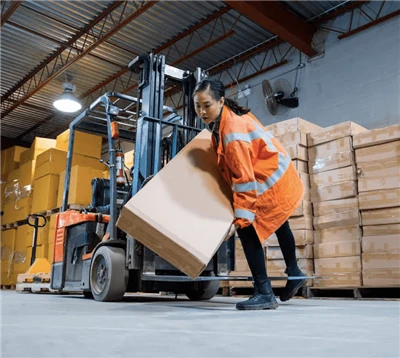
If your workshop relies on manual paper changes, you must keep at least two strong operators stationed at the mill roll stands at all times. Their entire job is to watch the paper roll drop, rush in with knives, pull heavy 200 GSM liner paper by hand, and slap tape down under intense time pressure.
From a strict corporate finance perspective, this introduces two major liabilities to your shop floor:
- Non-Productive Wages: Running a 2-shift daily operation requires four dedicated handlers just to manage manual roll changes. This adds a massive, fixed labor cost to your monthly overhead. An automatic paper splicer automates this entire sequence, allowing a single fork-truck operator to pre-prep rolls for three stands simultaneously while doing his normal material handling work.
- The Injury Liability: Manual splicing is a high-risk zone for severe workplace accidents. Workers are handling knives and touching heavy paper right next to spinning steel shafts and pneumatic chucks. A single caught hand or severed finger doesn't just halt your line for a day; it triggers medical payouts, insurance premium spikes, and safety audits that can freeze your production for weeks.

4,The 12-Month Forensic Payback Calculation
To see if this upgrade makes sense for your cash flow, let's calculate a real-world financial model. Below is a standard 2026 cost sheet for a factory running a 1.8-meter-wide corrugator at an average speed of 150 m/min, executing 15 roll changes per 24-hour day over 300 working days a year.
Forensic Annual Savings Breakdown (2026 Baseline Costing)
| Financial Loss Category | Manual Waste Math (Per Year) | Splicer Savings Performance | Real Dollars Recovered |
|
Raw Paper Tail Waste (Based on $600/ton market paper) |
15m left on core × 15 changes × 300 days = 67,500 meters of wasted liner. |
Splicer reduces core waste to less than 0.5m | $16,200 USD saved directly in raw paper costs. |
|
Scorched Board Scrap (Baked inside the double facer) |
45m chopped out × 15 changes × 300 days = 202,500 meters of trash board. |
Eliminates slow-downs, keeping thermal balance perfect. | $48,600 USD saved by preventing board scrap. |
|
Boiler Energy Spikes (Gas/Steam consumption surges) |
Reheating chilled cylinders after 15 stops daily = Massive monthly fuel efficiency loss. |
Line runs continuously, maintaining stable heat draw. | $8,400 USD cut directly from your utility bills. |
|
Downstream Idling Time (Starving the finishing lines) |
5 mins stopped × 15 changes × 300 days = 375 hours of zero output. |
Keeps your automatic flute laminator fed. | $18,000 USD in recovered billable machine hours. |
| Total Annual Capital Leakage: | $91,200 USD thrown away. | 95% Waste Reduction | $86,640 USD Net Annual Profit |
5,Is the Investment Justified?
If you look at the standard automatic paper splicer price on the market today, a reliable, heavy-duty pneumatic zero-speed unit generally requires an investment of around $40,000 to $65,000 USD per mill roll stand, depending on your (web width) specifications.
When you compare that initial equipment expenditure against our forensic table showing $86,640 USD in recovered cash per year, the financial conclusion is clear: The machine completely pays for itself within 7 to 9 months of active operation.
Every month you delay this upgrade, you aren't saving money; you are simply allowing your factory floor to bleed profit straight into the scrap bin. If you want to protect your margins, stabilize your board flatness, and keep your production running at peak capacity, installing an automatic splicer is the smartest financial decision you can make for your packaging plant this year.