In the high-speed world of a modern corrugated paperboard production line, "flatness" is the ultimate benchmark of quality. A perfectly bonded board is economically useless if it exits the line shaped like a banana or a potato chip. This physical defect, known as warping, is the single greatest cause of unplanned downtime in the conversion stage.
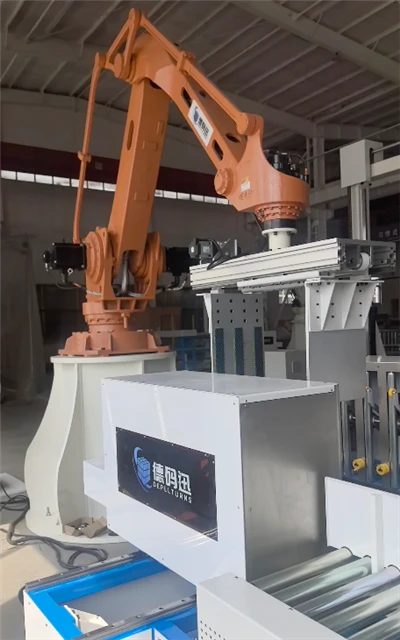
If the board is not flat, the thin blade slitter scorer will produce crooked cuts and uneven scoring lines. Even more critical in 2026, warped boards are the primary enemy of the automatic palletizing robot. These robotic systems rely on a flat, predictable surface for vacuum suction or mechanical clamping. A warped board leads to dropped loads, sensor misreads, and catastrophic interruptions in the final packaging stage. The battle against warping is won or lost through precise temperature control within the double facer corrugated machine.

The Physics of Warping: Moisture and Thermal Stress
Warping is fundamentally a crisis of moisture equilibrium and thermal expansion. Corrugated board is a multi-layered composite; if one layer shrinks or expands at a different rate than the others during the drying process, the entire structure curls.
The Moisture Gradient Challenge
Inside the double facer corrugated machine, we bond the single-face web to the bottom liner. If the moisture content of the top liner differs significantly from the bottom liner, they will react differently to the heat of the steam plates. As the board cools after exiting the 21-meter heating section, the drier side contracts more than the wet side, pulling the board into a curve.
Common Warp Profiles:
- Up-Warp (Concave): The board curves upward. This typically indicates the top liner is too dry or the bottom liner is too wet.
- Down-Warp (Convex): The board curves downward, often caused by excessive heat on the bottom plates or a bottom liner that has lost too much moisture.
- S-Warp: The most complex profile, usually caused by inconsistent moisture distribution across the width of the paper roll.
Advanced Temperature Control in the Double Facer
To prevent warping, the double facer corrugated machine must function as a precision thermal regulator, not just a heater. In 2026, granular control over heat transfer across the entire 21,000mm heating section is a technical necessity.
Zone-Based Heat Management
Modern high-output lines utilize segmented heating zones. Our 21-meter drying section is engineered to allow for distinct temperature gradients:
- The Bonding Zone: High heat to trigger immediate starch gelatinization.
- The Evaporation Zone: Controlled heat to manage moisture removal without scorching fibers.
- The Stabilization Zone: Gradually lower temperatures to prevent "thermal shock" when the board meets ambient air.
The 47-Ton Structural Advantage
Why does machine weight influence temperature? Thermal expansion exerts massive force on equipment. In lighter machines, steam plates can physically "bow" or warp when heated, creating uneven contact. A machine with a 47-ton chassis provides the structural rigidity required to keep the plates perfectly parallel. This ensures uniform heat transfer, which is the only way to prevent the localized "hot spots" that trigger S-warp.

Performance Matrix: Built for Flatness and Stability
The following specifications represent our 2026 flagship series. Every model utilizes the standardized 21,000mm length to ensure a gentle thermal gradient-the most effective defense against warping.
| Model Width (mm) | Total Machine Weight (T) | Heating Path (mm) | Motor Power (KW) | Warp Prevention Grade |
| 1400 | 38 | 21000 | 4 | High Precision |
| 1600 | 40 | 21000 | 4 | Industrial Standard |
| 1800 | 42 | 21000 | 4 | Export Quality |
| 2000 | 44 | 21000 | 4 | High-Speed Stable |
| 2200 | 46 | 21000 | 4 | Heavy-Duty |
| 2300 | 47 | 21000 | 4 | Flagship Maximum |
Operational Protocols for a Flat Board
Even the best double facer corrugated machine requires a strategic operator. Here is the 2026 protocol for maintaining board flatness.
A. Pre-Heater Calibration
The pre-heaters are your first line of defense. If you notice Up-Warp, increase the wrap angle on the bottom liner pre-heater to remove moisture before it enters the double facer corrugated machine. Conversely, for Down-Warp, reduce the heat exposure on the bottom liner.
B. Speed-Synced Steam Pressure
Our 4KW motor system ensures smooth speed transitions, which is vital for thermal balance. Temperature control must be "speed-synced." If the line slows down, the board spends more time on the hot plates. Without an automatic reduction in steam pressure, the board will over-dry and warp instantly.
C. The 21-Meter Tapered Cooling
The final 5 meters of a 21-meter heating section are critical for "setting" the board. By slightly reducing the temperature of the final plates, you allow the paper fibers to stabilize while still under the mechanical pressure of the weight rollers. This prevents the "spring-back" effect that causes curling the moment the board is released.
Downstream Impact: The Palletizing Crisis
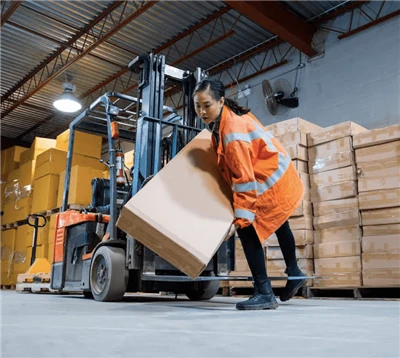
Why is a 5mm warp a deal-breaker? Because of the automatic palletizing robot.
In modern corrugated paperboard production lines, the palletizing stage is the ultimate bottleneck if board quality is low. Robotic palletizing systems use high-speed optical sensors to locate and grab boxes. If a box is warped:
- Suction Failure: Vacuum grippers cannot form a seal on a curved surface, leading to dropped products.
- Stack Instability: Warped boards create "leaning" pallets that are dangerous to transport and rejected by high-end logistics centers.
- Sensor Errors: The robot's AI may misidentify a warped edge as a "crushed box," triggering an emergency stop.
By mastering double facer temperature control, you aren't just making better paperboard; you are protecting your entire investment in downstream automation.
Maintenance for Thermal Precision
To maintain peak performance in your double facer corrugated machine, follow this routine:
- Plate Surface Audit: Monthly removal of carbon or glue buildup is mandatory. Buildup acts as an insulator, creating "cold spots."
- Steam Trap Inspection: A clogged trap allows condensate to fill the plate. A water-filled plate is a cold plate, and cold plates cause warping.
- Parallelism Check: Use a laser level to ensure the pressure system is perfectly parallel to the plates. Even a 0.2mm deviation causes uneven heat transfer.
Engineering the Foundation of Flatness
Warping prevention in the corrugated paperboard production line is a science of balance. It requires a machine capable of delivering high-mass pressure and a sophisticated temperature gradient.
By utilizing the 21,000mm heating path and the 47-ton stability of a modern double facer corrugated machine, operators have the time and structural support to manage moisture correctly. When the board exits the line flat, every subsequent process-from the thin blade slitter scorer to the automatic palletizing robot-can operate at maximum velocity.