The corrugated stitching machine has evolved far beyond a simple box‑closing tool. In 2026, it stands at the intersection of surging e‑commerce demand, acute labor shortages, rapid technological change, and stringent sustainability regulations. Driven by automation, artificial intelligence, and the rise of integrated finishing lines, the box stitching machine market is undergoing its most significant transformation in decades.
The global box stitching machine market was valued at USD 1.2 billion in 2024 and is forecast to reach USD 2.15 billion by 2033, growing at a robust CAGR of 6.7% (MarketIntelo 2025). However, this growth is not uniform across all machine types. The semi‑automatic and fully automatic segments, in particular, are growing at annual rates exceeding 12%, concentrated in high‑growth regions such as Asia‑Pacific manufacturing hubs and logistics‑driven markets across Europe and the Americas (Alibaba Industry Insights 2026).
This report examines seven major trends shaping the corrugated stitching machine market in 2026. Each trend is presented with data tables and bullet points for clarity, while retaining full depth of analysis.
Read More: 《The Guide of Stitching Machine》
Read More: 《What Are the Types of Corrugated Stitching Machine》
Read More: 《How to Choose a Corrugated Stitching Machine》

Market Overview at a Glance (2026)
| Indicator | Value |
|---|---|
| Global box stitching machine market (2024) | USD 1.2 billion |
| Forecast (2033) | USD 2.15 billion |
| CAGR (2024–2033) | 6.7% |
| Semi‑auto / fully auto segment growth rate | >12% (twice the market average) |
| Fastest‑growing regions | Asia‑Pacific (China, India), Europe & Americas (automation) |
| Key drivers | E‑commerce, labor shortage, sustainability regulations |
Trend 1 – Automation Accelerates: From Operator‑Dependent to Operator‑Light
Why automation is accelerating
- Labor shortages have become chronic. Turnover rates in finishing departments often exceed 50% annually.
- Fully burdened labor costs rose 15–20% since 2020 in many regions (US, EU, China coastal areas).
- E‑commerce requires consistent quality and high throughput across multiple shifts.
- Investor pressure to improve OEE and reduce waste.
Comparison: Semi‑Automatic vs. Fully Automatic Stitching Lines
| Parameter | Semi‑automatic | Fully automatic (inline) |
|---|---|---|
| Output per shift (boxes) | 800–6,000 | >5,000 (often 200–500 boxes/hour) |
| Operators per shift | 1–2 | 1 (can monitor multiple lines) |
| Changeover time | 10–20 minutes | 3–8 minutes |
| Payback period (high‑wage region) | 18–24 months | 12–18 months |
| Typical waste per job change | 20–50 boxes | 5–15 boxes |
| Suited for daily volume | <6,000 boxes | >5,000 boxes |
What is happening at trade shows
- SinoCorrugated South 2026 (Shenzhen, April 15–17, 2026) dedicated large floor space to fully automatic feeding‑folding‑stitching‑stacking lines.
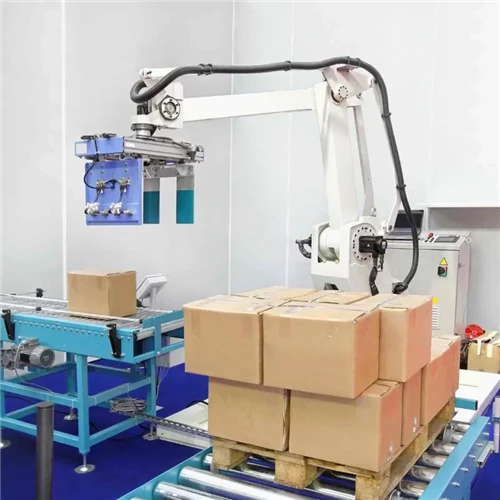
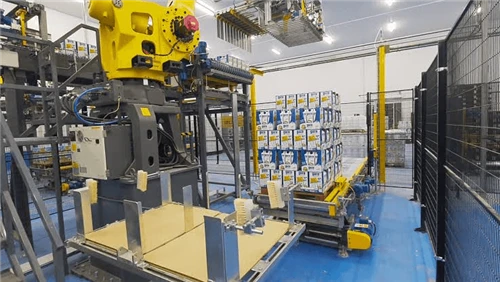
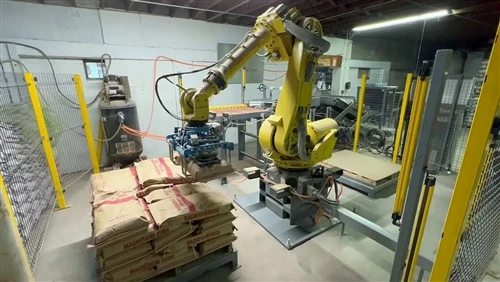
- Live demonstrations showed minimal human intervention. Many booths integrated stitchers with pre‑feeders, counter‑ejectors, and even robotic palletizers.
Automation features becoming standard even on semi‑auto machines
- Motorized head positioning (no wrenches)
- Automatic stitch spacing adjustment based on box length
- Integrated counting and batch control
- Touchscreen HMI with job memory (store 50–200 recipes)
Payback example (US Midwest, 2 shifts, labor $35/hr fully burdened)
- Investment: Fully automatic stitching line 120,000(vs.semi‑auto120,000(vs.semi‑auto25,000)
- Annual labor saving: 2 operators × 35×16hr×240days=35×16hr×240days=268,800 → $134,400 after automation
- Waste reduction: 30 boxes/day × 0.50×240=0.50×240=3,600
- **Net annual saving: 137,600∗∗→Payback:137,600∗∗→Payback:95,000 incremental / $137,600 = 8.3 months
Trend 2 – Integrated Stitching‑Gluing Lines (Hybrid)
Why hybrid?
- Glue gives a clean, seamless appearance – essential for retail and e‑commerce boxes that are seen by consumers.
- Stitches provide mechanical strength for heavy loads – critical for industrial packaging and rough shipping.
- Hybrid solves the "strength vs. appearance" trade‑off.
Comparison of fastening methods
| Method | Appearance | Mechanical strength | Recyclability impact | Best application |
|---|---|---|---|---|
| Glue only | Excellent (no marks) | Moderate (depends on glue & board) | Adhesive residue may lower recycling grade | Retail, light duty, food packaging |
| Stitch only | Visible staples | Very high (metal) | Metal easily removed in pulping | Heavy industrial, agricultural, double‑wall |
| Stitch‑glue hybrid | Clean + small staple marks | Highest (glue + metal) | Minimal glue + metal | E‑commerce, heavy loads, export, mixed runs |
Real‑world example
- MEPL (Jalna, India) displayed "the world's first integrated stitching and gluing machine" at CorruPack 2026 in Pune.
- The machine offers automation capabilities that, according to the company, exceed current technical capabilities of international manufacturers (PrintWeekIndia 2026).
Output gains reported by converters
- Customers adding stitching modules to existing folder‑gluers report 30–50% output gains for heavy‑duty boxes compared to glue‑only or stitch‑only alternatives.
- For a plant producing 10,000 heavy boxes per day, a 40% gain equals 4,000 extra boxes daily.
Additional benefits
- Reduced floor space (no separate glue and stitch stations) – saves 20–30% of finishing area.
- Easier operator training (one line to master instead of two).
- Inline counting and strapping often available as integrated options.
Trend 3 – AI and Servo Intelligence: The Smart Stitcher
Key intelligent features now available
| Feature | How it works | Benefit |
|---|---|---|
| Auto‑adjust stitch spacing | Servo‑driven heads reposition based on box length input | 70% reduction in setup time (from 15 min to <5 min) |
| Real‑time clinch monitoring | Camera or force sensor detects incomplete staple formation | Automatic rejection of defective boxes; prevents downstream jams |
| Predictive maintenance (AI diagnostics) | Monitors wire tension, head vibration, bearing temperature | 40–60% reduction in unplanned downtime |
| Remote diagnostics / OTA updates | Manufacturer connects via internet to troubleshoot | Less need for on‑site service visits; faster resolution |
| Energy‑optimized drive systems | Intelligent motor control adjusts power to load | 15–20% lower power consumption vs. fixed‑speed motors |
Example supplier
- Keshenglong & Shinko (Asia) integrates AI‑assisted diagnostics into its automated stitching lines. The system predicts maintenance needs before failures occur.
Retrofit market for older machines
- For less than USD 5,000, add IoT sensors + cloud gateway to legacy stitchers.
- Monitor: throughput (boxes/hour), wire waste (grams per 1,000 stitches), MTBF (mean time between failures).
- Turn legacy equipment into data nodes that feed into plant MES.
Data from digitized stitching lines (first year after implementation)
- OEE improvement: 10–15%
- Unplanned downtime reduction: 20–30%
- Changeover sequence optimization: system learns best job order, reducing total changeover time by 15–25%

Trend 4 – Heavy‑Duty and Large‑Format Stitchers Gain Ground
Why heavy‑duty demand is rising
- Industrial packaging (auto parts, machinery, chemicals, furniture) uses double‑wall / triple‑wall board (5–12 mm thick).
- Glue alone often fails on heavy board because:
- Dust or oil on recycled board reduces adhesion.
- High stacking loads (up to 2,000 kg) cause glued flaps to separate.
- Stitches provide reliable mechanical fastening.
New heavy‑duty models launched in 2025–2026
| Manufacturer / Model | Heads | Speed | Max working width | Key feature |
|---|---|---|---|---|
| HCL double‑head heavy‑duty | 2 | 500 stitches/min | – | Up to 200 boxes/min; ISO & CE certified |
| DGM Tfold Pro | – | 150 m/min | 2000 / 2400 / 3000 mm | Servo direct drive, high precision |
| AOPACK (WEPACK 2026) | – | – | – | "Heavy‑duty + automation‑ready" |
| Other Chinese brands | 1–2 | 300–450 stitches/min | Up to 2,800 mm | Often 40–60% lower price than European |
Trend observation
- Heavy‑duty stitching is no longer a niche segment. It is a growth market with increasing automation integration.
- Large‑format stitchers (width >2,400 mm) are being integrated with automated material handling: pre‑feeders for large blanks and stackers that handle heavy boxes.
Application example
- Furniture box: 2,000 mm wide, triple‑wall board, weight of contents 50 kg. A stitched box survives stacking of 5 pallets high; a glued‑only box fails at 3 pallets.
Trend 5 – Digitalization, IoT, and the Connected Stitching Line
Connectivity platforms for stitching equipment
| Platform | Provider | Function |
|---|---|---|
| Helios (SaaS) | SUN Automation Group | Real‑time OEE, waste %, wire consumption, predictive maintenance |
| PLC analytics | Amarjeet Industries (India) | Production tracking, downtime analysis, quality reporting |
| Generic IoT retrofit | Various (e.g., Bosch, Siemens) | Head vibration, bearing temperature, wire tension monitoring |
How connectivity improves stitching operations
- Real‑time OEE tracking identifies productivity bottlenecks (e.g., upstream folder too slow, excessive changeover time).
- Predictive maintenance alerts prevent catastrophic failures (e.g., worn head bearing detected 2 weeks before failure).
- Data‑driven job scheduling learns optimal changeover sequences to minimize downtime.
Measurable benefits (first year after full implementation)
- OEE improvement: 10–15% (from 65% to 75% typical)
- Unplanned downtime reduction: 20–30%
- Changeover time reduction: 15–25% through optimized job sequencing
What to look for when buying new equipment
- Open communication protocols: OPC‑UA or MQTT (not proprietary locked systems).
- Ability to export data to your existing MES or ERP.
- Avoid machines that become "blind spots" in your plant network.
Trend 6 – Sustainability Drives Demand for Stitching Over Gluing
Key regulations pushing packaging recyclability
| Regulation | Region | Key requirement | Impact on fastening |
|---|---|---|---|
| PPWR (EU) 2025/40 | European Union | Packaging must be designed for recyclability; adhesive residues can lower recycling grade | Stitching preferred; hybrid acceptable |
| California SB 54 | USA (California) | 100% of single‑use packaging recyclable or compostable by 2032 | Similar pressure |
| Canada Single‑use Plastics Prohibition | Canada | Ban on certain plastic packaging by late 2025 | Substitution with corrugated → heavier boxes → need stitching |
Why stitching is more recyclable than gluing
Adhesive residues (even water‑based) can:
- Contaminate the recycled pulp, causing spots and reducing fiber strength.
- Require additional screening steps in the recycling process.
- Lower the recyclability grade under PPWR classification (A–E scale).
Metal staples are easily removed by magnets during pulping, leaving no residue.
Customer demand shift (September 2025 survey of European corrugated converters, n=150)
- 42% reported that brand owners requested stitched or hybrid construction specifically for recyclability reasons.
- 28% said customers asked for pure stitched boxes (no glue).
- Only 12% of converters expected glue‑only packaging to be accepted for certain heavy‑duty applications by 2028.
Plastic substitution effect
- As plastic clamshells and trays are replaced by corrugated alternatives (e.g., for electronics, power tools, fresh produce), the resulting boxes are often heavier and require stitching for structural integrity.
- This directly drives demand for heavy‑duty and large‑format stitchers.

Trend 7 – Regional Dynamics: Asia‑Pacific Leads, China Exports, India Innovates
Regional comparison table
| Region | Market share (approx.) | Characteristics | Key players / trends |
|---|---|---|---|
| Asia‑Pacific (China) | 38% | Export powerhouse, price 40–60% lower than European | HCL, DGM, AOPACK; ISO/CE certified; quality gap narrowing rapidly |
| Asia‑Pacific (India) | 12% | Innovation hub, high‑mix + price‑sensitive | MEPL (stitch‑glue hybrid); PLI scheme supports local manufacturing; growing exports |
| Europe | 22% | Premium automation, TCO‑focused, high labor cost | German/Italian brands dominate ultra‑high‑speed segment; Chinese brands gaining share in semi‑auto tier |
| North America | 18% | Similar to Europe, strong reshoring trends | MarquipWardUnited, SUN Automation; plus imported Chinese machines |
| Rest of world | 10% | Emerging markets (Latin America, Africa, Middle East) | Mostly imported Chinese equipment |
Key trade shows in 2026
- SinoCorrugated South 2026 – Shenzhen, China (April 15–17)
- CorruPack 2026 – Pune, India (February)
- WEPACK 2026 – Global (multiple locations)
- SuperCorrExpo 2026 – Orlando, USA (September)
Strategic implications for buyers
- From Europe/North America: Consider Chinese semi‑auto stitchers for non‑critical lines – up to 60% cost saving with acceptable quality.
- From emerging markets: Indian and Chinese brands offer the best price‑to‑performance ratio; check local service availability.
- For exporters: Buy ISO/CE certified machines to avoid customs delays.
Strategic Recommendations for Box Plant Operators (2026–2030)
| Recommendation | Why | Action items |
|---|---|---|
| Invest in flexibility | Machines that handle multiple box sizes, board grades, and fastening modes (stitch‑only, glue‑only, hybrid) deliver the best long‑term value. | Specify adjustable heads, job memory, and quick‑change clinch plates. |
| Prioritize connectivity | Avoid "blind spot" machines that cannot integrate with your MES/ERP. Data reduces waste and downtime. | Require OPC‑UA or MQTT; budget for IoT gateway and analytics dashboard. |
| Watch Asia‑Pacific supply | Chinese and Indian brands are rapidly improving quality while maintaining price advantages – ideal for startups or non‑critical lines. | Request on‑site demo with your own board; check ISO/CE certs; ask for regional references. |
| Consider hybrid (stitch‑glue) | For e‑commerce or mixed production, hybrid gives both strength and appearance. | Evaluate integrated line vs. retrofit module; compare TCO over 5 years. |
| Plan for sustainability | Regulations (PPWR, SB 54) will favor stitched or low‑adhesive packaging. | Test stitched samples with your recycling partner; document recyclability claims. |
Conclusion
In 2026, the corrugated stitching machine is no longer a low‑tech commodity. It has become a precise, connected, and increasingly intelligent tool at the heart of automated, sustainable box plants.
The seven trends covered in this report – automation acceleration, integrated stitch‑glue lines, AI‑driven intelligence, heavy‑duty solutions, IoT connectivity, sustainability pull, and regional dynamics – are reshaping the market. Box plants that invest in flexible, data‑capable equipment and leverage value‑oriented Asian suppliers will be best positioned for the coming decade.