1. Introduction
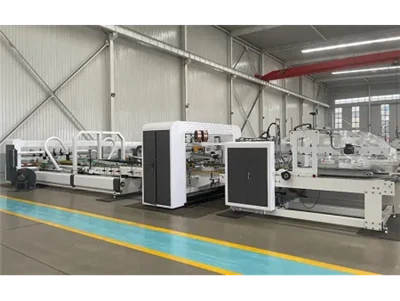
A stitching machine – also called a box stitcher or carton stitcher – is one of the oldest and most reliable pieces of finishing equipment in a corrugated box plant. Unlike folder gluers that use adhesive, a stitching machine joins box flaps with metal staples (stitches). This method creates a mechanical bond that is especially strong and resistant to rough handling.
Stitching is not a replacement for gluing. It serves a different purpose. While glued boxes are clean and suitable for retail display, stitched boxes are preferred for heavy-duty shipping, industrial packaging, and applications where box strength matters more than appearance. A stitching machine for corrugated box production remains essential for many converters, particularly those serving agricultural, automotive, and heavy industrial sectors.
This guide covers the definition, working principle, types, key components, technical specifications, applications, and selection criteria for stitching machines. It focuses mainly on semi-automatic models, which represent the vast majority of machines in use today.
Read More: 《Folder Gluer vs. Stitching Machine: Which One Do You Need?》

2. What Is a Stitching Machine?
A carton stitcher machine is a mechanical device that drives metal staples (stitching wire) through overlapping flaps of a corrugated box to fasten them together. The staple passes through the flaps and is clinched (folded) on the opposite side, creating a secure, permanent joint.
Stitching is a cold process – no heat or glue is involved. It works equally well on recycled board, double-wall, and triple-wall corrugated board where adhesives may struggle to bond due to surface dust or oil contamination.
The box stitching machine is available in three main automation levels:
- Manual stitcher: Operator positions the box and activates the stitch by foot or hand lever. Very slow, used only for repair or very low volume.
- Semi-automatic stitcher: Operator folds the box and feeds it into the machine; the machine drives the stitch automatically when the box is correctly positioned. This is the most common type.
- Fully automatic stitcher (often integrated with folder gluer): Automatic feeding, folding, and stitching. Typically part of a folder gluer stitcher line.
3. How a Semi-Automatic Stitching Machine Works
The working process of a typical semi-automatic box stitching machine can be broken into six steps:
- Box folding: The operator manually folds a flat die‑cut or slotted blank into its box shape, overlapping the flaps that need to be stitched.
- Positioning: The operator places the overlapped flaps under the stitching head, aligning them with the staple guide.
- Activation: The operator presses a foot pedal or a button. On some machines, a sensor detects the box and triggers automatically.
- Stitch driving: The stitching head drives a pre-formed staple through the flaps.
- Clinching: The staple legs are folded outward (clinched) against a clincher plate on the underside of the work table.
- Box removal: The operator removes the finished box and repeats.
Cycle time depends on operator skill and box size. A skilled operator can stitch 15–30 boxes per minute on a single-head machine and 25–40 boxes per minute on a double-head machine.
4. Types of Stitching Machines
4.1 By Number of Stitching Heads
|
Type |
Description |
Speed (cycles/min) |
Best for |
|---|---|---|---|
|
Single head |
One stitching head. Operator must reposition the box for a second stitch if needed. |
30–60 |
Small boxes, light duty, intermittent use |
|
Double head |
Two heads spaced apart. Both fire simultaneously, placing two staples in one operation. |
50–120 |
Medium to large boxes, higher volume |
A double head stitcher can significantly increase throughput. For a standard regular slotted carton (RSC) that requires two staples per side, a single-head machine requires two operations (two box repositionings) while a double-head machine completes both staples in one cycle.
4.2 By Maximum Box Size
|
Size Class |
Max Box Blank Width |
Typical Box Types |
|---|---|---|
|
Small |
Up to 800 mm |
E‑commerce cartons, small parts boxes |
|
Medium |
800–1,600 mm |
Standard RSC shipping boxes |
|
Large |
1,600–2,400 mm |
Industrial boxes, appliance packaging |
|
Extra‑large |
2,400+ mm |
Furniture, bulk containers |
A heavy duty box stitcher typically falls into the large or extra‑large category, with heavier frame construction and higher clinching force to handle double‑wall or triple‑wall board.
4.3 By Drive Type
-
Electric motor drive: Most common. A motor rotates a cam that drives the stitching head. Reliable and easy to maintain.
-
Pneumatic drive: Uses compressed air to drive the head. Offers faster cycling but requires a stable air supply (0.6–0.8 MPa).

5. Key Components of a Stitching Machine
| Component | Function |
|---|---|
| Stitching head | Contains the mechanisms that form, drive, and clinch the staple. The most critical part. |
| Wire spool holder | Holds a coil of galvanized stitching wire. |
| Wire straightener | Removes curvature from the wire before it enters the head. |
| Feed mechanism | Pulls wire from the spool and advances it to the forming die. |
| Clincher plate | Located under the work table; folds the staple legs outward. |
| Work table | Supports the box; often has adjustable guides for different box sizes. |
| Depth stop / edge guide | Positions the box so the staple is placed at the correct distance from the flap edge. |
| Foot pedal / control system | Activates the stitch. On pneumatic machines, a solenoid valve controls air flow. |
6. Stitching Wire Specifications
| Parameter | Typical Range | Notes |
|---|---|---|
| Wire diameter | 0.5–0.8 mm (BWG 24–21) | Thicker wire for heavier board |
| Material | Galvanized low‑carbon steel | Zinc coating prevents rust |
| Tensile strength | 350–550 N/mm² | Higher strength for double‑wall |
| Spool weight | 10–50 kg | Large spools reduce change frequency |
The cost of stitching wire is a significant operating expense. A stitching machine price should always be evaluated together with wire cost per thousand staples.
7. Technical Specifications to Evaluate
When comparing stitching machine for corrugated box models, request the following data:
| Specification | What to Check |
|---|---|
| Max box blank width | Must cover your largest box |
| Min box blank width | Must handle your smallest box |
| Max board thickness | Single‑wall (5–7 mm), double‑wall (7–10 mm), triple‑wall (10–12 mm) |
| Number of heads | 1 or 2 |
| Stitching speed (cycles/min) | Sustained speed, not peak |
| Staple leg length | 10–20 mm; longer leg for thicker board |
| Staple crown width | 12–20 mm typical |
| Power consumption | 0.5–2 kW for electric; air consumption for pneumatic |
| Table height adjustability | Ergonomics matter for operator fatigue |
Read More: 《The Guide of the Flexo Folder Gluer (FFG)》
8. Applications of Stitching Machines
Stitching is preferred over gluing in several scenarios:
| Application | Why Stitching |
|---|---|
| Heavy industrial boxes | Mechanical bond withstands rough handling and stacking |
| Agricultural packaging (fruit, vegetables) | Board may be dusty or waxed; glue fails |
| Double‑wall and triple‑wall containers | Adhesive penetration is inconsistent on thick board |
| Short runs / custom orders | Lower capital investment than a glue line; no warm‑up time |
| Reinforcing glued boxes (stitch + glue) | Adds extra strength for heavy loads |
A heavy duty box stitcher is essential for plants that regularly produce containers for automotive parts, machinery, chemicals, or produce.

9. Stitching vs. Gluing: When to Choose Which
| Factor | Stitching | Gluing |
|---|---|---|
| Joint strength | Very high, mechanical | High, depends on glue and surface |
| Appearance | Visible staples | Clean, seamless |
| Board surface tolerance | Works on dusty, oily, waxed board | Requires clean, absorbent surface |
| Speed (semi‑auto) | 30–120 boxes/min (operator dependent) | 80–400 boxes/min (machine dependent) |
| Cost per box (consumable) | Higher (wire) | Lower (glue) |
| Equipment cost (semi‑auto) | $5,000–$30,000 | $50,000–200,000+ |
| Operator skill required | Moderate | Low for automatic, high for semi |
Many box plants keep both a carton stitcher machine for heavy or short‑run work and a folder gluer for high‑volume retail boxes.
10. How to Choose a Stitching Machine
10.1 Determine Your Box Size and Board Type
-
Measure your largest and smallest box blank.
-
Identify your typical board grade (single‑wall, double‑wall, triple‑wall).
10.2 Estimate Daily Volume
-
<1,000 boxes/day → single head, electric drive.
-
1,000–5,000 boxes/day → single head with fast cycling or double head.
-
5,000 boxes/day → consider fully automatic folder gluer stitcher line.
10.3 Decide on Number of Heads
-
Single head: lower cost, slower, requires two passes for two staples.
-
Double head: higher cost, twice as fast for RSC boxes.
10.4 Check Power and Air Requirements
-
Electric machines: 220V or 380V single/three phase.
-
Pneumatic machines: compressor capacity (0.6–0.8 MPa, 100–300 L/min).
10.5 Evaluate Supplier Support
-
Spare parts availability (stitching heads, clincher plates, feed dogs).
-
Local service technicians or remote diagnostics.
10.6 Stitching Machine Price Range (2026 Estimates)
|
Type |
Price (USD) |
|---|---|
|
Manual stitcher |
$500 – $2,000 |
|
Single head, semi‑auto, small |
$3,000 – $8,000 |
|
Single head, semi‑auto, medium/large |
$8,000 – $15,000 |
|
Double head, semi‑auto |
$15,000 – $30,000 |
|
Fully automatic (integrated line) |
$50,000 – $150,000+ |
The stitching machine price varies significantly with brand, capacity, and automation level. For semi‑automatic models, Chinese brands offer competitive pricing at $5,000–12,000 for a double‑head unit.
11. Common Problems and Basic Troubleshooting
| Problem | Likely Cause | Quick Fix |
|---|---|---|
| Staple does not penetrate | Worn stitching head or insufficient down pressure | Adjust head pressure; replace worn parts |
| Staple legs not clinched | Worn clincher plate or improper gap | Replace clincher plate; adjust gap |
| Wire jams in head | Kinked wire, debris, or worn feed mechanism | Clear debris; replace wire; adjust feed |
| Inconsistent staple position | Loose box guide or depth stop | Tighten guides; recalibrate |
| Skipped stitches | Low wire tension or worn feed pawl | Increase wire tension; replace feed pawl |
12. Conclusion
A stitching machine is a durable, cost‑effective tool for joining corrugated boxes where strength is more important than appearance. Semi‑automatic models dominate the market because they balance low capital cost, acceptable speed, and flexibility for short runs and heavy‑duty applications.
When selecting a box stitching machine, focus on your box size range, board type, daily volume, and budget. For most small to medium box plants, a double‑head semi‑automatic stitcher offers the best return on investment. For high‑volume operations, a fully automatic folder gluer stitcher line is worth the additional investment.