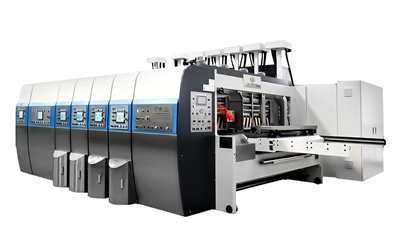
When setting up a corrugated box finishing line, one of the most common questions is whether to invest in a folder gluer or a stitching machine. Both are essential for box assembly, but they serve different purposes and are suited for different types of orders.
This article breaks down the key differences between these two types of equipment. We'll look at how each machine works, what types of boxes they produce, and which one makes sense for your production mix. By the end, you'll have a clear framework to decide which machine-or combination of machines-fits your operation.

What's the Difference between Folder Gluer and Stitching Machine?
A folder gluer uses adhesive to bond box flaps together. The machine folds the box blank, applies glue to the designated area, and presses the flaps together to form a finished box. The result is a clean, seamless appearance with no visible fasteners.
A stitching machine (also called a nailing machine) uses metal staples-typically galvanized wire-to mechanically fasten box flaps. The machine drives staples through the overlapping flaps, creating a strong mechanical bond that can be seen on the finished box.
The choice between these two methods affects not only the appearance of your boxes but also their strength, cost, and suitability for different applications.
Side-by-Side Comparison
| Factor | Folder Gluer | Stitching Machine |
|---|---|---|
| Joining method | Adhesive (cold glue or hot melt) | Metal staples (galvanized wire) |
| Appearance | Clean, seamless, no visible fasteners | Visible staples on the box |
| Typical applications | Retail packaging, e-commerce boxes, food packaging | Heavy-duty shipping boxes, industrial packaging, export cartons |
| Box strength | Bond strength depends on glue quality and surface | High mechanical strength, excellent for heavy loads |
| Material compatibility | Works best with clean, properly coated board | Can handle recycled board and rough surfaces |
| Speed | 80–150+ boxes/min (fully automatic) | 30–80 boxes/min depending on box size |
| Operator requirement | 1 operator per shift for automatic models | 1–2 operators per shift |
| Consumable cost | Glue (ongoing cost) | Staples (ongoing cost, typically higher per box than glue) |
| Equipment cost | Higher upfront investment | Lower upfront investment |
How Each Machine Works
Folder Gluer Operation
A folder gluer takes flat box blanks and runs them through a series of folding rails and glue applicators. The process is fully automatic on modern machines:
- Feeding: Box blanks are loaded into a feeder that separates and aligns each piece
- Folding: The blank passes through folding rails that fold the flaps into position
- Gluing: A precision glue applicator applies adhesive to the designated areas
- Pressing: The folded flaps are pressed together to form a solid bond
- Stacking: Finished boxes are stacked automatically or conveyed to the next station
The result is a clean box with no visible fasteners. This makes folder gluers the preferred choice for retail-ready packaging where appearance matters.
Stitching Machine Operation
A stitching machine uses a different principle. Instead of adhesive, it drives metal staples through the overlapping flaps:
- Feeding: Box blanks or partially assembled boxes are fed into the machine
- Positioning: The operator or automatic system positions the flaps for stitching
- Stitching: The machine drives staples through the flaps, clinching them on the other side
- Discharge: Finished boxes are stacked or conveyed away
Stitching creates a strong mechanical joint that can withstand rough handling and heavy loads. This makes stitching machines the go-to choice for industrial packaging, export cartons, and boxes that will be stacked under heavy weight.
For a detailed breakdown of automatic folder gluer specifications, see our selection guide.
Box Type Suitability
The type of box you produce most often should guide your equipment choice.
When to Choose a Folder Gluer
Folder gluers excel at producing boxes where appearance and consistency matter:
| Box Type | Why Folder Gluer Is Preferred |
|---|---|
| Retail display boxes | Clean appearance with no visible staples |
| E-commerce shipping boxes | Consistent flap alignment for automated packing lines |
| Food packaging | No metal fasteners that could contaminate product |
| Pharmaceutical boxes | Clean bonding meets hygiene requirements |
| High-volume standard boxes | Maximum speed and efficiency |
When to Choose a Stitching Machine
Stitching machines are ideal for boxes that prioritize strength over appearance:
| Box Type | Why Stitcher Is Preferred |
|---|---|
| Heavy-duty industrial boxes | Metal staples provide superior mechanical strength |
| Export cartons | Withstands rough handling during shipping |
| Agricultural packaging | Can handle rough, recycled board surfaces |
| Large-format boxes | Cost-effective for oversized boxes |
| Short-run custom boxes | Lower equipment investment for varied orders |

Technical Specifications Comparison
When evaluating specific models, these technical specifications matter. Below are typical specifications for a high-end combined machine that can perform both stitching and gluing functions-the JHXDX-2800-B1-to give you a sense of what modern equipment can handle.
Installation Requirements
| Parameter | Specification |
|---|---|
| Installation Area | 18000 × 4100 mm |
| Power Required | ≤23 kW |
| Air Pressure | 0.6–0.8 Mpa |
| Power Supply | 380V 50HZ |
| Weight | 11.7 t |
Sheet Specifications (Stitching Function)
| Parameter | E Flute | A=C Flute | B=D Flute | F Flute | G Flute |
|---|---|---|---|---|---|
| Max (mm) | 2800 | 810 | 575 | 1200 | 40 |
| Min (mm) | 860 | 230 | 150 | 300 | 35 |
Sheet Specifications (Gluing Function)
| Parameter | E Flute | A=C Flute | B=D Flute | F Flute | G Flute |
|---|---|---|---|---|---|
| Max (mm) | 2800 | 1150 | 700 | 1200 | 40 |
| Min (mm) | 730 | 200 | 100 | 300 | 35 |
As the table shows, the gluing function generally allows for a wider range of sheet sizes than stitching-particularly in the A=C and B=D flute categories. This is because glue application is more forgiving of board variations than precise staple placement.
Production Volume Considerations
Your production volume and order mix play a major role in equipment selection.
Low to Medium Volume (Under 500,000 boxes/month)
For lower volumes, a stitching machine often makes more sense:
- Lower upfront investment
- Faster changeover between different box sizes
- No glue cleanup or maintenance
- Suitable for custom or short-run orders
Medium to High Volume (Over 500,000 boxes/month)
For higher volumes, a folder gluer delivers better efficiency:
- Higher sustained speeds (100+ boxes/min)
- Lower consumable cost per box (glue vs. staples)
- Consistent quality with minimal operator intervention
- Better integration with downstream automation
Total Cost of Ownership
The upfront purchase price is only one factor. Total cost of ownership includes consumables, labor, and maintenance.
| Cost Factor | Folder Gluer | Stitching Machine |
|---|---|---|
| Purchase price | Higher | Lower |
| Consumable cost per box | Lower (glue) | Higher (staples) |
| Labor cost | Lower (1 operator) | Moderate (1–2 operators) |
| Maintenance | Moderate (glue system cleaning) | Lower (mechanical parts) |
| Changeover time | 3–8 minutes (CNC models) | 5–15 minutes |
| Energy consumption | 10–15 kW typical | Lower (mechanical operation) |
For a plant producing 1 million boxes per month, the higher consumable cost of staples can add up. However, the lower equipment cost and simpler maintenance may offset this for smaller operations.
Industry Trends and Market Context
Understanding where the market is heading can inform your equipment decision.
The global corrugated box market is projected to grow from USD 83.04 billion in 2024 to USD 131.24 billion by 2032, at a CAGR of 5.88%. Key trends shaping the industry include:
- E-commerce growth: Continued expansion of online shopping drives demand for standardized, high-quality shipping boxes
- Sustainability mandates: Increasing pressure to use recyclable materials and reduce waste
- Automation adoption: Labor shortages are accelerating investment in automatic finishing equipment
- Digital printing: Customization and short-run production are becoming more common
For plants serving the e-commerce sector, folder gluers are increasingly the standard because they produce clean, consistent boxes that meet the requirements of automated fulfillment centers.
For plants serving industrial or agricultural sectors, stitching machines remain the workhorse-particularly for large-format boxes where adhesive bonding may not provide sufficient strength.
Which One Should You Choose?
The decision between a folder gluer and a stitching machine depends on your specific production profile.
Choose a Folder Gluer If:
- You primarily produce retail packaging or e-commerce boxes
- Box appearance matters to your customers
- You run high volumes with relatively consistent box sizes
- You plan to integrate with automated palletizing
- Labor costs are high and skilled operators are scarce
Choose a Stitching Machine If:
- You produce heavy-duty industrial or export boxes
- Box strength is more important than appearance
- You run a wide variety of box sizes in smaller quantities
- You have a limited capital budget
- Your board quality varies (e.g., recycled content, rough surfaces)
Consider Both If:
- Your production mix includes both retail and industrial boxes
- You have the floor space and capital for multiple machines
- You want flexibility to handle any customer order
Many successful box plants operate both types of equipment-a folder gluer for high-volume retail work and a stitching machine for heavy-duty or custom orders. This combination gives you the flexibility to serve a wider range of customers while optimizing cost and quality for each order type.
Folder gluers and stitching machines serve different purposes in a corrugated box plant. Folder gluers deliver clean, consistent boxes at high speeds-ideal for retail and e-commerce applications. Stitching machines provide superior mechanical strength and lower upfront cost-ideal for heavy-duty industrial packaging.
When choosing between them, consider your typical order mix, production volume, customer requirements, and long-term growth plans. For many plants, the answer is not "either/or" but "both"-using each machine for the applications where it excels.