When you're investing in a Carton Stitching Machine for your corrugated box plant, one of the first decisions you'll face is whether to go with a semi-automatic or fully automatic model. Both have their place in the market, but the right choice depends on your production volume, labor availability, and long-term growth plans.
This guide walks you through the key differences between these two types of Carton Stitching Machines. We'll look at speed, labor requirements, changeover time, and total cost of ownership. By the end, you'll have a clear framework to decide which configuration fits your operation.

What's the Difference?
Before diving into the comparison, let's clarify what each type does.
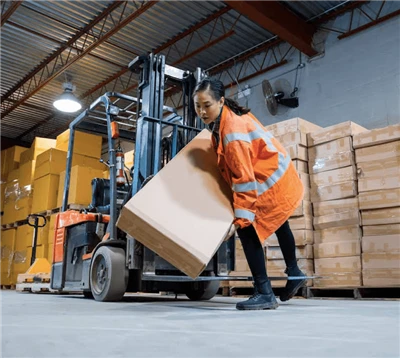
A semi-automatic Carton Stitching Machine requires manual feeding. An operator places each box blank or partially assembled box into the machine, positions the flaps, and activates the stitching cycle. These machines are common in smaller shops or for handling oversized boxes that are difficult to automate.
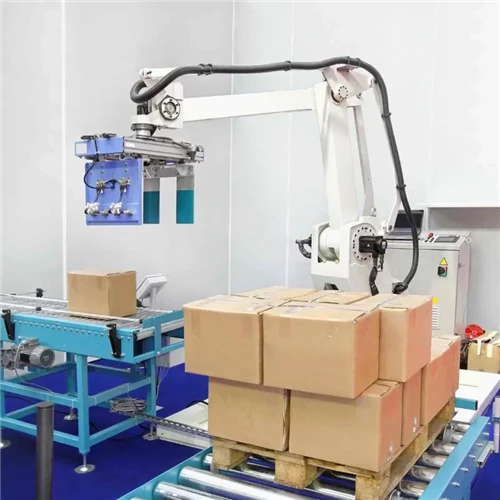
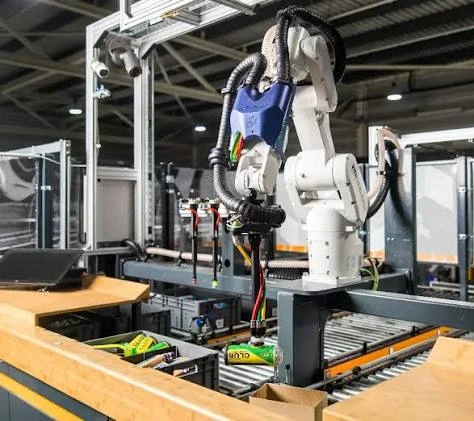
A fully automatic Carton Stitching Machine integrates with a feeding system that automatically separates, aligns, and feeds box blanks. Operators monitor the machine but don't physically feed each piece. The entire process-from feeding to stitching to stacking-runs continuously with minimal intervention.
The table below summarizes the typical differences between semi-automatic and fully automatic Carton Stitching Machines. Semi-automatic data represents industry averages; fully automatic data reflects typical specifications for modern machines.
| Factor | Semi-Automatic | Fully Automatic |
|---|---|---|
| Feeding method | Manual, operator places each box | Automatic feeder with belt or suction |
| Operating speed | 15–30 boxes per minute | 40–80 boxes per minute |
| Operators required | 1–2 per shift | 1 per shift |
| Changeover time | 5–10 minutes | 3–6 minutes (with CNC settings) |
| Box size range | Limited by operator handling | Wide range, up to 2800mm width |
| Stitch spacing | Manual adjustment | Digital control, programmable |
| Stacking | Manual stacker or simple discharge | Automatic stacker or conveyor |
| Investment cost | Lower upfront | Higher upfront |
| Maintenance complexity | Simple mechanical parts | More complex, requires trained technicians |
How Each Machine Works?
Semi-Automatic Carton Stitching Machine Operation
A semi-automatic stitcher relies on operator skill and attention. The typical workflow:
- Feeding: Operator picks up a box blank or partially assembled box
- Positioning: Operator aligns the overlapping flaps under the stitching head
- Activation: Operator triggers the stitching cycle (foot pedal or button)
- Stitching: Machine drives staples through the flaps and clinches them
- Removal: Operator removes the finished box and stacks it
The speed and consistency of output depend heavily on operator experience and physical endurance. Skilled operators can maintain steady rates, but fatigue inevitably slows production over a shift.
Fully Automatic Carton Stitching Machine Operation
A fully automatic stitcher eliminates manual handling at the point of stitching:
- Feeding: Box blanks are loaded into a feeder that separates and aligns each piece
- Conveying: Blanks move along a belt to the stitching section
- Positioning: Sensors detect the flap position and trigger the stitching head
- Stitching: The machine drives staples through the flaps automatically
- Discharge: Finished boxes are stacked or conveyed to the next station
Modern fully automatic machines use CNC controls to store job parameters. When an operator selects a job from the touchscreen, the machine adjusts stitch spacing, head position, and feed settings automatically.
Speed and Throughput
The most obvious difference between semi-automatic and fully automatic Carton Stitching Machines is speed.
A semi-automatic machine typically runs at 15–30 boxes per minute. That speed is limited by how fast an operator can feed, position, and trigger the machine. Even with an experienced worker, the cycle time includes both physical movement and the stitching cycle itself.
A fully automatic machine can run at 40–80 boxes per minute or more, depending on box size and complexity. The automatic feeder eliminates the human bottleneck, allowing the machine to run continuously.
Example calculation:
If your plant runs 8-hour shifts and produces medium-sized boxes:
- Semi-automatic at 20 boxes/min = 9,600 boxes per shift (accounting for breaks and fatigue)
- Fully automatic at 60 boxes/min = 28,800 boxes per shift
Over a two-shift day, that's a difference of nearly 40,000 boxes. For a plant with consistent volume, the fully automatic machine can pay for itself in labor savings alone within 12–24 months.
Labor Requirements
Labor is a major factor in equipment decisions, especially in markets like the United States where manufacturing labor costs are high and skilled operators are hard to find.
Semi-automatic operation:
- Requires 1–2 operators per shift: one feeding and stitching, one stacking
- High physical demand leads to fatigue and turnover
- Training time is relatively short, but consistency varies between operators
- Stitching quality depends on operator skill and attention
Fully automatic operation:
- Requires 1 operator per shift, primarily for monitoring and quality checks
- Reduced physical strain lowers turnover
- Operator can manage multiple machines if production layout is optimized
- Consistent stitching quality regardless of shift or operator
For a plant running two shifts, switching from semi-automatic to fully automatic can reduce headcount by 2–4 operators per day. At typical U.S. manufacturing wages, that translates to significant annual labor cost savings.
Similar labor savings apply when upgrading from semi-automatic to fully automatic folder gluers.
Changeover Flexibility
Box plants rarely run the same job all day. Most plants change box sizes, styles, or stitch patterns multiple times per shift. Changeover time directly affects overall throughput.
Semi-automatic changeover:
- Adjustments to stitch head position, feeding guides, and timing are typically manual
- Operators use wrenches and gauges to set positions
- Changeover takes 5–10 minutes depending on operator experience
- Quality of changeover varies-some operators set up faster but produce more waste
Fully automatic changeover:
- Many modern machines store job settings in CNC memory
- Operators select a job number, and the machine adjusts stitch spacing, head position, and feed guides automatically
- Changeover takes 3–6 minutes
- Consistent setup reduces waste and ensures repeatable quality
If your plant runs 5 changeovers per shift, the time savings from automatic changeover add up to 15–35 minutes of extra production time daily.

Box Size Range
The range of box sizes a machine can handle is another key differentiator.
Semi-automatic machines are limited by the physical reach and strength of the operator. A single person can only comfortably handle box widths up to about 1,600–2,000mm. Smaller boxes below 300mm may be difficult to position consistently.
Fully automatic machines are designed for wider size ranges and can handle larger boxes without operator fatigue. The table below shows typical specifications for a modern fully automatic Carton Stitching Machine-the JHXDX-2800-B1-to give you a sense of what automated equipment can handle.
Installation Requirements
| Parameter | Specification |
|---|---|
| Installation Area | 18000 × 4100 mm |
| Power Required | ≤23 kW |
| Air Pressure | 0.6–0.8 Mpa |
| Power Supply | 380V 50HZ |
| Weight | 11.7 t |
Sheet Specifications (Stitching Function)
| Parameter | E Flute | A=C Flute | B=D Flute | F Flute | G Flute |
|---|---|---|---|---|---|
| Max (mm) | 2800 | 810 | 575 | 1200 | 40 |
| Min (mm) | 860 | 230 | 150 | 300 | 35 |
As the table shows, a fully automatic machine can handle a wide range of board types and sizes. The maximum width of 2800mm covers most industrial box applications, while the minimum sizes accommodate smaller packaging.
Stitch Quality and Consistency
Stitch quality affects both box strength and customer perception.
Semi-automatic machines rely on operator skill to position the box correctly under the stitching head. If the operator's alignment is off, staples may miss the overlap or be placed inconsistently. Over a long shift, fatigue increases the risk of errors.
Fully automatic machines use sensors to detect flap position and trigger the stitching cycle only when alignment is correct. This ensures consistent staple placement on every box, regardless of operator fatigue or shift timing.
Key quality factors to consider:
| Quality Factor | Semi-Automatic | Fully Automatic |
|---|---|---|
| Staple placement accuracy | Operator-dependent | Sensor-controlled, consistent |
| Stitch spacing | Manual adjustment, may vary | Digital control, programmable |
| Clinching consistency | Mechanical, but operator influences alignment | Consistent mechanical clinching |
| Waste rate | 2–5% typical | 1–2% typical |
Total Cost of Ownership
Initial purchase price is only one part of the equation. Total cost of ownership includes labor, maintenance, waste, and downtime.
| Cost Factor | Semi-Automatic | Fully Automatic |
|---|---|---|
| Purchase price | Lower | Higher |
| Labor cost per year | Higher (1–2 operators) | Lower (1 operator) |
| Staple waste | Higher (misplaced staples) | Lower |
| Scrap rate | 2–5% | 1–2% |
| Maintenance cost | Low | Moderate |
| Downtime per year | Higher (operator breaks, fatigue) | Lower |
For a plant producing 500,000 boxes per month, the combination of labor savings, reduced waste, and higher throughput often results in a fully automatic machine paying for itself within 18–24 months compared to a semi-automatic alternative.
Which One Should You Choose?
The choice between semi-automatic and fully automatic Carton Stitching Machines depends on your specific situation.
Semi-Automatic May Be the Right Choice If:
- You have low production volume (under 300,000 boxes per month)
- Labor costs are low in your region
- You run few size changes per shift
- You have a limited capital budget
- You produce mostly large, one-off custom boxes that require manual handling anyway
Fully Automatic Is the Better Investment If:
- You run medium to high volume (over 300,000 boxes per month)
- Labor costs are high or skilled operators are scarce
- You run multiple size changes per shift
- You plan to integrate with automated stacking or palletizing
- You want consistent stitch quality with minimal operator influence
- Your customers require high-volume, repeatable quality
For most box plants in markets like the United States, the trend is clearly toward fully automatic equipment. Labor costs continue to rise, and customer demands for shorter lead times and consistent quality push plants to reduce manual handling.
Both semi-automatic and fully automatic Carton Stitching Machines have their place in the corrugated packaging industry. Semi-automatic machines offer lower upfront cost and simplicity, making them suitable for smaller operations or custom, large-format boxes. Fully automatic machines deliver higher throughput, lower labor costs, and consistent quality-advantages that typically justify the higher initial investment for growing plants.
When evaluating your next Carton Stitching Machine, consider not just the purchase price, but the total cost of ownership over five years. Factor in labor, waste, changeover time, and your growth plans. For many plants, the fully automatic route delivers better long-term ROI.