I. Introduction
The global corrugated packaging market is entering a transformative period. By 2026, industry dynamics will be shaped by a powerful mix of sustainability mandates, e-commerce growth, automation adoption, and digital innovation. For box plant operators, understanding these trends is not optional-it's essential for staying competitive.
This article examines seven major trends that will define the corrugated packaging industry in 2026. For each trend, we'll explore the underlying drivers, implications for box plants, and practical steps you can take to prepare.
II. Market Overview: Steady Growth Amid Structural Shifts
The corrugated packaging market continues to expand. According to industry forecasts, the global market is projected to grow from approximately USD 83 billion in 2024 to over USD 130 billion by 2032, at a compound annual growth rate (CAGR) of 5.5–6%.
Regional dynamics vary:
- North America: Mature market with steady replacement demand and automation upgrades
- Europe: Strong sustainability regulations driving innovation
- Asia-Pacific: Fastest-growing region, led by China and India
The primary growth engine remains e-commerce, which has fundamentally changed packaging requirements. Unlike traditional retail packaging, e-commerce boxes must withstand individual shipping, often without outer cartons, and deliver a positive brand experience upon arrival.
Key market data for 2026:
- E-commerce packaging demand expected to grow 8–10% annually
- Recycled content in corrugated boxes exceeds 80% in mature markets
- Automation investments in box plants rising 12% year-over-year
III. Trend 1: Sustainability Takes Center Stage
Sustainability is no longer a niche concern-it's a business imperative. Consumer brands are under pressure to reduce their environmental footprint, and packaging is the most visible element.
Key sub-trends driving sustainability:
| Sub-trend | Description | Impact on Box Plants |
|---|---|---|
| Recycled content mandates | Regulations requiring minimum recycled fiber | Need equipment that runs recycled board reliably |
| Lightweighting | Reducing board weight without sacrificing strength | Precision slitting and scoring to maintain performance |
| Water-based adhesives/inks | Replacing solvent-based alternatives | Compatibility with existing glue systems |
| Plastic substitution | Corrugated replacing plastic packaging | Increased demand for custom box designs |
Implications for box plants:
- Invest in slitter scorers and folder gluers that can handle recycled board (which has different surface properties than virgin board)
- Consider lightweight corrugated board as a value-added offering
- Obtain sustainability certifications (FSC, SFI) to meet customer requirements
IV. Trend 2: E-Commerce Drives Packaging Innovation
 E-commerce has shifted from a secondary channel to the primary sales channel for many brands. This shift demands packaging that performs differently than traditional retail boxes.
Key e-commerce packaging requirements:
- Right-sizing: Boxes that fit products snugly reduce void fill and shipping costs
- High-quality print: Brand experience starts at the box; unboxing matters
- Easy-open features: Perforations, tear strips, and reclosable designs
- Returns-friendly: Boxes that can be resealed easily
By the numbers:
- 60% of consumers say packaging influences their repeat purchase decision
- E-commerce packaging volume grew 25% between 2020 and 2025
- Returns account for 20–30% of e-commerce orders, driving demand for durable yet easy-to-open designs
Implications for box plants:
- Flexible finishing lines that can handle frequent size changes (robotic palletizers with quick changeover are ideal)
- Integration of printing and finishing for short-run, customized boxes
- Investment in automatic stitching machines for heavy-duty e-commerce boxes (appliances, furniture)
V. Trend 3: Automation and Industry 4.0 Accelerate
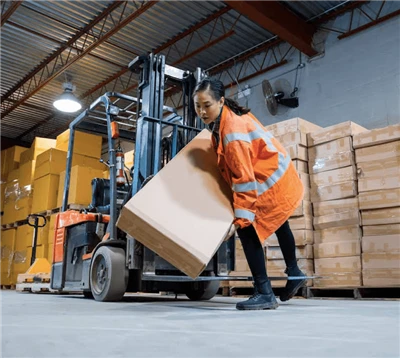
Labor shortages are the single biggest operational challenge facing box plants in North America and Europe. Automation is no longer a luxury-it's a survival strategy.
Key automation technologies for 2026:
| Technology | Application | Benefit |
|---|---|---|
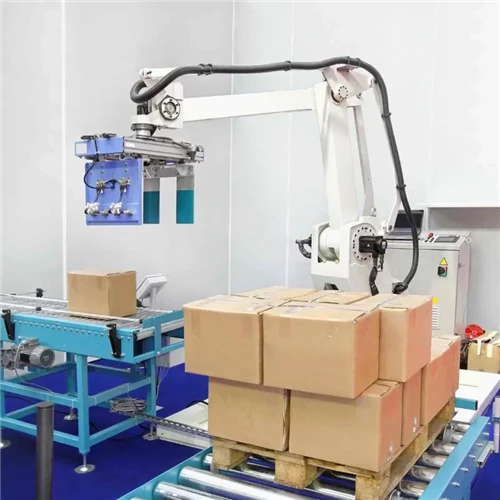
| Robotic palletizers | End-of-line stacking | Eliminates manual palletizing, 24/7 operation |
| Automatic changeover systems | Size and job changeover | Reduces downtime from 20 minutes to under 5 |
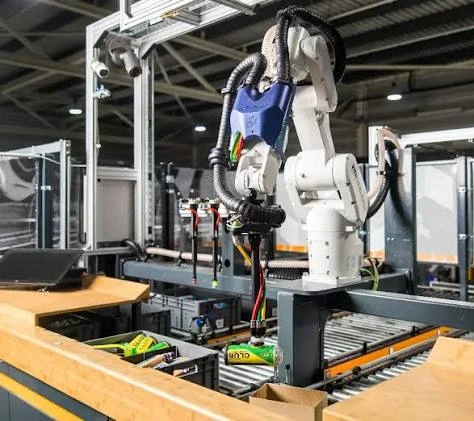
| IoT sensors | Machine health monitoring | Predictive maintenance prevents breakdowns |
| MES integration | Real-time production tracking | Data-driven decision making |
Why automation adoption is accelerating:
Manufacturing wages rose 15–20% post-pandemic
Skilled machine operators are retiring without replacements
ROI periods for automation have shortened to 12–24 months
Implications for box plants:
Conduct an automation audit: which manual tasks cause the most downtime?
Prioritize fully automatic folder gluers and stitching machines for high-volume lines
Consider robotic palletizers even for small footprints-modern units require minimal floor space
VI. Trend 4: Digital Printing Reshapes Order Profiles
Digital printing on corrugated is growing rapidly. While flexo remains dominant for long runs, digital handles the short runs and versioning that brands increasingly demand.
Key drivers of digital adoption:
- Short runs: Brands test products with small packaging quantities before scaling
- Personalization: Regional marketing, seasonal variations, and event-specific packaging
- Variable data: QR codes, batch numbers, and track-and-trace information printed per box
- Speed to market: Digital eliminates plate-making, reducing lead time from weeks to days
Market projection: Digital printing for corrugated is expected to grow at 15% CAGR through 2030.
Implications for box plants:
- Hybrid lines combining flexo for long runs and digital for short runs are becoming standard
- Digital requires precise feeding and finishing integration to maintain speed
- Finishing equipment (folder gluers, stitchers) must handle digitally printed board (different surface properties)

VII. Trend 5: Lightweight and Micro-Flute Board Adoption
Lightweighting is both a sustainability and a cost-reduction strategy. By reducing board weight, plants save fiber, lower shipping costs, and meet sustainability targets.
Key developments in board technology:
| Flute Type | Typical Use | Growth Driver |
|---|---|---|
| Micro-flute (F, G, N) | High-quality printing, retail displays | Brands want print quality approaching solid board |
| High-strength lightweight | Shipping boxes with lower basis weight | Reduces shipping costs for e-commerce |
| Recycled lightweight | General packaging | Meets recycled content mandates with less material |
Technical challenge: Lightweight board is more sensitive to scoring depth, folding accuracy, and glue application. Equipment must be precisely adjustable.
Implications for box plants:
- Upgrade to CNC-controlled slitter scorers with fine depth adjustment
- Ensure folder gluers have precise folding rail positioning for thin board
- Train operators on the unique handling characteristics of lightweight board
VIII. Trend 6: Supply Chain Localization and Reshoring
The pandemic exposed vulnerabilities in long, global supply chains. Brands are now shifting toward regional sourcing to reduce risk and improve responsiveness.
Key factors driving localization:
- Tariffs and trade uncertainty: US-China trade tensions continue
- Lead time reduction: Customers want days, not weeks
- Sustainability: Shorter transport distances reduce carbon footprint
- Quality control: Proximity enables faster issue resolution
What this means for box plants:
- New corrugator installations are rising in North America and Europe
- Smaller, agile plants serving regional customers are growing faster than mega-plants
- Equipment must handle rapid changeover for smaller, more frequent orders
Investment implications: This trend favors flexible, modular equipment over massive, dedicated lines. Automatic stitching machines and robotic palletizers with quick changeover are particularly well-suited.

IX. Trend 7: Smart Factories and Data-Driven Operations
Industry 4.0 goes beyond automation. The smart factory connects every piece of equipment, collects real-time data, and uses that data to optimize operations.
Key smart factory technologies:
- Cloud-based MES: Track production, waste, and downtime from any device
- Machine learning quality control: Cameras and algorithms detect defects in real time
- Remote diagnostics: Manufacturers troubleshoot equipment without site visits
- Digital twin: Simulate production changes before implementing on the floor
Benefits being realized today:
- 15–25% reduction in unplanned downtime
- 10–20% improvement in overall equipment effectiveness (OEE)
- Faster troubleshooting and less reliance on on-site technical staff
Implications for box plants:
- When buying new equipment, prioritize models with IoT connectivity and open APIs
- Train staff on data interpretation-data is only valuable if acted upon
- Start small: add sensors to your most critical bottleneck machine first
X. Challenges Facing the Industry in 2026
Despite positive trends, box plants face significant headwinds:
| Challenge | Impact | Mitigation |
|---|---|---|
| Raw material price volatility | OCC prices fluctuate 30–50% annually | Lightweighting, long-term supplier contracts |
| Energy costs | Heating corrugators is energy-intensive | Energy-efficient double facers, heat recovery |
| Skilled labor shortage | Operators retiring faster than replacements | Automation, cross-training, apprenticeship programs |
| Regulatory complexity | Different rules by region (EU, US, Asia) | Compliance tracking systems, third-party audits |
These challenges are manageable with strategic planning. The plants that thrive will be those that invest in automation, flexibility, and workforce development.
XI. Strategic Recommendations for Box Plants
Based on the trends above, here are actionable recommendations for 2026:
1. Audit your automation readiness
- Identify manual tasks that cause bottlenecks
- Calculate ROI for robotic palletizers and automatic changeover systems
- Prioritize equipment with quick setup and job memory
2. Verify equipment compatibility with recycled and lightweight board
- Test your slitter scorers and folder gluers on recycled board grades
- Ensure scoring depth and glue application are adjustable for thin substrates
3. Invest in flexibility over top speed
- For most plants, changeover time matters more than maximum speed
- Look for CNC-controlled machines with job storage
- Consider modular lines that can expand as demand grows
4. Build digital integration into your equipment roadmap
- Specify IoT connectivity and open APIs when purchasing new machines
- Plan for MES integration even if not installing today
- Train operators to use data dashboards
5. Develop your workforce
- Automation doesn't eliminate jobs-it changes them
- Train existing staff on CNC controls and data systems
- Partner with technical schools for operator recruitment
XII. Conclusion
The corrugated packaging industry in 2026 will be defined by sustainability, e-commerce innovation, automation, and digital transformation. Box plants that embrace these trends will gain competitive advantage through lower costs, higher quality, and faster response times.
The challenges-raw material volatility, energy costs, labor shortages-are real, but they are not insurmountable. Strategic investments in flexible, connected, and efficient equipment will position your plant for success.
As one industry executive recently noted, "The future of corrugated isn't about making boxes cheaper-it's about making them smarter, lighter, and more sustainable." The plants that lead in 2026 will be those that start preparing today.