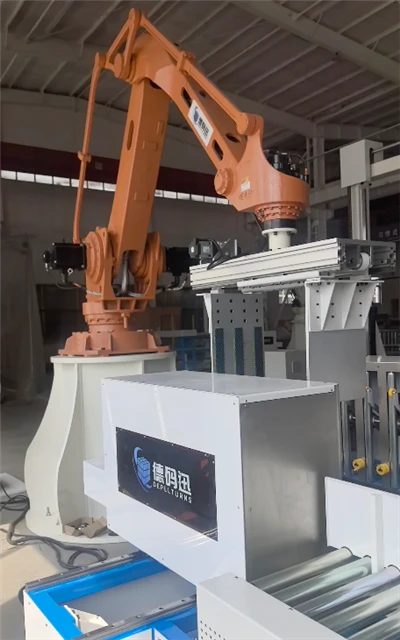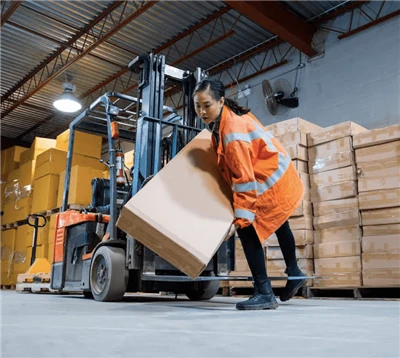
The Integrated Future of Packaging (2026)
In the rapidly evolving packaging landscape of 2026, the definition of "efficiency" has shifted. It is no longer enough to have a fast flute laminator machine or a high-output automatic box gluing machine in isolation. The true competitive advantage lies in system integration.
As labor costs continue to rise globally, packaging plants are moving toward "Lights-Out" manufacturing. This transition hinges on the "Last Meter of Automation"-the seamless handoff between the production of a corrugated box and its final placement by a palletizer machine. This guide explores how to optimize this entire flow, focusing on the critical role of the pallet gripper and why upstream quality is the foundation of robotic success.

Why Upstream Quality Rules the Palletizer?
A robotic palletizer is a high-precision instrument, but it is also a "garbage in, garbage out" system. If the corrugated boxes arriving at the end of the line are inconsistent, the robot will fail.
The Impact of Flute Lamination on Gripper Seal
The flute laminator machine is where the structural integrity of the box begins.
- The Warping Issue: If the lamination process uses excessive adhesive (poor high precision gluing), the moisture imbalance causes the board to warp.
- Vacuum Failure: A vacuum pallet gripper requires a perfectly flat surface to create a seal. Even a 2mm upward curve on the top liner can cause a vacuum leak, leading to dropped boxes and emergency stops.
The Impact of Folder Gluer Precision on Stacking Stability
The automatic box gluing machine determines the "squaring" of the box.
- The "Fishtail" Phenomenon: If the box is not folded at a perfect 90-degree angle, it becomes trapezoidal.
- Stack Collapse: When these non-square boxes are stacked by a mechanical side-clamp gripper, the internal stresses of the stack are uneven. By the time the pallet is 1.5 meters high, the cumulative error causes the entire load to lean, making it unsafe for transport.
Choosing Your Weapon: 2026 Pallet Gripper Technologies
Selecting the right End of Arm Tooling (EOAT) is the most critical decision in palletizing automation. Here is a breakdown of the three dominant technologies used in high-speed corrugated lines.
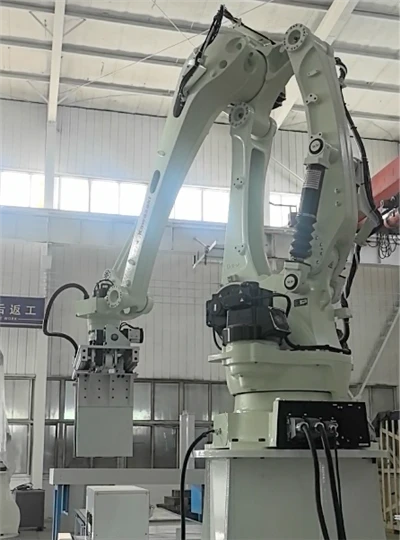
A. Vacuum Suction Systems (The Speed King)
Vacuum grippers are the most common for e-commerce and retail-ready packaging. They use high-flow blowers or venturi pumps to lift boxes from the top.
- Best Used For: Lightweight E-flute, F-flute, and high-gloss coated boxes.
- Technical Requirement: Requires a flute laminator that maintains zero-warp standards.
B. Mechanical Side-Clamp Grippers (The Heavy Lifter)
These grippers use servo-driven plates to apply lateral pressure to the sides of the box.
- Best Used For: Heavy A-flute or B-flute industrial boxes (e.g., appliances or chemicals).
- Technical Requirement: Requires the folder gluer to produce boxes with high "crush resistance" so the sides don't cave in during the squeeze.
C. Layer-Forming Heads (The Volume Monster)
For lines running at 18,000+ SPH, picking boxes individually is inefficient. Layer forming systems organize an entire tier of boxes on a table and then slide or lift the whole layer onto the pallet.
- Best Used For: High-volume beverage and food sectors.
- Technical Requirement: Requires perfect dimensional consistency. If one box is 1mm wider than the others due to poor flute lamination alignment, the entire layer will fail to fit the pallet footprint.
Comparison Matrix: Gripper Selection and Upstream Requirements
The following table provides a technical roadmap for factory managers to match their machinery.
| Feature | Vacuum Suction Gripper | Mechanical Side Clamp | Layer Forming Head |
| Ideal Speed | High (Up to 15 cycles/min) | Medium (8-12 cycles/min) | Ultra-High (Full Layers) |
| Material Sensitivity | High (Needs flat surface) | Low (Grabs sides) | Medium (Needs squaring) |
| Key Upstream Asset | High-Precision Laminator | Heavy-Duty Folder Gluer | Integrated Servo Line |
| Common Failure | Loss of vacuum (Warping) | Box deformation (Soft flutes) | Layer misalignment |
| 2026 Tech Trend | Self-cleaning suction pads | Servo-torque monitoring | AI-vision layer correction |
Deep Dive: Troubleshooting the "Last Meter"
When a robotic palletizer stops, the instinct is to check the code. However, experienced operators know to look at the paper first.
Step 1: Check for "Hydroplaning" in Lamination
If the flute laminator machine is applying too much glue, the face paper "slides" on the flutes before it sets. This creates a box that is slightly out of alignment. Even if the automatic box gluing machine tries to correct it, the structural memory of the paper will cause it to drift.
- Solution: Calibrate the metering roller gap to 0.1mm.
Step 2: Monitor the Pressing Section
In the automatic box gluing machine, the pressing belt must be perfectly balanced. If one side is tighter, the box will be slightly "diamond-shaped." A pallet gripper might pick it up fine, but it won't sit flush against the next box on the pallet.
- Solution: Use ultrasonic sensors to verify box squareness before the palletizing infeed.
Economic Impact: The ROI of Precision
Investing in a high-end palletizer machine without upgrading your flute laminator is a financial mistake.
Reduced Downtime
A "dropped box" event on a robotic line typically causes 5-10 minutes of downtime (clearing the debris, resetting the robot, restarting the infeed). If this happens 5 times a shift, you lose nearly an hour of production daily. Over a year, this equates to 300 hours of lost capacity.
Adhesive Savings vs. Robotic Reliability
By implementing high precision gluing (saving 15% on starch), you aren't just saving on material costs. You are producing a stiffer, flatter board that allows the robotic palletizer to run at its maximum rated speed. The ROI is doubled: lower input costs and higher output volume.
The Role of AI and Vision Systems in 2026
We are now seeing the integration of 3D vision systems directly onto the pallet gripper.
- Real-time Warpage Detection: Sensors can detect if a box is too warped to be safely picked.
- Automatic Rejection: Instead of stopping the line, the robot can divert the "soft" or "misaligned" box to a reject bin, allowing the palletizer to continue working with high-quality units.
Operational Best Practices: A Checklist for Success
To ensure your palletizer machine works in harmony with your folder gluer, follow this daily protocol:
- Viscosity Check: Ensure the glue in the flute laminator is at 35-45s (Zahn Cup #4). This ensures the board is dry enough for vacuum grippers.
- Sensor Cleaning: Clean the photoelectric eyes on the palletizer infeed. Dust buildup here causes timing errors.
- Belt Tension: Verify that the transport belts in the automatic box gluing machine are not glazed. Slippage here leads to inconsistent spacing, which confuses the robot's "pick" cycle.
- Pallet Quality: Ensure the wooden or plastic pallets are not broken. Even a perfect pallet gripper cannot place a box on a slanted or broken pallet base.
Conclusion
Success in 2026 packaging is not about the fastest machine; it is about the most stable process. The palletizer machine is the final judge of everything that happened upstream.
By focusing on high precision gluing at the flute laminator and perfect squaring at the automatic box gluing machine, you provide the pallet gripper with the perfect "raw material" it needs to succeed. Automation is a chain, and every link-from the first drop of glue to the final pallet wrap-must be strong.