If you are expanding your packaging business from simple pizza boxes or clothing mailers to heavy-duty industrial shipping cartons-such as appliance boxes for washing machines, heavy agriculture crates, or bulk industrial packaging-you will inevitably need to upgrade your post-processing workshop. When souring equipment for this transition, the most critical machine center you will evaluate is the 5 ply flute laminator.
For many newcomers to the box manufacturing industry, understanding how different laminating machines handle thick cardboard can be confusing. Is a 5 ply flute laminator different from a standard machine? How does it handle multiple layers of paper without ruining the premium printed design?
In this comprehensive beginner's guide, we will break down the foundational concepts of this essential machinery center in plain, easy-to-understand language, explaining how it works, what it manufactures, and how to choose the right specifications for your factory.

The Basics-Understanding 5-Ply Board and the "3-in-1" Advantage
To understand what a 5 ply flute laminator does, we must first look at the unique physical structure of the heavy-duty cardboard it is engineered to produce.
The Anatomy of 5-Ply Corrugated Cardboard
In the commercial packaging sector, "Ply" simply refers to a single layer of paper. A standard shipping box used for small retail items is typically 3-Ply (also known as Single Wall), which consists of one wavy paper wave sandwiched between two flat liners.
However, heavy industrial goods require far more structural strength. They rely on 5-Ply (Double Wall) corrugated cardboard. This heavy-duty board consists of five distinct layers stacked together:
- Layer 1 (Top Printed Liner): The premium, high-definition colorful face paper that carries the brand logos and product graphics.
- Layer 2 (First Flute Wave): The upper wavy middle layer that provides shock absorption.
- Layer 3 (Inner Core Liner): A flat sheet of containerboard that separates and stabilizes the two wave layers.
- Layer 4 (Second Flute Wave): The lower wavy middle layer that provides deep vertical stacking strength.
- Layer 5 (Bottom Back Liner): The flat inside lining sheet that completes the rigid sandwich structure.
The Modern Production Leap
Traditionally, manufacturing this 5-layer structure required a slow, inefficient two-step process. A factory had to run two separate 2-ply corrugated sheets through a basic machine, let them dry, and then pass them through a second time to bond them with the top printed liner. This manual method doubled labor costs, wasted excessive amounts of starch glue, and often caused the finished cardboard to warp or delaminate.
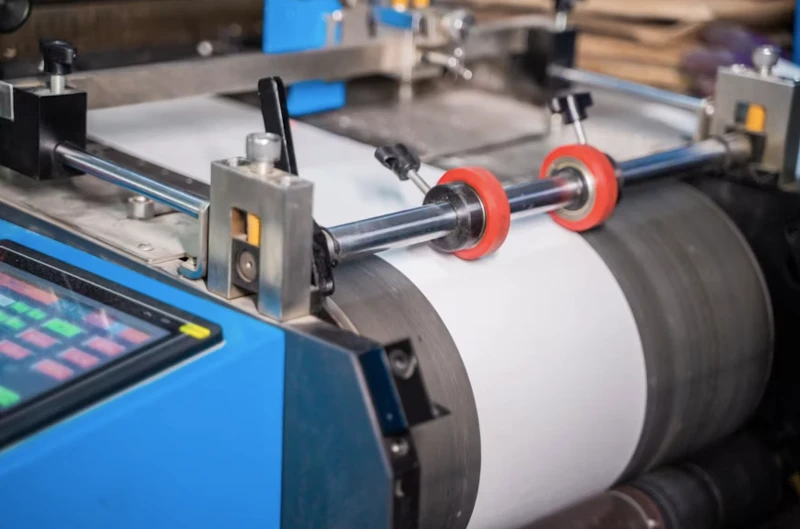
A modern 5 ply flute laminator solves this problem by utilizing advanced inline integration, often referred to in the industry as "3-in-1" technology. This means the machinery center simultaneously pulls three distinct material feeds into a single compression point: two separate streams of continuous single-face corrugated webs (liner + wave) and one stream of individual pre-printed color sheets. It bonds all layers perfectly in a single, high-speed pass.
How a 5-Ply Flute Laminator Operates Step-by-Step
A high-performance laminating line functions as a continuous, synchronized assembly matrix. Here is how the raw paper material progresses through the machine center:
- Step 1: Dual Continuous Web Infeed: At the rear of the machine, two independent rolls of single-face corrugated board (previously produced by a single facer unit) are fed into the system. Operators can mix and match different flute profiles-such as utilizing a dense, thin E-flute on the top layer for crisp graphics, combined with a taller, shock-absorbing B-flute or C-flute on the bottom layer for heavy structural integrity.
- Step 2: Sheet-Fed Top Liner Sorting: At the front of the machine, a high-speed automatic feeder uses vacuum suction cups to lift and feed individual sheets of premium printed face paper. This paper has already been decorated with high-end brand graphics using an off-line offset or digital printing press.
- Step 3: Precision Starch Coating: As the layers rush toward the central combining station, specialized glue rollers apply a micro-layer of starch or PVA adhesive strictly to the exposed tips of the corrugated waves.
- Step 4: Servo-Driven Edge Registration: This is the most technically critical stage. To prevent the printed graphics from looking crooked on the finished box, the machine utilizes advanced photo-electronic sensors and high-speed servo motors. The computerized control system reads the position of the sheets and the moving webs in real-time, instantly adjusting the feed speeds down to a fraction of a millimeter to guarantee perfect edge-to-edge alignment.
- Step 5: Uniform Pressing and Curing: The fully combined 5-ply board immediately passes into an extended delivery conveyor equipped with soft, heavy pressure belts. This belt section applies consistent downward compression across the entire surface of the board, smoothing out air bubbles and allowing the glue to cure flat without crushing the underlying waves.

Commercial Applications-What Products Can You Manufacture?
Investing in a premium 5 ply flute laminator allows your packaging business to break out of low-margin commodity box markets and target high-volume, high-profit industrial manufacturing accounts. Standard single-wall boxes are heavily commoditized, but custom double-wall heavy packaging commands excellent price margins.
With this machinery operating on your shop floor, your plant can instantly produce:
- Heavy-Duty Home Appliance Packaging: Rugged, beautifully branded boxes for refrigerators, washing machines, commercial kitchen ovens, and air conditioning units.
- Bulk Agricultural Transport Crates: Heavy, ventilated display containers used to ship large quantities of heavy produce-such as watermelons, citrus fruits, or apples-without the bottom of the crate buckling under humid cold-chain conditions.
- Industrial E-Commerce Master Shippers: Extra-strength outer cartons designed to safeguard multiple smaller retail packages during international freight transit or automated fulfillment center handling.
- Premium Heavy Gift and Consumer Electronics Cases: Large, glossy display packaging for heavy items like children's electric ride-on vehicles, high-end stereo equipment, or multi-bottle wine presentation gift sets.

Essential Machinery Evaluation Criteria for Buyers
When reviewing equipment specifications or contacting manufacturers for a new laminating line, prioritizing the lowest price tag often leads to severe operational headaches. Low-grade laminators use cheap mechanical gears that lose calibration quickly, resulting in misaligned layers and high paper waste rates.
Ensure your engineering team verifies these critical hardware baselines before purchasing:
Table 1: Technical Standards Matrix for 5-Ply Laminator Procurement
| Machine Center Component | Required Technical Baseline | Direct Operational Benefit Secure |
| Main Drive Control | Multi-axis servo-driven alignment | Eliminates mechanical gear backlash; holds registration within ±1mm. |
| Glue Distribution Unit | Anilox coating rollers with auto-gap | Saves up to 20% on starch glue; prevents board warping. |
| Top Sheet Infeed System | High-speed vacuum non-stop feeder | Prevents double-sheet feeding and paper jams on thin or heavy stock. |
| Curing Conveyor Section | Extended pressure blanket (6+ meters) | Allows heavy 5-ply glue seams to set flat under uniform compression. |
Eliminating the End-of-Line Material Bottleneck
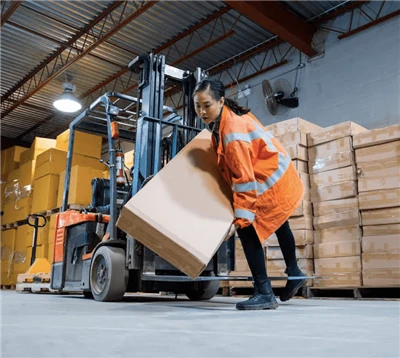
A high-speed 5 ply flute laminator is capable of outputting thousands of square meters of heavy combined board every single hour. However, because 5-ply sheets destined for industrial goods are significantly thicker, heavier, and bulkier than standard retail cardboards, managing the finished bundles manually at the end of your processing line can instantly create a massive physical bottleneck.
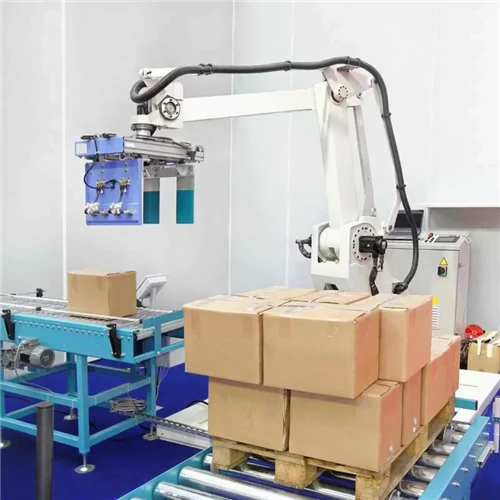
To maintain maximum efficiency and ensure your laminating investment runs at its rated capacity, modern high-output factories integrate an automatic palletizing robot at the absolute end of the production loop. While the laminator takes care of high-speed, multi-layer alignment and precise bonding, the robotic palletizer uses specialized, heavy-duty industrial grippers to automatically lift, rotate, and stack the finished heavy box bundles onto transport pallets. This completely eliminates manual heavy lifting, keeps your floor layout perfectly organized, and allows your entire packaging plant to maintain a continuous, automated workflow.