In the sequence of a corrugated production line, if the single facer is the heart that creates the pulse, the double facer corrugated machine-often professionally referred to as the double backer corrugator-is the skeletal system that provides final rigidity. This machine is responsible for bonding the single-face web (produced earlier in the process) to the bottom liner, effectively completing the "sandwich" structure of the corrugated board.
As production speeds in 2026 push toward 350 meters per minute, the technical demands on the double facer have shifted from simple heating to complex thermodynamic management. The goal is no longer just to "dry" the glue, but to manage moisture and heat in a way that prevents warp and ensures a high-quality finish for downstream converting.

The Functional Role of the Double Facer
The double facer corrugated machine operates at the "Dry End" of the wet-end process. Its primary mission is to facilitate the gelatinization of starch adhesive across a wide surface area. Unlike the localized pressure used in a single facer, the double facer utilizes an extended heating section followed by a cooling or traction section.
The machine must perform three simultaneous tasks:
- Heat Transfer: Driving heat through the bottom liner to reach the glue line on the flute tips.
- Pressure Application: Maintaining intimate contact between the paper layers without crushing the newly formed flutes.
- Moisture Evaporation: Removing the water carrier from the starch adhesive to lock the bond in place.
The Heating Section and Steam Management
The core of the double facer consists of a series of cast-iron or steel heating plates. These plates are precision-ground to ensure a perfectly flat surface, as any deviation can lead to "low spots" where the board fails to bond.
To maintain these plates at consistent temperatures (typically between 160°C and 180°C), modern plants rely on a sophisticated plate heat exchanger steam system. The efficiency of this system is paramount; if the steam pressure fluctuates, the temperature of the plates will drop, leading to "soft" board or de-lamination. High-performance machines often divide the heating section into multiple zones, allowing operators to adjust the heat profile based on the paper weight and production speed.
Traction and Transport: The Traction Belt System
Once the board has been heated and bonded, it must be pulled through the machine with consistent tension. This is the role of the traction belt system. This system usually consists of two heavy-duty, heat-resistant belts that sandwich the corrugated board.
The traction belt system provides the friction necessary to overcome the drag of the heating plates. If the tension is uneven, the board will "snake" or develop internal stresses that lead to warping after the board is cut. Modern belts are designed with specific permeability ratings, allowing moisture to escape through the belt while maintaining a high grip coefficient on the paper.
Technical Specifications and Operational Data
When integrating a double backer corrugator into a high-speed corrugated production line, the following technical parameters are standard benchmarks for 2026 industrial operations:
| Feature | Standard Industrial Spec | High-Speed Performance Spec |
| Max Production Speed | 150 - 200 m/min | 250 - 350 m/min |
| Heating Plate Count | 12 - 18 Plates | 22 - 32 Plates |
| Steam Working Pressure | 0.8 - 1.1 MPa | 1.2 - 1.4 MPa |
| Belt Tension Control | Manual/Hydraulic | Automatic Pneumatic/Servo |
| Board Thickness Range | 2.5 mm - 9.0 mm | 1.5 mm - 15.0 mm |
| Total Length | 15 - 20 Meters | 25 - 35 Meters |

Managing Pressure: Weight Rollers vs. Pressure Shoes
A significant engineering challenge in the double facer is applying pressure to the board as it travels over the hot plates. Historically, this was done using heavy "weight rollers." However, in modern high-speed double backer corrugator units, "pressure shoes" or "contact bars" have become the preferred choice.
Pressure shoes provide a continuous, even load across the entire width of the board. This is particularly important when running micro-flutes like E or F, where excessive localized pressure from a roller can crush the flute structure. By using a distributed load, the double facer corrugated machine ensures a strong bond while preserving the "caliper" (thickness) of the board, which is essential for the box's stacking strength.
Warp Control and Moisture Balance
Warp is the primary defect generated at the double facer. It occurs when the top liner and bottom liner have different moisture levels or are under different tensions. As the board cools, one side shrinks more than the other, causing the board to curl.
To combat this, the double facer must be synchronized with the pre-heaters and the single facer. If the board exiting the double backer corrugator is "up-warp," it usually indicates that the bottom liner is too dry. Operators use the plate heat exchanger steam controls to modulate the temperature of specific plate zones, effectively "tuning" the moisture of the board in real-time. This precision is what allows the board to stay flat enough for high-speed processing in a rotary die cutting machine.
Energy Efficiency in the Steam Loop
The double facer is the largest consumer of thermal energy in the factory. Optimizing the plate heat exchanger steam cycle is not just about quality-it is about cost control.
Modern machines utilize condensate recovery systems that return hot water to the boiler, reducing the energy required for reheating. Furthermore, "gap control" systems lift the pressure rollers or shoes when the line stops, preventing the board from scorching and reducing radiant heat loss. An efficiently managed double facer corrugated machine can reduce a plant's total energy expenditure by up to 15% compared to legacy setups.
The Cooling and Outfeed Section
After the heating section, the board enters a cooling or "traction" zone. While still under the influence of the traction belt system, the board begins to shed its latent heat. This section is vital for "setting" the starch. If the board is cut and stacked while still too hot and moist, the starch bond can "re-wet" or fail under the weight of the stack.
The length of this cooling section is often a limiting factor for machine speed. A longer double backer corrugator allows for more gradual cooling, which is superior for producing heavy-duty double-wall or triple-wall boards used in industrial packaging.
Maintenance of the Double Backer Corrugator
Given the harsh environment of steam, heat, and paper dust, maintenance for the double facer corrugated machine must be rigorous.
- Plate Planarity: Over years of operation, heating plates can warp. Regular laser-alignment checks are necessary to ensure the heating surface remains flat.
- Belt Cleaning: Starch buildup on the traction belt system can cause slippage or marks on the paper. Automated brush systems are often installed to clean the belts during production.
- Steam Traps: Faulty steam traps in the plate heat exchanger steam circuit can lead to "water hammer" or cold spots on the plates, directly resulting in de-lamination.
The Foundation of Finished Board Quality
The double facer corrugated machine is the final arbiter of cardboard quality. It takes the flexible output of the single facer and transforms it into a rigid, industrial-grade material. Through the precise application of heat via a plate heat exchanger steam system and the steady pull of a traction belt system, the machine ensures that the board is ready for the rigors of the modern supply chain.
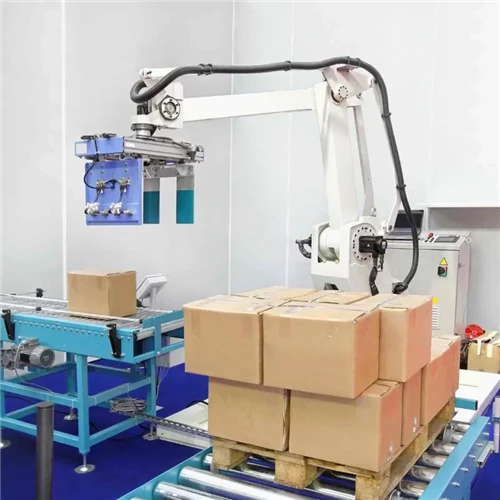
For a corrugated production line to be truly profitable, the double facer must deliver sheets that are flat, dry, and securely bonded. This structural perfection is the prerequisite for all downstream automation, from high-speed slitting to the final stage of robotic palletizing.Mastering the double backer corrugator is, therefore, a masterclass in thermodynamic and mechanical balance.