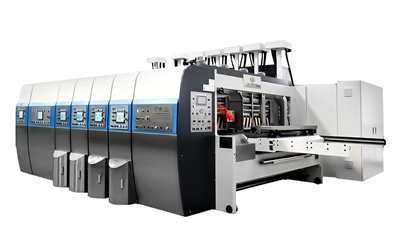
In the vertical of industrial packaging, the single facer machine is often regarded as the "heart" of the production process. Its primary function is deceptively simple but mechanically demanding: it transforms flat rolls of paper into a structural medium by forming flutes and bonding them to a liner. This creates a single face corrugated cardboard roll, the fundamental building block for all three-ply, five-ply, and seven-ply cardboard boxes used in global logistics.

The Core Advantages of Modern Single Facers
While early iterations of this machinery relied on mechanical guides, modern engineering has introduced several advantages that stabilize production at speeds exceeding 250 meters per minute.
- Structural Integrity: By precision-forming flutes, the machine ensures that the vertical compression strength of the board is maximized. Even a 0.1mm deviation in flute height can result in a 5-10% loss in the final box's stacking strength.
- Operational Versatility: High-end units allow for quick roll changes. This "cassette" style system enables a plant to switch from B-flute to E-flute in under 20 minutes, significantly reducing downtime in short-run environments.
- Waste Reduction: Integrated pre-conditioners and precise glue application systems help reduce paper waste. In an industry where paper represents nearly 70% of the total cost, a 1% reduction in waste directly impacts the bottom line.
Functional Sections: From Raw Paper to Single Face Web
The Pre-Conditioning Phase
Before the paper hits the corrugating rolls, it must be prepared. The medium paper (the wavy part) and the liner paper (the flat part) pass over heated drums. This process manages the moisture content of the paper. If the paper is too dry, it will crack during fluting; if it is too damp, the adhesive will not bond.
Flute Formation and the Vacuum Suction System
This is the most critical stage. The medium paper passes between two meshed corrugating rolls. In a fingerless single facer machine, the paper is held against the lower corrugating roll using a vacuum plenum. This negative pressure ensures that the paper stays perfectly in contact with the heated roll without the need for mechanical "fingers" that used to mark the paper and limit production speeds.
Adhesive Application
Once the flutes are formed, a glue applicator roll-synchronized with the speed of the corrugating rolls-applies a precise film of starch-based adhesive to the tips of the flutes. The "glue gap" (the distance between the applicator roll and the paper) is typically controlled to within 0.1mm to prevent "soaking" the paper, which would lead to warping.
Technical Specifications and Operational Data
When selecting a single facer machine for a high-volume corrugated production line, technical data must be analyzed against the plant's specific output goals.
| Parameter | Standard Performance Range | High-Speed Industrial Range |
| Design Speed | 150 - 200 m/min | 250 - 350 m/min |
| Working Width | 1400 - 1800 mm | 2200 - 2800 mm |
| Heating Method | Saturated Steam | Steam or Thermal Oil |
| Steam Consumption | 0.5 - 0.8 t/h | 1.0 - 1.5 t/h |
| Flute Types | A, B, C, E, F | Cassette Interchangeable |
| Vacuum Pressure | 0.05 - 0.10 MPa | 0.12 - 0.15 MPa |
Key Features of the Fingerless Single Facer Machine
The transition to the fingerless single facer machine has been the single greatest advancement in the corrugated production line over the last two decades. The "fingerless" designation refers to the removal of the brass guides that traditionally held the paper in place.
- Vacuum Suction Stability: By using a vacuum suction single facer design, the air pressure holds the fluted medium uniformly across the entire width of the roll. This eliminates the "striping" effect often seen in older board, where the glue was missing in areas where the fingers blocked the roll.
- Speed Capability: Mechanical fingers generated friction and heat, which limited speeds to approximately 120m/min. The fingerless design removes this friction, allowing modern machines to reach speeds of 300m/min and beyond.
- Reduced Maintenance: Without mechanical fingers to adjust or replace, the maintenance cycle of the machine is extended, and the risk of paper jams caused by worn-out guides is eliminated.

Managing the Single Face Corrugated Cardboard Roll
Once the paper is bonded, the resulting single face corrugated cardboard roll is either wound for separate use (such as in protective wrapping) or, more commonly, sent up to the "bridge" of a full corrugator line.
The quality of this roll is determined by the "bond strength." This is measured by the force required to peel the liner from the medium. In a professional setting, this is monitored using a Pin Adhesion Test (PAT). Consistent bond strength is achieved through the precise management of the "pressure roll"-a large, heated cylinder that shoves the liner against the glued flute tips. If the pressure roll is misaligned, one side of the roll may be securely bonded while the other is loose, leading to catastrophic failure in the downstream double facer corrugated machine.
Control Systems and Automation
Modern single facer machine units are equipped with PLC (Programmable Logic Controller) systems that manage the "speed-matching" of the rolls. As the overall corrugated production line speeds up or slows down, the glue roll and the vacuum pressure must adjust automatically.
- Auto-Gap Adjustment: Based on the paper weight (GSM) being used, the machine automatically adjusts the gap between the corrugating rolls and the pressure roll.
- Temperature Monitoring: Infrared sensors monitor the temperature of the paper web in real-time. If the paper exceeds a certain threshold, the steam valves adjust to prevent the paper from becoming too brittle.
- Glue Volume Control: Sophisticated systems use a "doctor roll" to ensure the glue film thickness remains constant, regardless of the machine's speed.
Maintenance and Longevity of Corrugating Rolls
The corrugating rolls are the most expensive consumables in the single facer machine. Typically made of high-quality alloy steel with a tungsten carbide coating, these rolls determine the flute profile.
Over time, the friction of the paper wears down the rolls, particularly in the center. A worn roll will produce "low flutes," which drastically reduces the box's resistance to crushing. Most industrial plants track the "linear meters" produced by a set of rolls, with high-quality tungsten carbide rolls expected to last for 30 to 50 million linear meters before requiring a regrind or replacement.
Impact on the Overall Corrugated Production Line
It is important to remember that the single facer machine does not operate in isolation. Its output directly influences the efficiency of the entire factory.
If the single face corrugated cardboard roll is produced with incorrect moisture levels, it will cause "warp" in the finished sheets. Warp is the enemy of automation. A warped sheet cannot be easily fed into a rotary die cutting machine for corrugated boxes and will certainly cause jams in a high speed robotic palletizer. Therefore, the precision of the single facer is the foundation upon which the rest of the plant's automation is built.
Safety Standards and Environmental Considerations
Operating a single facer machine involves high temperatures and rotating parts, making safety a primary engineering concern. Modern units include:
- Full Enclosure Guards: To reduce noise and prevent accidental contact with heated rollers.
- Emergency Braking: Systems that can stop the massive inertia of the rolls within seconds.
- Energy Recovery: Modern steam systems recycle the condensate, reducing the amount of energy required to keep the rolls at the operating temperature (typically 160°C to 180°C).