When you're investing in a folder gluer for your corrugated box plant, one of the first decisions you'll face is whether to go with a fully automatic or semi-automatic machine. Both have their place in the market, but the right choice depends on your production volume, labor availability, and long-term growth plans.
This article breaks down the key differences between these two types of folder gluers. We'll look at speed, labor requirements, changeover time, and total cost of ownership. By the end, you'll have a clear framework to decide which configuration fits your operation.

What's the Difference between Fully Automatic and Semi-Automatic Folder Gluer?
Before diving into the comparison, let's clarify what each type does.
A semi-automatic folder gluer requires manual feeding. An operator places each box blank onto the feed table, and the machine handles folding, gluing, and sometimes squaring. These machines are common in smaller shops or as backup lines for larger plants.
A fully automatic folder gluer integrates with a feeder system that automatically separates, feeds, and aligns box blanks. Operators monitor the machine but don't physically feed each piece. The entire process-from feeding to folding to gluing to stacking-runs continuously with minimal intervention.
Side-by-Side Comparison
The table below summarizes the typical differences between semi-automatic and fully automatic folder gluers. Semi-automatic data represents industry averages; fully automatic data reflects typical specifications for modern machines.
| Factor | Semi-Automatic | Fully Automatic |
|---|---|---|
| Feeding method | Manual, operator places each blank | Automatic feeder with suction or belt |
| Operating speed | 20–40 boxes per minute | 80–150+ boxes per minute |
| Operators required | 2–3 per shift | 1 per shift |
| Changeover time | 10–20 minutes | 3–8 minutes (with CNC settings) |
| Box size range | Limited to operator handling | Wide range, often 300–2,200mm width |
| Glue system | Basic glue pot or wheel | Precision glue applicator with digital control |
| Stacking | Manual or simple stacker | Automatic stacker or conveyor |
| Investment cost | Lower upfront | Higher upfront |
| Maintenance complexity | Simple mechanical parts | More complex, requires trained technicians |
Speed and Throughput
The most obvious difference between the two types is speed.
A semi-automatic machine typically runs at 20–40 boxes per minute. That speed is limited by how fast an operator can feed blanks. Even with an experienced worker, fatigue sets in after a few hours, and speed drops.
A fully automatic machine, by contrast, can run at 80–150 boxes per minute or more, depending on box size and complexity. The feeder system eliminates the human bottleneck. For small to medium boxes, the machine runs at its mechanical limit rather than the operator's limit.
Example calculation:
If your plant runs 8-hour shifts and produces medium-sized boxes:
- Semi-automatic at 30 boxes/min = 14,400 boxes per shift (with breaks factored in)
- Fully automatic at 100 boxes/min = 48,000 boxes per shift
Over a two-shift day, that's a difference of nearly 70,000 boxes. For a plant with consistent volume, the fully automatic machine can pay for itself in labor savings alone within 12–24 months.
Labor Requirements
Labor is a major factor in equipment decisions, especially in markets like the United States where manufacturing labor costs are high and skilled operators are hard to find.
Semi-automatic operation:
- Requires 2–3 operators per shift: one feeding, one monitoring glue and folding, one stacking
- High physical demand leads to fatigue and turnover
- Training time is relatively short, but consistency varies between operators
Fully automatic operation:
- Requires 1 operator per shift, primarily for monitoring and quality checks
- Reduced physical strain lowers turnover
- Operator can manage multiple machines if production layout is optimized
For a plant running two shifts, switching from semi-automatic to fully automatic can reduce headcount by 4–6 operators per day. At typical U.S. manufacturing wages, that translates to $80,000–$150,000 in annual labor cost savings.
Changeover Flexibility
Box plants rarely run the same job all day. Most plants change box sizes, styles, or glue patterns multiple times per shift. Changeover time directly affects overall throughput.
Semi-automatic changeover:
- Adjustments to feed guides, glue applicator, and folding sections are typically manual
- Operators use wrenches and scales to set positions
- Changeover takes 10–20 minutes depending on operator experience
- Quality of changeover varies-some operators set up faster but produce more waste
Fully automatic changeover:
- Many modern machines store job settings in CNC memory
- Operators select a job number, and the machine adjusts feed guides, folding rails, and glue applicator automatically
- Changeover takes 3–8 minutes
- Consistent setup reduces waste and ensures repeatable quality
If your plant runs 5 changeovers per shift, the time savings from automatic changeover add up to 35–60 minutes of extra production time daily.
Box Size Range
The range of box sizes a machine can handle is another key differentiator.
Semi-automatic machines are limited by the physical reach and strength of the operator. A single person can only comfortably handle box widths up to about 1,200–1,400mm. Smaller boxes below 300mm may be difficult to feed consistently.
Fully automatic machines are designed for wider size ranges. The table below shows typical specifications for automatic folder gluers across different width models.
| Model Width | External Dimensions (LWH) | Weight | Power |
|---|---|---|---|
| 1200mm | 1450*1630*3820 | 10.0 kg | 10 kW |
| 1400mm | 1450*1830*3820 | 10.5 kg | 15 kW |
| 1600mm | 1450*2030*3820 | 11.0 kg | 15 kW |
| 1800mm | 1450*2230*3820 | 11.5 kg | 15 kW |
| 2000mm | 1450*2430*3820 | 12.0 kg | 15 kW |
| 2200mm | 1450*2630*3820 | 12.5 kg | 15 kW |
| 2300mm | 1450*2730*3820 | 13.0 kg | 15 kW |
These machines handle box widths from approximately 300mm up to the model width, giving you flexibility across different customer orders without manual handling constraints.
Glue System Precision
Glue application affects both box quality and material cost.
Semi-automatic machines typically use a simple glue pot or wheel. The operator adjusts glue flow manually. Over-application wastes glue and may cause box sticking on the stack; under-application leads to box failure.
Fully automatic machines use precision glue applicators with digital control. Glue pattern length and position are programmed per job. This reduces waste and ensures consistent bonding. For plants running food-grade or high-value packaging, consistent glue application is critical for customer acceptance.
Stacking and Finishing
What happens after the box is glued matters as much as the gluing itself.
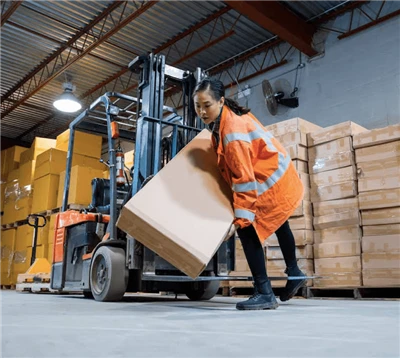
Semi-automatic lines typically end with a manual stacking station. Operators remove boxes from the conveyor and stack them onto pallets. This is physically demanding and creates a bottleneck if the machine runs at its maximum speed.
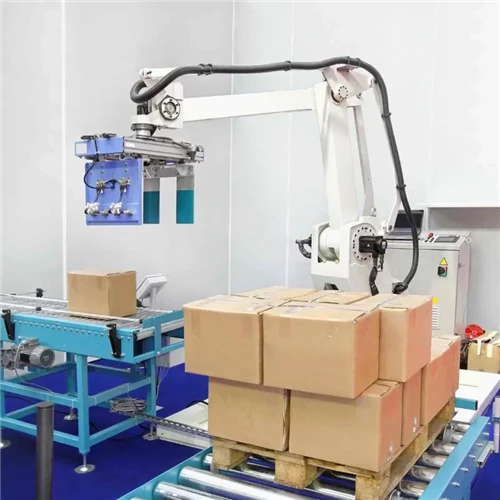
Fully automatic machines can be integrated with an automatic stacker or directly with a robotic palletizer. This creates a continuous flow from feeding to palletizing with no manual handling. For plants that already have or plan to add a robotic palletizer, a fully automatic folder gluer is the natural upstream partner.
Total Cost of Ownership
Initial purchase price is only one part of the equation. Total cost of ownership includes labor, maintenance, waste, and downtime.
| Cost Factor | Semi-Automatic | Fully Automatic |
|---|---|---|
| Purchase price | Lower | Higher |
| Labor cost per year | Higher (2–3 operators) | Lower (1 operator) |
| Glue waste | Higher | Lower |
| Scrap rate | 2–5% | 1–2% |
| Maintenance cost | Low | Moderate |
| Downtime per year | Higher (changeovers, operator breaks) |
Lower |
For a plant producing 1 million boxes per month, the combination of labor savings, reduced waste, and higher throughput often results in a fully automatic machine paying for itself within 18–24 months compared to a semi-automatic alternative.
Which One Should You Choose?
The choice between semi-automatic and fully automatic folder gluers depends on your specific situation.
Semi-automatic may be the right choice if:
- You have low production volume (under 500,000 boxes per month)
- Labor costs are low in your region
- You run few size changes per shift
- You have a limited capital budget
Fully automatic is the better investment if:
- You run medium to high volume (over 500,000 boxes per month)
- Labor costs are high or skilled operators are scarce
- You run multiple size changes per shift
- You plan to integrate with automated stacking or palletizing
- You want consistent quality with minimal operator influence
For most box plants in markets like the United States, the trend is clearly toward fully automatic equipment. Labor costs continue to rise, and customer demands for shorter lead times and consistent quality push plants to reduce manual handling.
Conclusion
Both semi-automatic and fully automatic folder gluers have their place in the corrugated packaging industry. Semi-automatic machines offer lower upfront cost and simplicity, making them suitable for smaller operations or backup lines. Fully automatic machines deliver higher throughput, lower labor costs, and consistent quality-advantages that typically justify the higher initial investment for growing plants.
When evaluating your next folder gluer, consider not just the purchase price, but the total cost of ownership over five years. Factor in labor, waste, changeover time, and your growth plans. For many plants, the fully automatic route delivers better long-term ROI.
If you're currently comparing folder gluer options and want to understand how specific specifications translate to your production numbers, start by documenting your average box sizes, daily volume, and changeover frequency. Those numbers will guide you to the right choice.