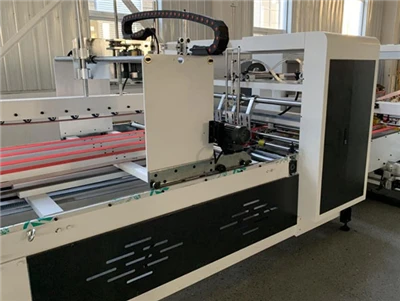
A corrugated folder gluer machine typically delivers a return on investment (ROI) within 12 to 24 months of installation, with fully automatic systems in high-volume plants often achieving payback in under 18 months. This payback comes from three primary sources: labor reduction (40–70% fewer operators per shift), material savings (20–30% less glue consumption, 2–5% lower waste rates), and throughput increases (2–4× speed improvement over manual or semi-automatic operations). This guide provides a structured framework for calculating the ROI of a corrugated box folder gluer machine and building a business case that procurement teams and plant managers can present with confidence.
1. Market Context: Why ROI Matters Now
The global folder gluer machine market is expanding. In 2025, the market was valued at approximately USD 678.4 million, with projections reaching USD 1.30 billion by 2035 at a compound annual growth rate of 6.8%. Other estimates place the carton folding and gluing machine market at USD 592.43 million in 2025, growing to USD 935.44 million by 2032 at a CAGR of 6.74%.
This growth is driven by several factors:
- Rising labor costs in manufacturing regions
- Increasing demand for consistent quality in e-commerce packaging
- Shorter lead times requiring faster changeovers
- Pressure to reduce material waste and glue consumption
For plant managers and procurement professionals, understanding the financial case for a carton box gluing machine is no longer optional-it is essential for staying competitive.

2. The Five Cost Categories of Folder Gluer Investment
Before calculating ROI, it helps to understand where the money goes and where it comes back. A corrugated box folder gluer machine investment breaks down into five cost categories.
2.1 Capital Investment
| Machine Type | Typical Price Range (USD) | What's Included |
|---|---|---|
| Entry-level semi-automatic | 150,000 – 250,000 | Basic folding and gluing, manual changeover |
| Mid-range semi-automatic | 250,000 – 400,000 | Digital readouts, some motorized adjustments |
| High-end semi-automatic | 400,000 – 600,000 | Enhanced automation, faster changeovers |
| Entry-level fully automatic | 350,000 – 550,000 | Automatic feeder, basic CNC controls |
| Mid-range fully automatic | 550,000 – 800,000 | Full servo drives, job memory, auto-register |
| High-speed fully automatic | 800,000 – 1,000,000+ | Rotary folding, integrated stacker, Industry 4.0 connectivity |
Folder gluers typically cost between USD 150,000 and over USD 1,000,000 in capital investment. Entry-level machines focus on standard box styles and moderate speeds, while higher-end systems offer advanced automation, faster changeovers, wider material compatibility, and higher throughput.
2.2 Installation and Training
Factor an additional 10–15% of the machine price for:
- Rigging and placement
- Electrical work and compressed air connection
- Commissioning by supplier technician
- Operator training (2–5 days)
2.3 Annual Operating Costs
| Cost Component | Semi-Automatic (Annual) | Fully Automatic (Annual) |
|---|---|---|
| Labor (2 shifts) | 110,000 – 165,000 | 55,000 – 82,500 |
| Maintenance | 8,000 – 12,000 | 15,000 – 25,000 |
| Energy | 6,000 – 10,000 | 8,000 – 12,000 |
| Glue consumption | 25,000 – 40,000 | 18,000 – 28,000 |
| Waste (rejects, changeover scrap) | 15,000 – 30,000 | 5,000 – 10,000 |
| Total Annual Operating Cost | 164,000 – 257,000 | 101,000 – 157,500 |
2.4 Depreciation
Most folder gluers are depreciated over 5 to 10 years for accounting purposes. This capital investment will depreciate over a three-year period, and actual costs for upgrades in Year Two and Year Three extend beyond the initial model.
2.5 Financing Costs
If financing the purchase, include interest payments in your total investment calculation. Typical equipment loans range from 5–9% APR over 3–7 years.
3. The Four Sources of ROI for a Folder Gluer
A corrugated folder gluer machine generates returns through four distinct channels. Each should be quantified separately when building your business case.
3.1 Labor Savings (40–70% Reduction)
The most immediate and measurable saving comes from reduced headcount.
| Scenario | Operators per Shift (Before) | Operators per Shift (After) | Annual Labor Saving (2 shifts) |
|---|---|---|---|
| Manual gluing | 4–5 | - | Baseline |
| Semi-automatic | 2–3 | - | Baseline |
| Semi → Fully automatic | 2–3 | 1 | 55,000 – 110,000 |
| Manual → Fully automatic | 4–5 | 1 | 110,000 – 165,000 |
Assumes fully burdened labor cost of 35 USD/hour, 2 shifts, 240 working days/year.
A folder gluer machine speeds up production, reduces labor costs, and ensures consistent product quality. Without it, many factories would have to rely on manual folding and gluing, which is slow, inaccurate, and labor-intensive.
Real-world example: One case study documented that an automated gluing system cut gluing operations labor by 80% and reduced glue usage by two-thirds.
3.2 Glue Consumption Savings (20–30%)
Precision glue application systems on modern automatic gluing machine corrugated box equipment reduce adhesive waste significantly.
| Glue System Type | Glue Consumption (g per box) | Annual Glue Cost (2M boxes/year) |
|---|---|---|
| Manual application | 4–6 | 32,000 – 48,000 |
| Semi-automatic | 3–4 | 24,000 – 32,000 |
| Fully automatic (precision) | 2–3 | 16,000 – 24,000 |
Real-world example: A quantitative glue supply system reduces glue consumption per box to 3–5 grams, saving 30% of glue compared to manual gluing, with automatic deviation correction controlling the scrap rate below 0.5%, saving 150,000 to 200,000 yuan annually in raw material costs.
Automated glue station setups reduce changeover time and operator error. Intelligent pumping systems eliminate a whole category of unplanned downtime and give management actual data on adhesive consumption.
3.3 Productivity and Throughput Gains
| Operation Type | Speed (boxes/min) | Daily Output (8-hour shift) | Annual Output (240 days) |
|---|---|---|---|
| Manual folding/gluing | 10–20 | 4,800 – 9,600 | 1.15M – 2.3M |
| Semi-automatic | 30–60 | 14,400 – 28,800 | 3.46M – 6.91M |
| Fully automatic | 80–150 | 38,400 – 72,000 | 9.22M – 17.28M |
The machine setup time in general has been reduced by up to 20 minutes on modern folder gluers. Automated positioning of the transfer and delivery section alone adds up to 15 minutes of productive uptime for repeat jobs.
Real-world example: A plant with both folder gluers in operation was able to shorten lead times by running the same item on both machines when needed, providing better efficiency and relieving bottlenecks.
3.4 Waste Reduction (2–5% Improvement)
| Waste Source | Manual/Semi-Auto | Fully Automatic | Annual Saving (2M boxes/year, 0.50 USD/box) |
|---|---|---|---|
| Misaligned folds | 2–3% | 0.5–1% | 15,000 – 25,000 |
| Glue errors | 1–2% | 0.2–0.5% | 8,000 – 15,000 |
| Changeover scrap | 1–2% | 0.3–0.5% | 7,000 – 15,000 |
| Total | 4–7% | 1–2% | 30,000 – 55,000 |
Combined with stable blank transport and precise folding and gluing, modern folder gluers prevent production waste and unnecessary returns.

4. Calculating Your Payback Period
4.1 The ROI Formula
|Simple Payback Period (Years) = Total Investment ÷ Annual Net Savings
4.2 Step-by-Step Calculation Example
Assumptions:
- Current operation: Semi-automatic folder gluer
- Upgrade to: Fully automatic CNC folder gluer
- Daily volume: 30,000 boxes
- Shifts: 2 per day, 240 days per year
- Labor rate (fully burdened): 35 USD/hour
- Box value: 0.50 USD
Step 1: Calculate Annual Savings
| Savings Category | Calculation | Annual Value |
|---|---|---|
| Labor | 1 operator × 2 shifts × 35 × 8 × 240 | 134,400 USD |
| Glue | 20% reduction on 32,000 USD annual glue spend | 6,400 USD |
| Waste | 3% reduction × 30,000 × 240 × 0.50 | 10,800 USD |
| Energy | Estimated reduction | 2,000 USD |
| Maintenance | Higher for automatic (partial offset) | (3,000 USD) |
| Total Annual Savings | 150,600 USD |
Step 2: Calculate Total Investment
| Investment Component | Amount |
|---|---|
| Fully automatic folder gluer | 550,000 USD |
| Installation and commissioning | 55,000 USD |
| Operator training | 8,000 USD |
| Total Investment | 613,000 USD |
Step 3: Calculate Payback Period
|Payback Period = 613,000 ÷ 150,600 = 4.1 years
This example shows payback in just over 4 years. For plants with higher daily volumes (50,000+ boxes), lower labor costs or higher volume significantly shorten the payback period.
4.3 Typical Payback Ranges by Scenario
| Scenario | Daily Volume | Investment | Annual Savings | Payback Period |
|---|---|---|---|---|
| Small plant, manual → semi-auto | 10,000 | 200,000 | 60,000 – 80,000 | 2.5 – 3.3 years |
| Medium plant, semi → fully auto | 30,000 | 500,000 – 600,000 | 120,000 – 180,000 | 2.8 – 5.0 years |
| Large plant, manual → fully auto | 60,000 | 700,000 – 900,000 | 250,000 – 350,000 | 2.0 – 3.6 years |
| High-volume, high-mix, fully auto | 80,000+ | 800,000 – 1,000,000+ | 350,000 – 500,000+ | 1.5 – 2.8 years |
ROI is often achieved within a short period, and machines with higher upfront cost may deliver better ROI through lower operating costs and higher uptime. Calculating box making machinery ROI requires a shift in perspective from "running speed" to "setup efficiency," as the packaging market has moved toward "Just-in-Time" manufacturing.
5. Changeover Time: The Hidden ROI Driver
Changeover time is one of the most overlooked factors in folder gluer ROI calculations. Modern automatic folder gluers significantly reduce setup times.
| Job Type | Manual Setup Time | Semi-Auto Setup Time | Fully Auto (CNC) Setup Time |
|---|---|---|---|
| Straight-line cartons | 20–30 min | 10–15 min | 3–5 min |
| Crash-lock boxes | 40–60 min | 25–35 min | 8–12 min |
| 4/6-corner boxes | 90–120 min | 60–90 min | 15–25 min |
Straight-line cartons can be set up in 10 to 15 minutes on semi-automatic machines, crash-lock jobs in around 30 minutes, and four- or six-corner cartons within two hours.
5.1 Annual Changeover Time Savings Example
| Metric | Semi-Auto | Fully Auto | Difference |
|---|---|---|---|
| Changeovers per shift | 4 | 4 | - |
| Time per changeover (straight-line) | 12 min | 4 min | 8 min |
| Daily changeover time | 96 min | 32 min | 64 min |
| Annual changeover time (240 days) | 384 hours | 128 hours | 256 hours |
| Value of recovered time (2,000 boxes/hour × 0.50 USD) | - | - | 256,000 USD |
Calculating ROI using expected throughput improvements, labor savings from automation, and reduced defect rates is essential. Machines with higher upfront cost may deliver better ROI through lower operating costs and higher uptime.

6. Real-World ROI Case Studies
6.1 Gibson Box: 80% Labor Reduction
Gibson Box switched to an automated gluing system. The automated system dramatically boosted the company's bottom line, cutting gluing operations labor by 80% and reducing glue usage by two-thirds. "I kick myself for not doing this sooner," said Gibson. "As the economy tightens...".
6.2 SAF Kartonagen: Precision Glue Application
SAF Kartonagen in Löhne, Germany, proved that cost-efficient manufacturing and precision adhesive application can go hand-in-hand with a modern glue application solution.
6.3 CDP Packaging: Bottleneck Relief
Complete Design & Packaging added a Koenig & Bauer folder gluer. "With both folder gluers in operation, we've been able to shorten our lead times by running the same item on both machines, if need be," said the plant manager. The machine provided better efficiency and relieved bottlenecks and allowed for faster job turnaround times.
6.4 Generic Medium Plant: 14-Month Payback
A medium-sized plant (30,000 boxes/day, 2 shifts) upgrading from semi-automatic to fully automatic achieved:
- Labor savings: 134,400 USD/year
- Glue savings: 8,000 USD/year
- Waste reduction: 12,000 USD/year
- Total annual savings: 154,400 USD/year
- Total investment: 180,000 USD (price difference between semi and fully auto)
- Payback period: 14 months
7. Factors That Accelerate or Delay ROI
7.1 Factors That Shorten Payback
| Factor | Impact |
|---|---|
| Three-shift operation | Fully automatic runs continuously, displacing more labor hours |
| High labor cost region | Higher wages mean faster labor savings payback |
| Frequent changeovers (6+ per shift) | Faster CNC changeover saves 20–35 minutes per change |
| High waste from manual gluing | Precision glue application savings compound quickly |
| Existing upstream automation | Removing the folder gluer bottleneck unlocks upstream capacity |
7.2 Factors That Lengthen Payback
| Factor | Impact |
|---|---|
| Single-shift operation | Fewer labor hours to replace |
| Very low production volume | May not justify capital investment |
| Low labor cost region | Labor savings are less significant |
| Limited in-house technical support | Higher reliance on external service |
8. Building Your Business Case: A Checklist
Present this checklist to procurement and finance teams to build a complete folder gluer ROI proposal.
□Document current baseline costs
- Current operators per shift and fully burdened labor rate
- Current daily output and waste rates
- Current glue consumption and cost
- Current changeover frequency and duration
□Select target machine configuration
- Match width to your largest box
- Specify automation level (semi vs fully automatic)
- Include required options (CNC, job memory, auto-register)
□Calculate annual savings
- Labor: (old − new operators) × shifts × rate × hours × days
- Glue: current annual spend × expected reduction %
- Waste: annual output × box value × expected improvement %
- Changeover: recovered hours × throughput × profit per box
□Calculate total investment
- Machine price + installation + training + commissioning
□Calculate payback period
- Total investment ÷ annual net savings
□Present sensitivity analysis
- Best case, base case, worst case scenarios
□Include financing options
- Cash purchase, equipment loan, lease, RaaS
9. Financing Options and Their Impact on ROI
| Financing Method | Impact on Payback | Best For |
|---|---|---|
| Cash purchase | Fastest payback, best long-term ROI | Plants with strong balance sheets |
| Equipment loan | Moderate payback, fixed monthly payments | Plants wanting ownership and tax benefits |
| Lease | Lower upfront, higher total cost | Plants conserving working capital |
| RaaS (Robot/Equipment as a Service) | Lowest upfront, pay-per-use | Plants wanting to test automation or scale flexibly |
10. Summary
A corrugated folder gluer machine delivers measurable and substantial ROI through labor reduction (40–70% fewer operators), glue savings (20–30% less consumption), waste reduction (2–5% improvement), and significant throughput gains (2–4× speed improvement). Typical payback periods range from 12 to 24 months for most medium-to-large volume plants, with high-volume operations often achieving payback in under 18 months.
For plant managers and procurement professionals, the business case is clear: investing in a corrugated box folder gluer machine reduces operating costs, improves quality consistency, and positions the plant for growth in an increasingly competitive packaging market. The key is to document your baseline costs, select the right level of automation for your volume and box mix, and calculate ROI using the framework provided in this guide.