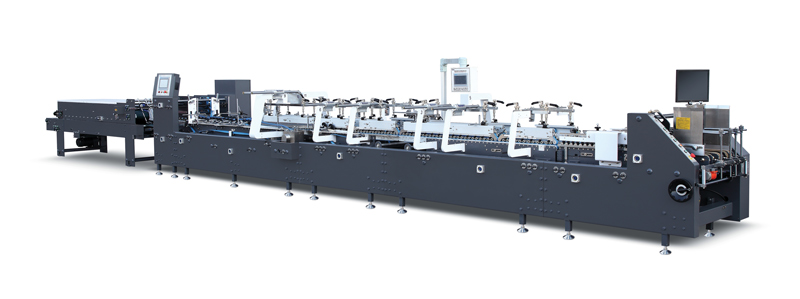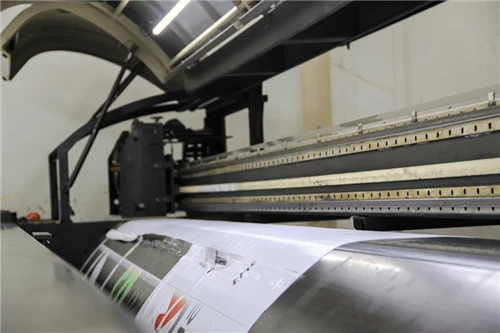
A carton folding and gluing machine is the backbone of any corrugated box finishing line. It takes die‑cut blanks, folds them along pre‑scored lines, applies adhesive, and delivers a finished, ready‑to‑use box. But not all folder gluers work the same way. Different box styles, production volumes, and automation needs call for different machine architectures.
This guide classifies folder gluer machines by four practical criteria: feeding method, folding mechanism, speed and automation, and web width. Each section includes clear decision tables and real‑world application notes.
For a fundamental introduction to what a folder gluer does, read our guide: 《What Is a Flexo Folder Gluer?》.

1. Classification by Feeding Method
The way blanks are fed into the machine determines the minimum operator skill required and the maximum practical speed. Two main categories exist.
1.1 Manual Feed
How it works: An operator picks each blank from a stack and places it into the feed section. The machine then takes over folding and gluing.
| Feature | Detail |
|---|---|
| Typical speed | 20–40 boxes per minute |
| Operators per shift | 1–2 |
| Best for | Short runs, sample making, oversized or irregular blanks |
| Advantages | Low investment, flexible for odd sizes, easy to learn |
| Disadvantages | High labor cost per box, inconsistent feed speed, operator fatigue |
A manual box gluing machine is still common in small‑scale packaging shops, carton repair stations, and plants that run frequent changeovers of very different box sizes. It is also a cost‑effective entry point for converters who mainly run short‑run custom orders under 5,000 boxes per day.
Typical users: Local box shops, print finishers, small e‑commerce packaging suppliers.
1.2 Automatic Feed
How it works: A hopper or stack feeder automatically separates blanks and feeds them into the folding section using vacuum belts or friction wheels. The operator only refills the stack periodically and monitors for jams.
| Feature | Detail |
|---|---|
| Typical speed | 60–200+ boxes per minute |
| Operators per shift | 1 (monitoring) |
| Best for | Medium to high volume, standard box sizes, continuous production |
| Advantages | High throughput, consistent feed spacing, lower labor cost per box |
| Disadvantages | Higher initial cost, less tolerant of severely warped blanks, requires regular feeder maintenance |
Most modern automatic folder gluer models in the market today are built on this principle. They are the standard choice for corrugated box plants running daily production of more than 10,000 boxes.
Typical users: Integrated corrugated box plants, high‑volume packaging converters, e‑commerce fulfillment suppliers.
2. Classification by Folding Mechanism (The Most Important Distinction)
The folding mechanism defines which box styles a machine can produce. Four main types dominate the industry.
2.1 Straight‑Line Folder Gluer
How it works: The blank travels in a straight line through folding rails that fold both sides upward. Glue is applied to the side flaps, and pressure sections press them together. The entire folding process happens continuously as the blank moves forward.
| Feature | Detail |
|---|---|
| Box styles | Regular slotted carton (RSC), half‑slotted containers (HSC), die‑cut trays with simple folds |
| Complexity | Low to medium |
| Changeover time | 5–15 minutes |
| Speed range | 60–200 boxes per minute |
| Width range | 300–2,400 mm |
| Advantages | Fast, simple to operate, easy changeover, widely available |
| Limitations | Cannot produce lock‑bottom or crash‑lock boxes |
A straight‑line carton folder gluer machine is the most common type in the industry. It handles the vast majority of standard shipping boxes, e‑commerce mailers, and pizza boxes. If your product mix is dominated by RSC boxes, this is your workhorse.
Real‑world application: A plant producing 50,000 RSC boxes per day for an online retailer can run a straight‑line automatic folder gluer at 120 boxes per minute, completing the daily order in under 7 hours.
2.2 Crash‑Lock / Lock‑Bottom Folder Gluer
How it works: In addition to side folding rails, the machine has a separate module that pre‑breaks and locks the bottom flaps. This creates a self‑locking bottom that requires no tape or extra glue. The crash‑lock action happens in a dedicated station before the main folding section.
| Feature | Detail |
|---|---|
| Box styles | Crash‑lock boxes, lock‑bottom cartons (pharmaceutical, cosmetics, direct‑mail boxes) |
| Complexity | Medium to high |
| Changeover time | 15–30 minutes |
| Speed range | 60–150 boxes per minute |
| Width range | 300–1,600 mm typical |
| Advantages | Eliminates tape, very strong bottom structure, faster packing line because boxes self‑lock |
| Limitations | Longer setup, higher machine cost, requires precise die‑cutting |
A corrugated folder gluer machine with crash‑lock capability is essential for plants serving the pharmaceutical, luxury goods, and direct‑to‑consumer subscription box markets. The self‑locking bottom also speeds up manual packing lines because the box stays closed without taping.
Real‑world application: A pharmaceutical carton converter runs lock‑bottom boxes for pill bottles. The crash‑lock folder gluer produces 80 boxes per minute, and the self‑locking bottom eliminates a separate taping station downstream.
2.3 Rotary / Continuous Motion Folder Gluer
How it works: Instead of stopping the blank at folding stations, a rotary folder gluer uses rotating folding wheels that work on the fly. The blanks are carried on a vacuum belt, and folding wheels rotate at the same linear speed as the belt, folding flaps progressively.
| Feature | Detail |
|---|---|
| Box styles | Simple RSC and similar designs (not suitable for complex crash‑lock) |
| Complexity | Low (but high‑precision mechanics required) |
| Changeover time | 10–20 minutes |
| Speed range | 150–300+ boxes per minute |
| Width range | 400–1,800 mm typical |
| Advantages | Highest throughput, consistent glue pattern, smooth motion reduces jams |
| Limitations | Expensive, only suitable for long runs of simple boxes, higher energy consumption |
A box folding and gluing machine with rotary motion is rarely the first purchase for a small plant. It becomes attractive when daily volume exceeds 50,000 boxes of similar size and the product mix is dominated by one or two box styles.
Real‑world application: A large corrugated plant producing 200,000 identical RSC boxes per day for a beverage company runs a rotary folder gluer at 280 boxes per minute. The line runs continuously for 12 hours with only two operator breaks.
2.4 Multi‑Corner / Window‑Patch Folder Gluer
How it works: These specialized machines integrate extra stations for folding four corners (e.g., for display trays) or applying transparent film windows. They are often built on an inline platform with additional modules for film feeding, cutting, and glue application on the window area.
| Feature | Detail |
|---|---|
| Box styles | 4‑corner trays, windowed cartons (food, cosmetics, gift boxes) |
| Complexity | High |
| Changeover time | 20–45 minutes |
| Speed range | 40–120 boxes per minute |
| Width range | 200–1,200 mm typical |
| Advantages | Produces complex retail packaging in one pass, eliminates separate window‑patching machine |
| Limitations | Very high cost, specialized skill required, slower than straight‑line |
Real‑world application: A cosmetics packaging converter runs windowed cartons for lipstick displays. The multi‑corner folder gluer applies the transparent window film, folds the 4‑corner tray, and glues all flaps in one continuous operation.
For a detailed comparison of finishing methods, see our article: 《Folder Gluer vs. Stitching Machine: Which One Do You Need?》.
3. Classification by Speed and Automation Level
The same folding mechanism can be offered with different levels of automation. This directly affects operator workload and changeover time.
| Automation Level | Setup Method | Changeover Time | Operator Skill Required | Best For |
|---|---|---|---|---|
| Manual | Hand cranks, rulers, mechanical stops | 20–45 minutes | High (experienced operator) | Job shops, prototypes, less than 3 changeovers per shift |
| Semi‑automatic | Digital readouts, motorized adjustments on key axes | 10–20 minutes | Medium | Mixed‑volume production, 3–6 changeovers per shift |
| Fully automatic (CNC) | Touchscreen job recall, all axes motorized | 3–8 minutes | Low (basic training) | High‑mix, high‑volume plants, more than 6 changeovers per shift |
A carton folder gluer machine with full CNC automation stores hundreds of job recipes. The operator selects a job number from the touchscreen, and the machine automatically adjusts feed guides, folding rails, glue applicator position, pressure settings, and stacker height.
Cost‑benefit example: A plant with 8 changeovers per shift running a fully automatic CNC folder gluer saves 80 minutes of changeover time per shift compared to a manual machine. Over 240 working days per year, that is 640 hours of recovered production time.
For a step‑by‑step framework to select the right automation level, read 《How to Choose Flexographic Printing Equipment》 - the same principles apply to folder gluers.
4. Classification by Blank Width Capacity
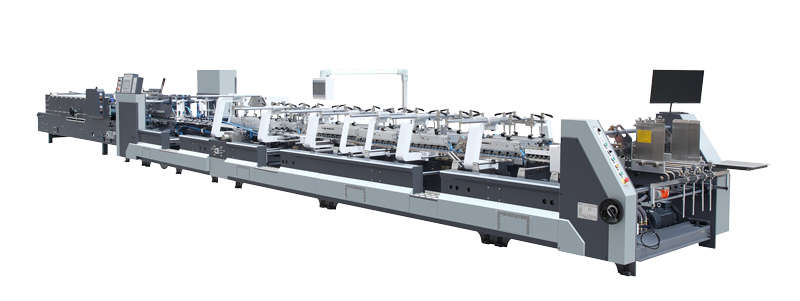
Folder gluers are also sized by the maximum blank width they can handle. Choosing the wrong width is a common and expensive mistake.
| Width Category | Typical Range (mm) | Typical Box Types | Plant Profile |
|---|---|---|---|
| Narrow | 300–800 | Small e‑commerce boxes, pharmaceutical cartons, cosmetic boxes | Label converters, specialty packaging, short‑run shops |
| Medium | 800–1,600 | Standard RSC boxes, pizza boxes, shipping cartons | General corrugated box plants, medium‑volume production |
| Wide | 1,600–2,400 | Appliance boxes, industrial packaging, bulk shipping containers | Large integrated box plants, high‑volume production |
| Extra‑wide | 2,400+ | Pallet‑sized boxes, furniture packaging, automotive parts | Specialty industrial, very large format |
Selection rule: Choose a machine whose maximum width is at least 100 mm larger than your largest regular blank. Running a machine at its absolute maximum width every day accelerates wear on folding rails and belts.
A manual box gluing machine is almost always in the narrow to medium category because an operator must physically handle each blank. Manual feeding of blanks wider than 1,200 mm becomes impractical due to reach and weight.
5. Classification by Glue Application System
The way adhesive is applied affects both box quality and material cost.
| Glue Type | Application Method | Drying Time | Best For |
|---|---|---|---|
| Cold glue (PVA / white glue) | Wheel or extrusion | 30–90 seconds | General corrugated boxes, paperboard cartons |
| Hot melt | Precision nozzle | 1–5 seconds | High‑speed lines, e‑commerce boxes that need immediate stacking |
| Cold glue + hot melt hybrid | Both systems installed | Variable | Plants running both standard and rush orders |
Cold glue is cheaper per box but requires longer compression sections. Hot melt costs more but allows immediate stacking and eliminates compression belts on some machines.
6. Quick Selection Table by Box Type and Volume
Use this table to shortlist the right folder gluer architecture for your typical orders.
| Box Style | Recommended Mechanism | Suggested Automation | Speed Target (boxes/min) | Typical Width (mm) |
|---|---|---|---|---|
| Regular slotted carton (RSC) | Straight‑line | Semi or fully auto | 80–150 | 600–1,800 |
| Crash‑lock bottom | Crash‑lock | Fully auto | 60–120 | 400–1,200 |
| 4‑corner display tray | Multi‑corner | Semi or fully auto | 40–80 | 400–1,200 |
| Windowed carton | Window‑patch | Fully auto | 40–80 | 300–1,000 |
| Short run (<5,000 boxes) | Straight‑line or manual feed | Manual or semi | 20–60 | 300–1,200 |
| Long run (>50,000 boxes) | Rotary or high‑speed straight‑line | Fully auto | 150–300 | 600–1,800 |
| Mixed box styles daily | Straight‑line with CNC | Fully auto | 80–150 | 600–1,600 |
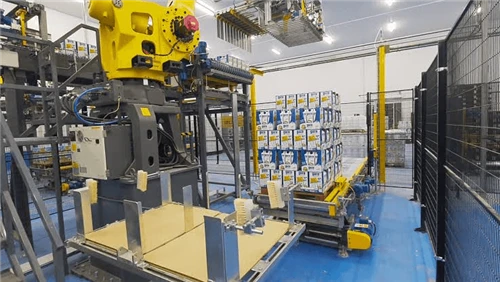
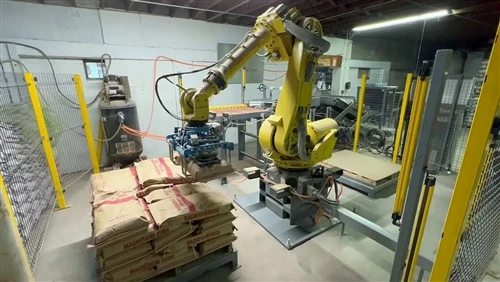
Once your boxes are folded and glued, consider how they will be palletized. Our 《Robotic Palletizer ROI Guide》 can help you plan the next step.
7. Real‑World Selection Example
Scenario: A corrugated box plant runs the following mix:
- 60% RSC boxes, size range 300×200 mm to 1,200×800 mm
- 30% crash‑lock boxes for e‑commerce subscription kits
- 10% windowed cartons for food packaging
Daily volume: 25,000 boxes total
Changeovers per shift: 6–8
Recommended machine: A fully automatic CNC folder gluer with:
- Straight‑line folding mechanism (for the 60% RSC)
- Optional crash‑lock module (can be engaged when needed)
- Window‑patch capability (separate inline unit or offline solution)
Why not a rotary? Volume is too low for rotary economics.
Why fully automatic? High changeover frequency (6–8 per shift) demands fast setup.
For a broader view of how upstream processes affect folder gluer performance, see 《What Is a Printing Slotting Die Cutting Machine?》.
8. Common Mistakes When Selecting a Folder Gluer Type
| Mistake | Why It Is Costly |
|---|---|
| Buying a straight‑line machine when you need crash‑lock | You will have to tape bottoms manually or buy a second machine later |
| Choosing a width too close to your largest box | Folding rails rub constantly, causing premature wear and setup difficulty |
| Over‑specifying speed (e.g., 250 boxes/min for 10,000 boxes/day) | You pay for capacity you never use. The machine runs idle most of the shift |
| Under‑specifying automation for high changeover frequency | You lose 2–3 hours per shift in manual setup time |
| Ignoring glue system compatibility | Cold glue machines cannot run hot melt without major modification |
9. Summary: Key Decision Factors
When choosing among different types of folder gluer, answer these seven questions:
1,What box styles do you run most?
- RSC only → straight‑line
- Lock‑bottom or crash‑lock → crash‑lock type
- Window or 4‑corner → specialized inline
2,What is your daily volume?
- <5,000 boxes → manual or semi‑automatic straight‑line
- 5,000–30,000 → semi‑auto or CNC straight‑line
- 30,000 → high‑speed rotary or fully automatic
3,How many changeovers per shift?
- More than 5 → invest in CNC automation
- Fewer than 2 → manual or semi may be adequate
4,What is your largest blank width?
- Choose a machine that comfortably exceeds it by at least 100 mm
5,Do you need to integrate with a printer or die‑cutter?
- Yes → look for inline‑ready models with conveyor synchronization
6,What glue type do your customers require?
- Food packaging often requires cold glue (FDA compliant)
- High‑speed e‑commerce often requires hot melt
7,What is your operator skill level?
- Low → fully automatic CNC is safer and faster
- High → manual or semi can work, but labor cost per box is higher
10. Conclusion
A carton folding and gluing machine is not a one‑size‑fits‑all investment. The right type depends on your box styles, volume, changeover frequency, automation expectations, and glue requirements.
- Straight‑line machines handle most standard corrugated boxes and offer the best speed‑to‑cost ratio. They are the default choice for plants running mainly RSC boxes.
- Crash‑lock models are essential for self‑locking bottom cartons used in pharma, retail, and subscription boxes.
- Rotary folder gluers deliver the highest throughput for long runs of simple boxes but require high volume to justify the investment.
- Multi‑corner and window‑patch machines are specialized tools for complex retail packaging and should only be purchased if that work is a core part of your business.
By matching the folding mechanism, automation level, width capacity, and glue system to your real production mix, you will avoid buying a machine that is either underpowered for your peak demand or over‑specified for your daily needs.