I. Introduction
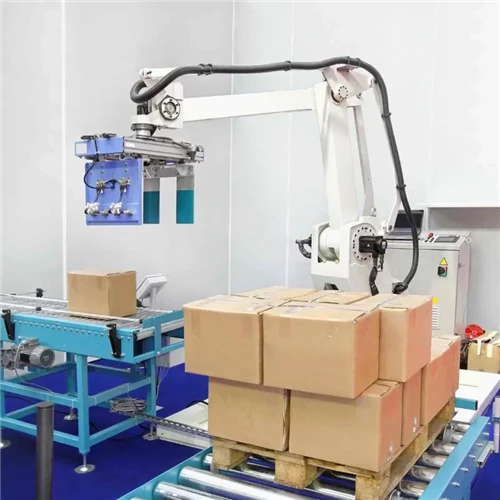
Robotic palletizers are no longer a luxury reserved for the world's largest manufacturing operations. In 2026, they've become a practical, accessible, and financially compelling investment for corrugated box plants, food and beverage producers, and logistics centers of all sizes.
The global robotic palletizer market is forecasted to grow by USD 1.87 billion between 2025 and 2030, accelerating at a compound annual growth rate (CAGR) of 6.1%. This growth is driven by persistent labor shortages, e-commerce expansion, and technological advances that have made robots more affordable and easier to deploy than ever before.
But for plant managers and financial decision-makers, one question dominates all others: What is the actual return on investment (ROI) of a robotic palletizer?
The answer depends on how you calculate it. A simplistic model that only counts labor substitution may show a payback period of two years or more. But a comprehensive model that captures quality improvements, safety savings, maintenance reductions, and productivity gains can drop that payback to well under 12 months in many real-world applications.
This guide provides a complete, data‑driven framework for calculating robotic palletizer ROI. We'll walk through every cost category, share real-world case studies with verified payback periods, and give you a step‑by‑step template to build your own business case. Whether you're considering your first automated palletizer or expanding an existing fleet, this guide will help you justify the investment with confidence.

II. Why Manual Palletizing Is Costing You More Than You Think
Before calculating the ROI of automation, it's essential to understand the true cost of manual palletizing. Most plant managers focus on direct wages, but the hidden costs often far exceed payroll expenses.
2.1 The Real Cost of Manual Labor
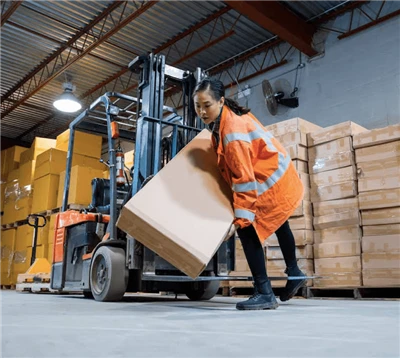
Manual palletizing is physically demanding, repetitive, and increasingly difficult to staff. In 2026, the fully‑loaded cost of a warehouse worker performing palletizing tasks typically ranges from $35 to $40 per hour, including wages, benefits, overtime, training, and turnover expenses.
Consider this hypothetical scenario from the Association for Advancing Automation. A manual palletizing operation requiring four workers across two shifts per day at a labor rate of $35 per hour generates monthly labor costs of $53,760 - over $645,000 per year just in direct wages.
An automated system, by contrast, may require only one worker to monitor operations under the same shift structure, cutting monthly labor costs to $13,440 and saving $40,320 per month. In this example, the payback period for the automated system can be as short as two months.
2.2 Hidden Costs Rarely Captured
The most dangerous mistake in ROI modeling is counting only direct wages. A complete analysis captures five distinct cost categories:
| Category | Hidden Cost Example |
|---|---|
| Labor substitution | Wages + benefits + overtime + temp agency fees |
| Quality & damage reduction | Dropped cases, crushed packaging, incorrect stacking |
| Safety & workers' comp | Repetitive strain injuries, back claims, forklift collisions |
| Maintenance | Replacing aging manual equipment, unplanned downtime |
| Throughput & capacity | Lost production when palletizing creates a bottleneck |
One snack foods manufacturer in Ohio spent 14 months building a robotics business case that only included labor substitution - $186,000 in annual savings - and proposed a $420,000 capital investment. The CFO rejected the proposal twice, calculating a marginal 27-month payback.
When the engineering team expanded their model to include eliminated product damage ($94,000/year), reduced workers' compensation claims ($67,000/year), overtime elimination ($41,000/year), and maintenance cost reduction ($23,000/year), total annual savings jumped to $411,000. The payback period dropped from 27 months to 11 months, and the project was approved in a single meeting.
The difference between a rejected proposal and an approved one was not the robot - it was the ROI model.
2.3 Bottlenecks and Lost Throughput
When palletizing falls behind, upstream equipment stops. This is one of the most expensive and least‑recognized costs of manual operations. A coffee co-packer named Cascade Coffee experienced this firsthand: upstream machines frequently stopped because operators couldn't palletize fast enough, reducing overall plant productivity and increasing operational stress on the floor.
A robotic palletizer acts as a metronome for your entire production line. It forces upstream equipment to maintain a steady pace because the end‑of‑line bottleneck has been eliminated. For plants with high‑volume or just‑in‑time commitments, the throughput gains alone can justify automation.

III. The Five‑Category ROI Framework for Robotic Palletizers
A defensible robotics ROI model captures savings across five distinct categories. Each category has specific data sources and calculation methods that finance teams can verify independently. Presenting all five with documented assumptions gives decision‑makers a model they can stress‑test - not a single number they must accept on faith.
Category 1: Labor Substitution
This is the category every proposal includes - but it is typically only 45–55% of total savings.
What to include:
- Base wages for eliminated positions
- Benefits (health insurance, retirement contributions, paid time off)
- Overtime premiums
- Seasonal temp labor costs and agency fees
- Recruiting and training expenses for high‑turnover roles
Calculation method:
(Loaded labor cost per position) × (Number of positions eliminated) × (Shifts covered)
Real‑world benchmark: A single robotic palletizing cell typically replaces 2 to 3 manual laborers per shift.
Category 2: Quality & Damage Reduction
Product damage from manual handling errors - dropped cases, crushed packaging, incorrect stacking patterns - is a direct cost that appears in your ERP system as write‑offs and rework.
What to include:
- Damaged goods written off in the last 12 months, segmented by production area
- Rework labor and material costs
- Customer returns due to packaging damage
- Lost product during changeovers and improper starts
Real‑world benchmark: Robotic palletizing cells typically reduce handling damage by 55–75% on automated tasks.
Where to find the data: Pull 12 months of damage write‑offs from your ERP system by production area or product line.
Category 3: Safety & Workers' Compensation
Manual palletizing is the #1 source of repetitive strain injuries (RSI) and lower back issues in packaging operations. One serious workers' compensation claim can cost more than a down payment on a robot.
What to include:
- Workers' compensation claims related to palletizing (direct costs)
- Increased insurance premiums after claims (indirect costs)
- Lost time and administrative costs for injury investigations
- OSHA fines or compliance-related expenses
Calculation method: Review the last 36 months of claims data specific to palletizing tasks. Even if you haven't had a major claim, use industry averages to estimate potential exposure.
Real‑world benchmark: A milk formula manufacturer in Australia reduced labor requirements from two individuals to less than one while eliminating palletizing‑related health and safety risks entirely - a project that earned a safety award nomination and achieved ROI in less than 11 months.
Category 4: Maintenance & Reliability
Manual and semi‑manual palletizing equipment (conveyors, pallet jacks, stretch wrappers) requires regular maintenance. Multiple aging machines often mean multiple maintenance events, each with labor and parts costs.
What to include:
- Maintenance costs for existing palletizing equipment (parts, labor, contractor fees)
- Unplanned downtime costs - when palletizing equipment fails, production stops
- Reduced maintenance burden from replacing multiple machines with one robotic cell
Calculation method: Track maintenance costs and downtime hours per asset over 12–24 months. Compare the total to projected costs for a single robotic palletizer maintained through a structured preventive maintenance program.
Real‑world benchmark: Plants with structured maintenance tracking have documented that replacing multiple aging manual palletizers with one robotic cell reduces annual maintenance costs by $20,000–$30,000.
Category 5: Throughput & Capacity
The most overlooked category - but often the largest source of value. Robotic palletizers eliminate the end‑of‑line bottleneck, allowing upstream equipment to run at designed speeds.
What to include:
- Lost production hours when manual palletizing cannot keep up
- Capacity to accept new contracts without adding shifts
- Overtime reduction from consistent 24/7 palletizing
- Faster changeover between SKUs, reducing non‑productive time
Calculation method: Measure the current average throughput of your production line in units per hour. Identify the bottleneck. Calculate the value of operating at full design speed for one additional hour per day, then multiply by 240 production days per year.
Real‑world benchmark: A manufacturer of plastic products used cobots to replace eight workers per day, freeing them for higher‑value tasks while increasing productivity by 15% - achieving ROI in less than one year.

IV. Real‑World ROI Case Studies
4.1 Cascade Coffee: Nine‑Month ROI on Six Cobot Palletizers
Contract coffee roaster and co‑packer Cascade Coffee runs a high‑mix operation in the Seattle area, producing single‑serve coffee capsules, retail bags, and other formats for major global brands. The business model requires frequent product changeovers and constant adjustments to accommodate more than 400 SKUs and dozens of pallet configurations.
The problem: Manual palletizing was a dangerous and expensive bottleneck. Workers lifted cartons from conveyors and stacked them by hand - a repetitive process requiring constant bending, twisting, and motion. Turnover in palletizing roles exceeded 60% , forcing the company to frequently rely on temporary labor and retrain new workers nearly every week. Upstream machines frequently stopped because operators couldn't palletize fast enough.
The solution: Cascade deployed a single collaborative robot (cobot) palletizer from Robotiq as a test. According to COO Ron Kane: "We put in the cobotic palletizer as a test to see if it would solve the problem, and it solved the problem on day one. We quickly wrote the check for the rest."
The results: Today Cascade operates six cobot palletizers on its retail production lines. The company achieved:
- Reduced turnover and training costs
- Eliminated production bottlenecks
- Improved worker safety
- ROI in less than nine months for the initial unit, with less than 11 months for the total package
4.2 Australian Milk Formula Manufacturer: 11‑Month ROI with 50% Labor Reduction
A milk formula manufacturer in Australia was experiencing health and safety issues from manual stacking, including repetitive strain injuries and back complaints. The stacking process also created blind spots for forklifts, increasing accident risk.
The problem: Two staff members packed cases from the case packer onto pallets manually. The process was physically demanding and created significant safety hazards.
The solution: The company implemented a Smart Palletizer - an intelligent cobot solution with a small footprint that easily fit into the existing processing and packaging line.
The results:
- Labor requirements reduced from two individuals to less than one
- All previous health and safety risks eliminated
- 24/7 palletizing capability on a 24‑hour, 5‑day weekly schedule
- 50% reduction in labor costs
- ROI achieved in less than 11 months
- Safety award nomination for the project
4.3 Coffee Manufacturer: 13‑Month ROI with Safer Workforce
A major U.S. coffee roaster faced high turnover, safety concerns, and production bottlenecks. Before automation, the company's team of 120 employees manually stacked thousands of coffee cases each day - work requiring constant bending, twisting, and lifting. Turnover hovered around 60% , and each new hire required training across more than 400 SKUs and dozens of pallet configurations.
The problem: Traditional automated systems were too expensive or too rigid for their needs. The company needed something compact, flexible, and easy to use, with limited floor space and the requirement to keep pallets on the ground for pallet‑jack access.
The solution: The company deployed six palletizing units using Robotiq's PAL Series with a Universal Robots cobot. Key advantages included:
- Small footprint fitting seamlessly into existing lines
- No safety cages required (built‑in scanners and sensors)
- Fast deployment - installed and running in just a few days
- Simple operation - new employees learn in minutes
The results:
- 13‑month ROI
- Happier, safer, more productive workforce
- Operators now work with robots rather than against them
- Zero injuries from palletizing tasks after implementation
4.4 Ohio Snack Foods Manufacturer: 11‑Month ROI After Complete Modeling
This example demonstrates the danger of incomplete ROI modeling - and the power of capturing all five cost categories.
The incomplete model (rejected twice):
- Annual savings: $186,000 (labor substitution only)
- Capital cost: $420,000
- Payback: 27 months
The complete model (approved):
- Labor substitution: $186,000
- Product damage elimination: $94,000
- Workers' comp reduction: $67,000
- Overtime elimination: $41,000
- Maintenance reduction: $23,000
- Total annual savings: $411,000
- Payback: 11 months
The lesson: A complete ROI model captures 40–60% more savings than a labor‑only model. In this case, the additional savings categories reduced payback by more than half and turned a rejected proposal into an approved project.

V. Side‑by‑Side ROI Comparison: Manual vs. Robotic Palletizing
The following comparison is based on typical 2026 data for a mid‑sized packaging or corrugated plant running two shifts per day, five days per week.
| Factor | Manual Palletizing | Robotic Palletizing |
|---|---|---|
| Workers per shift | 2–3 | 1 (monitoring only) |
| Annual labor cost (2 shifts) | $110,000–$165,000 | $55,000 |
| Typical system cost | Minimal | $200,000–$450,000 |
| Product damage rate | 2–5% | 1–2% |
| Annual injury claims | Moderate to high | Near zero |
| Changeover time | 10–20 minutes | 3–8 minutes |
| Operating hours | Limited by shifts and breaks | 24/7 continuous |
| Consistency | Varies by operator and shift | Consistent ±0.1 mm |
| Scalability | Add more workers | Reprogram or redeploy |
Estimated ROI for robotic palletizing: 12–30 months, depending on production volume, shifts, and how completely you capture savings.
For many plants, the combination of labor savings, waste reduction, and throughput gains results in full payback within 18–24 months. With a comprehensive ROI model that captures all five cost categories, payback can drop to under 12 months.
VI. How to Calculate Your Specific ROI: A Step‑by‑Step Template
Use this template to build your own robotic palletizer ROI model. Gather data from your ERP, maintenance logs, safety records, and production reports for the last 12–24 months.
Step 1: Calculate Current Manual Palletizing Costs
| Cost Category | Your Data (annual) |
|---|---|
| Direct wages for palletizing positions | $______ |
| Overtime premiums | $______ |
| Temporary labor / agency fees | $______ |
| Training and recruiting costs | $______ |
| Product damage from manual handling | $______ |
| Workers' comp claims (palletizing‑related) | $______ |
| Insurance premium increases | $______ |
| Maintenance for existing palletizing equipment | $______ |
| Unplanned downtime (value of lost production) | $______ |
| Total current manual cost | $______ |
Step 2: Estimate Automated Palletizing Costs
| Cost Category | Estimate |
|---|---|
| Robotic palletizer purchase price | $200,000–$450,000 |
| Installation and integration | $______ |
| Training | $______ |
| Annual maintenance (parts + service) | $15,000–$25,000 |
| Annual energy consumption | $______ |
| Total 5‑year TCO | $______ |
Step 3: Project Annual Savings
| Savings Category | Projection |
|---|---|
| Labor (1 operator vs. 2–3) | $______ |
| Product damage reduction (55–75% reduction) | $______ |
| Workers' comp and insurance reduction | $______ |
| Maintenance cost reduction | $______ |
| Throughput / capacity gain | $______ |
| Total annual savings | $______ |
Step 4: Calculate Payback Period
Formula:
(Robotic palletizer system cost + Installation + Training) ÷ Total annual savings = Payback period in years
Example (comprehensive model):
- System cost + installation: $350,000
- Total annual savings (all five categories): $180,000
- Payback: 23 months
Example (labor‑only model):
- System cost + installation: $350,000
- Annual labor savings only: $70,000
- Payback: 60 months
Step 5: Calculate ROI Percentage
Formula:
*(Total annual savings − Annual operating costs) ÷ Total investment × 100 = ROI %*
A good ROI benchmark for automation projects generally falls between 15% and 30% annually . Many robotic palletizer projects exceed these benchmarks.
VII. Financing Options and Their Impact on ROI
The way you finance your robotic palletizer affects both cash flow and effective payback period. Several options are available in 2026:
| Financing Method | Impact on ROI | Best For |
|---|---|---|
| Cash purchase | Fastest payback, best long‑term ROI | Plants with strong balance sheets |
| Equipment loan | Moderate payback, fixed monthly payments | Plants that want ownership and tax benefits |
| Lease | Lower upfront, higher total cost | Plants conserving working capital |
| Robot‑as‑a‑Service (RaaS) | Lowest upfront, pay‑per‑use | Plants wanting to test automation or scale flexibly |
Robot‑as‑a‑Service (RaaS) is a rapidly growing model where suppliers provide palletizing robots on a subscription or pay‑per‑pallet basis. When financed through RaaS, a cobot palletizer can cost as little as $8.50 per hour - often less than a quarter of the cost of a manual operator.
RaaS lowers the barrier to entry for small and mid‑size plants, turns automation from a capital expense into an operating expense, and aligns supplier incentives with your success.
VIII. Factors That Accelerate or Delay ROI
Not every robotic palletizer installation achieves the same ROI. Several factors influence how quickly you'll see payback.
Factors That Accelerate ROI
| Factor | Impact |
|---|---|
| Multi‑shift operation | Robots deliver savings on all shifts, not just one |
| High product mix / frequent changeovers | Fast automated changeover saves more time |
| High injury rates | Safety savings are immediate and significant |
| Existing upstream automation | Removing the palletizing bottleneck unlocks capacity |
| High labor costs / tight labor market | Higher wages mean faster payback |
Factors That Delay ROI
| Factor | Impact |
|---|---|
| Single‑shift operation | Fewer labor hours to replace |
| Very low production volume | May not justify capital investment |
| Complex integration requirements | Higher installation costs |
| Limited in‑house technical support | Higher reliance on external service |
The most important variable is not your plant's size - it's how many of the five cost categories you capture in your model. Plants that only count labor substitution will see longer payback periods. Plants that capture damage reduction, safety savings, maintenance savings, and throughput gains will see ROI accelerate dramatically.
IX. Robotic vs. Traditional Industrial vs. Cobot Palletizers
The type of palletizer you choose affects both upfront cost and long‑term ROI. Each technology has distinct characteristics that suit different applications.
Industrial Robot Palletizers
Characteristics:
- High speed, high payload
- Requires safety fencing and guarding
- Large footprint
- Complex programming by specialists
- Best for high‑volume, single‑SKU operations
ROI profile: High upfront cost, very low per‑unit cost at scale. Best for plants running millions of identical cases per year.
Collaborative Robot (Cobot) Palletizers
Characteristics:
- Moderate speed, moderate payload
- Built‑in safety sensors - can work alongside humans
- Small footprint
- No‑code or drag‑and‑drop programming
- Best for high‑mix, moderate‑volume operations
ROI profile: Lower upfront cost, faster deployment, quick payback for mixed‑SKU production. Cobots are the fastest‑growing segment of the palletizing market due to their accessibility and flexibility.
Which Technology Delivers Better ROI?
| Production Profile | Recommended Technology | Expected Payback |
|---|---|---|
| High volume, single product | Industrial robot | 18–30 months |
| High mix, frequent changeovers | Cobot | 9–18 months |
| Multi‑line, seasonal production | Cobot or mobile robot | 12–24 months |
| Space‑constrained plant | Cobot | 12–18 months |
In 2026, the price points for automation technology - including sensing, pick‑and‑place case packing, and cobot palletizing - have dropped significantly compared to a decade ago. This trend has made cobot palletizing accessible to small and mid‑size plants that previously could not justify automation.
X. Common ROI Calculation Mistakes (And How to Avoid Them)
Even experienced plant managers and finance teams make predictable errors when building robotic palletizer ROI models. Avoid these pitfalls:
Mistake 1: Counting Only Labor Substitution
The problem: Labor substitution is typically only 45–55% of total savings. Models that stop here systematically underestimate ROI by 40–60%.
The fix: Capture all five cost categories: labor, damage, safety, maintenance, and throughput.
Mistake 2: Using Only Peak Capacity Savings
The problem: Projects often assume robots will run at maximum speed 100% of the time - which never happens in real production.
The fix: Use average sustained speed over 8‑hour shifts, not peak mechanical speed.
Mistake 3: Ignoring Real‑World Availability
The problem: Models often assume 100% uptime, ignoring scheduled maintenance, changeovers, and unplanned stops.
The fix: Apply typical availability factors (95–98% for modern robotic palletizers) to your throughput calculations.
Mistake 4: Underestimating Installation and Training Costs
The problem: Some proposals include only the robot price, omitting integration, safety systems, and training.
The fix: Budget 15–25% of equipment cost for installation, integration, safety, and training.
Mistake 5: Overlooking The Cost of Doing Nothing
The problem: The most common mistake is failing to recognize that continuing manual palletizing is itself a costly choice.
The fix: Compare automated palletizer ROI against a baseline of "no change." When you fully account for rising labor costs, injury claims, turnover, and bottleneck losses, doing nothing is often the most expensive option.
XI. Industry Trends Shaping Robotic Palletizer ROI in 2026 and Beyond
Several converging trends are making the ROI case for robotic palletizers stronger in 2026 than ever before.
Trend 1: Persistent Labor Shortages
Manufacturing labor shortages are not temporary. The workforce is aging, and younger workers are less willing to perform physically demanding manual palletizing tasks. Turnover rates in palletizing roles commonly exceed 50–60%, creating constant recruiting and training cycles that drain profitability. Automation is no longer a luxury - it's a survival strategy.
Trend 2: Declining Robot Costs
Compared to ten years ago, automation technology price points have dropped significantly for sensing, pick‑and‑place case packing, and cobot palletizing. This trend has lowered the barrier to entry for small and mid‑size plants, making automation accessible to a much broader range of manufacturers.
Trend 3: E‑Commerce and Supply Chain Pressure
E‑commerce continues to drive demand for faster, more flexible palletizing. Mixed‑SKU pallets ("rainbow pallets") are increasingly common, and manual labor struggles to keep pace. Robotic palletizers with vision guidance can now handle mixed‑case stacking efficiently, opening new ROI opportunities for plants serving e‑commerce fulfillment.
Trend 4: Smart Factory Integration
Modern robotic palletizers are equipped with IoT sensors and OPC‑UA interfaces, enabling real‑time data exchange with MES and ERP systems. Plants can now track OEE, waste, and maintenance needs from a central dashboard, using data to continuously improve operations. This connectivity extends ROI beyond initial payback into ongoing optimization.
Trend 5: RaaS and Flexible Financing
Robot‑as‑a‑Service models have matured, allowing plants to deploy palletizing automation with little or no upfront capital. Pay‑per‑pallet or monthly subscription models align supplier incentives with your success and make automation accessible to plants that cannot or will not make large capital investments.
XII. Action Plan: Your Next Steps to Build the Business Case
Ready to build your own robotic palletizer ROI proposal? Follow these steps:
Step 1: Gather Baseline Data
Collect the following from your ERP, maintenance logs, safety records, and production reports for the last 12 months:
- Direct and indirect labor costs for palletizing
- Product damage write‑offs
- Workers' compensation claims (palletizing‑related)
- Maintenance costs for existing palletizing equipment
- Production downtime attributed to palletizing bottlenecks
Step 2: Select a Target Line
Choose one production line for your initial proposal. Focus on a line with:
- High labor cost relative to volume
- Frequent changeovers
- Recorded bottlenecks or injuries
- Available floor space
Step 3: Calculate Your Five‑Category Savings
Use the template in Section VI to project savings across all five categories. Be conservative in your assumptions - finance teams will verify them.
Step 4: Research System Costs
Get quotes from at least three suppliers for robotic palletizer systems matched to your application. Include installation, integration, safety systems, and training in your total investment calculation.
Step 5: Model Different Financing Scenarios
Run ROI calculations for cash purchase, equipment loan, lease, and RaaS options. Present the scenario that best fits your plant's financial situation.
Step 6: Present the Complete Picture
When you present your proposal, include:
- The five‑category savings model with documented assumptions
- Payback period and ROI percentage
- Comparison to "do nothing" baseline
- Sensitivity analysis (best case, expected case, worst case)
XIII. Conclusion
The robotic palletizer ROI case in 2026 is stronger than ever. Persistent labor shortages, declining robot costs, e‑commerce growth, and smart factory integration have converged to make end‑of‑line automation accessible and financially compelling for plants of all sizes.
But the difference between a rejected proposal and an approved one is not the robot - it's the ROI model. Plants that count only labor substitution will see marginal payback periods of two years or more. Plants that capture all five cost categories - labor, damage, safety, maintenance, and throughput - can achieve payback in under 12 months and turn a capital expense into a competitive advantage.
The question is no longer whether to automate palletizing, but how quickly you can build a complete business case and get approval. The tools, data, and case studies in this guide give you everything you need to start that conversation.
What is the single biggest cost category you've been overlooking in your palletizing operation? Start by pulling 12 months of data on product damage, workers' comp claims, or downtime events. You might be surprised by what you find - and how quickly a complete ROI model turns a marginal project into an urgent priority.