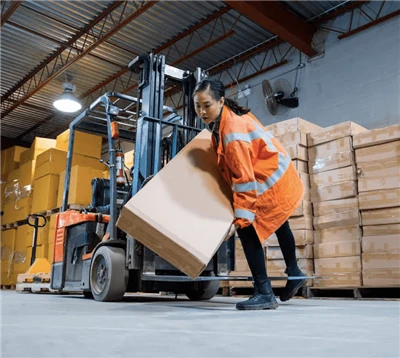
Is Your Palletizing Area a "Ticking Time Bomb" for Injuries?
In a typical corrugated box manufacturing facility, the end-of-line process is often the most physically demanding. Have you ever calculated how many tons a single worker lifts in an eight-hour shift? When stacking boxes manually, a worker may lift between 5,000 to 10,000 kg daily.
This repetitive strain is the primary cause of palletizing ergonomic hazards. For plant owners, an injury isn't just a medical issue; it's a massive financial drain. From workers' compensation claims to the cost of hiring temporary labor and the inevitable drop in morale, the "hidden costs" of manual labor are staggering. Is it time to ask: can you afford not to automate with an automatic box palletizing system?

Manual Palletizing vs. Robotic Palletizing: The Safety Showdown
When comparing manual palletizing vs robotic palletizing, we must look at the long-term biological impact on the human body versus the mechanical consistency of a robot.
| Risk Factor | Manual Palletizing | Robotic Palletizing |
| Repetitive Motion Injuries | Extremely High (Carpal Tunnel, Back Strain) | Zero (Mechanical consistency) |
| Heavy Lifting Hazards | Constant risk of spinal disc herniation | Unlimited (Based on payload capacity) |
| Fatigue-Related Errors | Increases significantly after 4 hours | None; 24/7 peak performance |
| Workplace Safety Compliance | Hard to monitor individual posture | Built-in compliance with robotic palletizer safety standards |
| Long-Term Financial Risk | High (Potential for lawsuits/insurance hikes) | Fixed (Initial investment + minor maintenance) |
What is the Real Workplace Injury Cost in Manufacturing?
Many managers only see the "Direct Costs" of an injury-medical bills and insurance. However, workplace injury cost in manufacturing follows the "Iceberg Principle": most of the cost is below the surface.
-
Indirect Cost 3: Insurance Premium Hikes. A single major back injury can raise your "Experience Modifier Rate" (EMR), increasing your insurance premiums for years to advance.
How Do Robotic Palletizer Safety Standards Protect Your Team?
A common misconception is that adding a robot creates new dangers. In reality, modern robotic palletizer safety standards (such as ISO 10218 and ANSI/RIA R15.06) ensure that the machine is safer than the human it replaces.
- Light Curtains & Area Scanners: These sensors create an invisible "safety bubble." If a human enters the zone, the automatic box palletizing system slows down or stops instantly.
- Pressure-Sensitive Grippers: By adjusting clamp pressure for palletizing, the robot ensures that it only applies force to the box, not to any external objects.
- Ergonomic Relief: The robot takes over the "Dull, Dirty, and Dangerous" tasks, allowing your human staff to move into "Machine Operator" roles which are safer and more rewarding.
Can an Automatic Box Palletizing System Solve Your "Labor Shortage" Crisis?
In 2026, finding workers willing to perform heavy manual labor is becoming nearly impossible. This labor scarcity drives up wages while the quality of applicants decreases.
By implementing an automatic box palletizing system, you aren't just improving safety; you are stabilizing your production. A robot doesn't call in sick due to back pain, it doesn't file for workers' comp, and it doesn't quit for a higher-paying job across the street. This reliability is a core component of your robotic palletizing system cost justification.

ROI Deep Dive: Safety as a Profit Center
Let's look at the financial impact of safety through the lens of a medium-sized box plant.
5-Year Safety & Labor Financial Comparison:
| Category | Manual Palletizing (2 Shifts) | Robotic System (2 Shifts) |
| :--- | :--- | :--- |
| Labor Costs (Wages/Tax) | $450,000 | $50,000 (Maintenance/Power) |
| Average Injury Claims | $45,000 (Based on industry average) | $0 |
| Insurance Premiums | High & Volatile | Lower & Stable |
| Productivity Loss (Fatigue)| ~15% annually | 0% |
| Total 5-Year Outlay | $580,000+ | $180,000 - $250,000 (Incl. Purchase) |
The numbers are clear: an automatic box palletizer machine pays for itself purely through labor and safety savings, often within 18 to 24 months.
How to Mastering Palletizing Ergonomic Hazards?
If you aren't ready for full automation, how do you mitigate risks? Even then, the manual solutions are expensive and less effective.
1,Lift Tables: These help with height but don't solve the twisting and reaching motions.
2,Job Rotation: This spreads the risk but doesn't eliminate the palletizing ergonomic hazards.
3,The Ultimate Solution: Transitioning the "Heavy Lift" portion of your corrugated box manufacturing to a robotic cell is the only way to achieve zero ergonomic risk.
Is Your Plant Compliant with ISO 10218 Standards?
International safety standards like ISO 10218 are becoming stricter. In some regions, failing to provide an ergonomic workspace can lead to heavy fines. An automatic box palletizing system is designed from the ground up to meet these global compliance requirements, giving you peace of mind during safety inspections.
Why "Employee Morale" is the Secret Benefit of Automation?
Nobody wants to be a "human forklift." When you automate the palletizing area, you demonstrate to your employees that you value their health. Workers who transition from manual stacking to "Robot Supervisors" have higher job satisfaction and lower turnover rates. This shift in culture is a vital part of modern corrugated box manufacturing equipment implementation.
Safety is the New Productivity
In the battle of manual palletizing vs robotic palletizing, the human cost is the deciding factor. You can no longer afford the risk of chronic injuries, rising insurance rates, and a shrinking labor pool.
Investing in an automatic box palletizer machine is an investment in your people as much as your production. By eliminating palletizing ergonomic hazards and adhering to the highest robotic palletizer safety standards, you transform your factory into a modern, safe, and highly profitable powerhouse.